By Robert M. Cutler
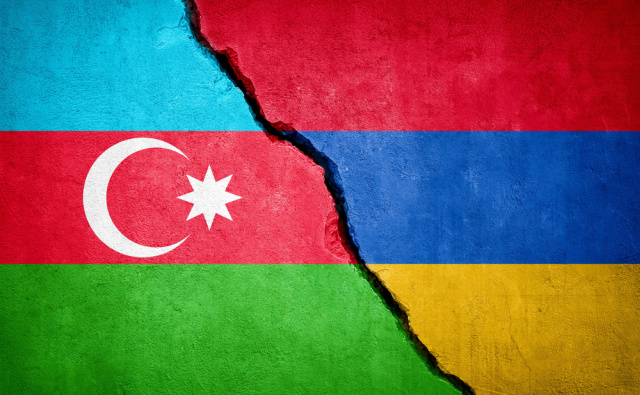
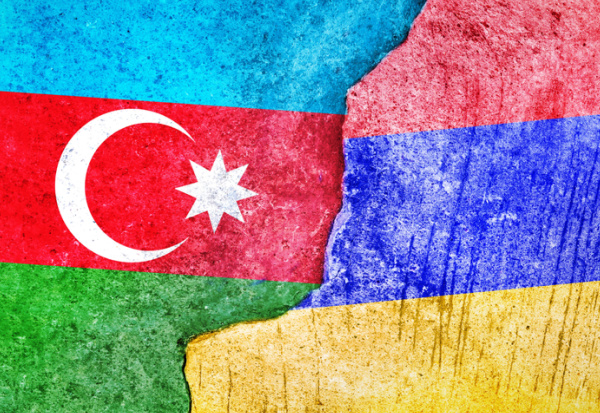
The year 2024 saw a shift away from external mediation in the Armenia–Azerbaijan conflict, to direct bilateral negotiations. Despite widespread expectations of a finalized peace treaty by the end of 2024, no agreement was signed. This reflects a strategic decision to avoid an interim settlement that could entrench unresolved provisions. Constitutional ambiguities in Armenia and bilateral territorial adjustments continue to shape the negotiation dynamics, raising questions about whether this diplomatic model will consolidate into a stable framework or remain in flux.

BACKGROUND: Since the 1994 Bishkek Protocol froze the conflict between Azerbaijan and Armenia over Nagorno-Karabakh in a fragile ceasefire regime under Russian sponsorship, mediation models had consistently prioritized multilateral equilibrium over durable resolution. The OSCE Minsk Group—formalized in December 1994 with the three co-chairs France, Russia, and the U.S.—institutionalized this status quo. In this diplomatic environment, negotiations served as an instrument for conflict management rather than conflict termination. The April 2016 Four-Day War briefly upended that architecture, demonstrating the latent instability embedded of the frozen-conflict model. Four and a half years later, the 2020 Second Karabakh War fundamentally restructured the region’s power balance. It rendered obsolete the externally imposed frameworks that had governed negotiations since the collapse of the Soviet Union.
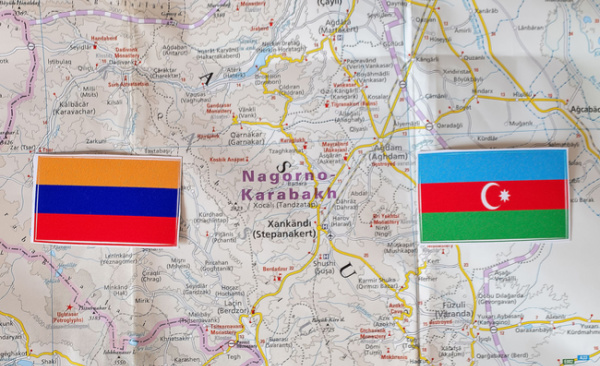
The outcome of the 2020 war was the restoration of Azerbaijan’s control over the previously Armenian-occupied regions around the territory of the former (Soviet-era) Nagorno-Karabakh Autonomous Oblast. The Russian-brokered ceasefire of November 10, 2020, set the stage for a negotiation dynamic predicated on asymmetrical positioning. Armenia’s formal recognition of Azerbaijan’s territorial integrity in October 2022 (a move reportedly taken despite Kremlin opposition) implicitly signalled a shift that was not widely acknowledged at the time. Specifically, multilateral mediation lost its functional rationale; a new phase of direct engagement emerged. The replacement of Minsk Group arbitration, beginning with face-to-face negotiations in Brussels (May 2022), Prague (October 2022), and Munich (February 2023), was the logical conclusion of this trajectory.
The October 2022 Prague meeting marked the first sustained round of direct talks without the Minsk Group’s mediation. It encapsulated the recalibration of the regional conflict-resolution paradigm. The Armenia–Azerbaijan peace process has entered a structurally distinct phase, as direct bilateral diplomacy has replaced externally mediated negotiations. This is not merely a procedural transition. It is a fundamental shift in the conflict’s geopolitical management. For nearly three decades, external actors—principally Russia, the U.S., and the EU—had dictated the diplomatic framework while regional players remained constrained by inherited institutional architectures, notably the defunct OSCE Minsk Group.
IMPLICATIONS: The failure to finalize a peace treaty in 2024, despite reports that 90 percent of the agreement had been drafted, is not due to any diplomatic shortcoming. Rather, it represents a strategic recalibration. The logic behind avoiding an interim settlement is evident in historical analogues. For example, while the 1995 Dayton Accords successfully concluded the Bosnian War, institutionalized ethnic partitions persist as a structural impediment to governance nearly three decades later. To take another example, the 2015 Minsk II Agreement, designed to create a transitional settlement for the then-Donbas conflict, wound up embedding unresolved territorial issues in the political fabric. This subsequently facilitated Russia’s full-scale invasion of Ukraine in February 2022.
The deliberate avoidance of a prematurely finalized Armenia–Azerbaijan treaty suggests an awareness of these precedents. By declining to entrench provisions that might later serve as triggers of an unresolved structural conflict, the diplomatic system moves toward a “stable equilibrium” to replace the “local equilibrium” of the temporary cessation of hostilities. The elimination of substantive third-party mediation reinforces this shift.
Since October 2022, all consequential negotiations have been conducted bilaterally. External actors now function as logistical facilitators rather than as substantive arbiters. This pattern is comparable with, for example, the 1979 Egypt–Israel Peace Treaty, which—despite U.S. facilitation at Camp David—was fundamentally structured around direct negotiation and which has shown durability for over four decades. It contrasts with the 1993 Oslo Accords, which relied upon external assurances and ambiguous transitional mechanisms, and which collapsed amid shifting geopolitical realities. The Armenia–Azerbaijan framework thus increasingly resembles the former model, with bilateralization reinforcing sustainability. However, asymmetries within the process remain pronounced.
Azerbaijan has consistently employed a “position-setting” strategy, articulating clear demands and advancing specific legal-political objectives. This was evident in President Ilham Aliyev’s remarks at the February 2024 Munich Security Conference, where he characterized the negotiation process as a “one-sided dialogue” in which Azerbaijan proposes terms while Armenia refrains from active counter-positioning. This dynamic was illustrated also by the February 2024 withdrawal of Armenian forces from four Azerbaijani villages (Baghanis-Ayrum, Ashaghi Askipara, Kheyrimli, and Gizilhajili). This withdrawal was executed without a formalized reciprocal agreement, creating the perception that Azerbaijani proposals, rather than structured bilateral compromise, are the driving force in the conflict-resolution process.
The trial of Ruben Vardanyan, a key former figure in the Karabakh administration, further underscores Azerbaijan’s strategy of consolidating its post-2020 advantage through legal and political mechanisms. Vardanyan, arrested in September 2023 following Azerbaijan’s military operation in Karabakh, has been charged with financing terrorism and illegally crossing Azerbaijan’s border. His prosecution reflects a broader pattern of post-conflict legal adjudication, where Azerbaijan is systematically dismantling the institutional remnants of the former Karabakh authority while reinforcing its sovereignty claims over the region.
This judicial dimension introduces new considerations for the negotiation process. While Armenia has distanced itself from former Karabakh leadership figures, the trial raises concerns over how legal precedents set by Azerbaijan’s courts could influence broader diplomatic calculations. Precedents from post-war trials in Bosnia and Kosovo demonstrate that such cases can serve as mechanisms of conflict closure or as sources of prolonged diplomatic friction, depending on how they are leveraged within ongoing negotiations. Whether the trial is seen as a necessary legal process or as a strategic assertion of power will shape both Armenian domestic discourse and international perceptions of Azerbaijan’s post-war governance model.
An unresolved question about Armenia’s constitution remains a central point of contention. The constitution’s preamble makes reference to the 1990 Armenian Declaration of Independence, which in turn invokes the 1989 Soviet-era decision on the then–Nagorno-Karabakh, implicitly sustaining a legal framework that conflicts with Armenia’s 2022 diplomatic commitments. While Armenia contends that a treaty provision will supersede domestic law, Azerbaijan cites historical precedents in which Armenian legal rulings activated dormant constitutional clauses to justify policy reversals.
For example, the 2003 Armenian Supreme Court decision permitting Robert Kocharyan’s candidacy for president, despite constitutional residency requirements, exemplifies this phenomenon. Kocharyan, who had never officially resided in the Republic of Armenia prior to independence, was deemed eligible based on his prior residence in Nagorno-Karabakh during the Soviet and early post-Soviet period. This precedent reinforces Azerbaijan’s concerns regarding the durability of Armenian legal commitments, particularly given the requirement for a national referendum to amend the constitutional preamble—an event that will not take place before late 2026.
Historically, such delays have introduced windows of instability, where unforeseen political shifts disrupt anticipated diplomatic trajectories. The postponement of Palestinian legislative elections following the Oslo Accords, for example, contributed to the erosion of transitional governance structures, leading to subsequent escalations. The Armenia–Azerbaijan process now faces a comparable timeline-dependent risk, where protracted legal ambiguity could generate new friction points before formalized resolution mechanisms are enacted.
CONCLUSIONS: The bilateralization of diplomacy in the South Caucasus challenges the post-Soviet convention of externally managed equilibrium but has not yet cohered into a stable system. Whether the region consolidates into a sustainable post-conflict order or re-enters a phase of mediated arbitration depends not only on the resolution of uncertainties over the Armenian constitution, but also on unresolved territorial demarcations and the strategic recalibrations of external actors. The next 24 months will likely determine the trajectory of this diplomatic framework. Events between now and the end of 2026 will establish whether bilateral statecraft becomes institutionalized or whether it remains only an intermediary phase before external actors (not just Russia but also the EU and Iran) again seek to reassert dominant influence.
AUTHOR BIO: Robert M. Cutler was for many years a senior research fellow at the Institute of European, Russian and Eurasian Studies, Carleton University, and is a past fellow of the Canadian International Council.
By Syed Fazl-e-Haider
Pakistan and India, the longstanding rivals in South Asia, have instigated an arms race in the South Caucasus region. This development comes amid a broader arms supply deficit caused by Russia's preoccupation with the ongoing conflict in Ukraine. While India is deepening its military partnership with Armenia, Pakistan is enhancing the defense capabilities of Azerbaijan. Both states are actively seeking to fill the vacuum in arms procurement left by Russia's reduced presence in the region. India has aligned with Armenia, leveraging this partnership to pursue strategic connectivity projects in the South Caucasus. Conversely, Pakistan views Azerbaijan as a strategic ally, with their collaboration deemed essential for countering India in the competition for regional influence.

BCKGROUND: India and Pakistan have shared a contentious relationship since their emergence as independent states in 1947. The two states have engaged in three full-scale wars, primarily over Kashmir, a territory claimed by both. In 1998, Pakistan conducted nuclear tests shortly after India, marking a significant escalation in their rivalry. This ongoing antagonism often manifests in international forums, where the two countries accuse each other of fostering cross-border terrorism. Their rivalry extended to the South Caucasus in 2020, during the 44-day war between Armenia and Azerbaijan over the disputed Nagorno-Karabakh region.
Pakistan supported Azerbaijan during the Second Karabakh War in 2020. However, the close relationship between the two countries predates this conflict, with their cordial ties dating back to Azerbaijan's independence in 1991, following the dissolution of the Soviet Union. Pakistan was among the first nations to recognize Azerbaijan's independence, second only to Türkiye. After Armenian forces attacked Azerbaijan's Nagorno-Karabakh region shortly after its independence, both Türkiye and Pakistan strongly condemned Armenia's actions. Since then, they have consistently supported Azerbaijan’s position on the Nagorno-Karabakh issue in international forums, both politically and diplomatically. Pakistan has gone so far as to refrain from recognizing Armenia, refusing to establish diplomatic relations with the country. In return, Azerbaijan has endorsed Pakistan’s stance on the Kashmir dispute, a position that has antagonized India.
During the Second Karabakh War in 2020, Islamabad was alleged to have sent military advisers to support Azerbaijan. Armenian Prime Minister Nikol Pashinyan even claimed that Pakistani soldiers were actively fighting alongside the Azerbaijani army against Armenia during the 44-day conflict over Nagorno-Karabakh. Pakistan, however, categorically dismissed these allegations, labeling them as "baseless and unwarranted." Ultimately, Azerbaijan emerged victorious in the six-week war over the disputed region.
Türkiye strongly backed Pakistan's position on Kashmir, reciprocating Pakistan’s unequivocal support for Azerbaijan during the Karabakh war. The mutual endorsements of Islamabad's stance on Kashmir by Ankara and Baku provoked concern in New Delhi. Pakistan’s support for Azerbaijan during the conflict played a pivotal role in fostering closer ties between India and Armenia in the aftermath of the war. Observing its rival’s activities during the Karabakh conflict, India responded by significantly enhancing its defense partnership with Armenia over the subsequent four years.
Meanwhile, Azerbaijan, Pakistan, and Türkiye formalized their alliance by signing the Trilateral Islamabad Declaration in 2021, underscoring their solidarity with Azerbaijan in the aftermath of the war.
IMPLICATIONS: The supply of military equipment by India and Pakistan has significantly reduced Azerbaijan's and Armenia's dependence on Russia for weapons and ammunition. Historically, both South Caucasian nations relied heavily on Russia for defense supplies, particularly in the period preceding the 2020 Karabakh War. Between 2011 and 2020, Russia accounted for 94 percent of Armenia's major arms imports, including armored personnel carriers, air defense systems, multiple rocket launchers, and tanks. Similarly, Azerbaijan depended extensively on Russian military supplies during the same period, purchasing armored vehicles, air defense systems, Smerch rockets, transport and combat helicopters, artillery, multiple rocket launchers, and tanks.
India considers Armenia a strategic partner in the South Caucasus and has consequently deepened its military ties with Yerevan. Armenia has emerged as the largest foreign recipient of Indian weapons, with defense contracts concluded since 2020 estimated at US$ 2 billion. According to a report by the Indian Ministry of Finance, Armenia has become the leading importer of Indian arms, securing deals for the purchase of Pinaka multiple-launch rocket systems and Akash anti-aircraft systems. This development reflects a significant realignment in the defense landscape of the region.
In September, Azerbaijan formally introduced Pakistan’s fourth-generation JF-17 Thunder Block III fighter jets to its air force, marking a significant milestone in defense cooperation between the two nations. This development followed a US$ 1.6 billion agreement signed in February for the acquisition of JF-17 Block III aircraft. The deal includes not only the supply of aircraft but also ammunition and pilot training provided by Pakistan. The advanced combat capabilities of the JF-17 Block III are expected to enhance Azerbaijan's military edge in the South Caucasus. Notably, Azerbaijan has requested 60 JF-17 jets, intended to replace its entire fleet of aircraft, making this the largest defense export deal in Pakistan’s history.
The defense agreements between India and Armenia, as well as those between Pakistan and Azerbaijan, have significantly diminished Russia’s position as the principal supplier of weapons and ammunition to the South Caucasian nations. This shift has been exacerbated by Russia’s ongoing war in Ukraine, which has undermined its ability to deliver weapons in a timely manner under previously signed contracts. The entry of India and Pakistan into the regional defense market has provided Armenia and Azerbaijan with an opportunity to diversify their military procurement, reducing their historical reliance on Russian defense supplies.
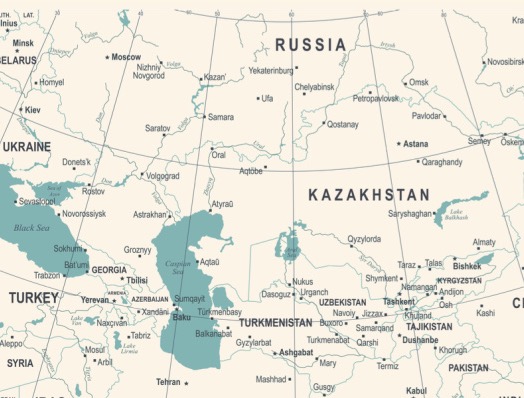
The entry of India and Pakistan into the South Caucasus has resulted in the formation of two rival blocs competing for regional influence. One alliance, referred to as the Three Brothers, comprises Azerbaijan, Türkiye, and Pakistan, while the opposing group includes Armenia, Iran, France, and India.
For India, Armenia holds strategic importance as a potential bridge to access the vast market of the Eurasian Economic Union (EAEU). New Delhi views Armenia as a vital transit hub for connecting Indian goods to EU countries and envisions its role in facilitating bilateral or multilateral partnerships with nations such as Iran, France, and Greece to implement strategic connectivity projects in the South Caucasus.
Conversely, Islamabad considers its partnership with Azerbaijan critical for countering India's influence in the region. Azerbaijan has also emerged as a key player in the energy transit corridors connecting the Black Sea, South Caucasus, and Europe, further enhancing its geopolitical significance. This dynamic positions Azerbaijan as a strategic ally for Pakistan, particularly in the context of their shared interests in limiting India's regional ambitions.
CONCLUSIONS: Pakistan's defense cooperation with Azerbaijan and India's arms sales to Armenia are shaping new security dynamics that link the South Caucasus and South Asia. The extensive defense contracts between India and Armenia are poised to strengthen Armenia's position as a strategic ally for India in the region.
India's military partnership with Armenia is influenced by its geopolitical rivalry with Pakistan, which is actively supporting Azerbaijan's defense capabilities. Both Pakistan and India aim to secure reciprocal cooperation from the South Caucasian nations to advance their strategic interests. For Pakistan, Azerbaijan holds particular importance as a potential partner in trans-regional energy cooperation, given Pakistan's energy deficiencies. Azerbaijan's pivotal role in the energy transit corridor connecting South Asia and the South Caucasus further underscores this strategic alignment.
Conversely, India, as an observer in the Eurasian Economic Union (EAEU), is working to deepen its cooperation with Armenia across economic sectors, with a particular emphasis on defense. Armenia's strategic position could also facilitate India's broader connectivity initiatives with Europe. Meanwhile, Pakistan is likely to leverage its relationship with Azerbaijan to counterbalance India's growing influence in the region, highlighting the interconnected and competitive geopolitical landscape of the South Caucasus and South Asia.
AUTHOR’S BIO: Syed Fazl-e-Haider is a Karachi-based analyst of the Wikistrat. He is a freelance columnist and the author of several books. He has contributed articles and analysis to a range of publications. He is a regular contributor to Eurasia Daily Monitor of Jamestown Foundation.
By Laura Linderman and Michael Hikari Cecire
In early October, Chechen leader Ramzan Kadyrov declared a blood feud against three North Caucasian federal lawmakers, accusing them of plotting his assassination amid a power struggle over the Wildberries e-commerce platform. This incident highlights the escalating tensions and fragility of power within Russian politics, revealing vulnerabilities in the Kremlin's governance amid ongoing conflicts. As regional elites assert their interests, the potential for broader instability increases, particularly against the backdrop of Russia's war in Ukraine. The situation underscores the complex interplay of patronage networks and regional autonomy that could lead to significant shifts in Russia's internal power dynamics.

BACKGROUND: In early October, Chechen strongman Ramzan Kadyrov declared a blood feud against three federal lawmakers—two Dagestani and an Ingush deputy—whom he accused of planning his assassination. The dispute is tied to control over the Russian Wildberries e-commerce website, which had been wrested by forces backed by the Dagestani and Ingush deputies against Kadyrov’s allies, culminating in a deadly shootout at the company’s Moscow headquarters. The company's contentious expansion has also led to intimidation beyond Russia's borders - in October 2024, a JAMnews editor in Georgia received threats of violence from an apparent Chechen supporter after criticizing Wildberries' entry into the Georgian market despite international sanctions. Kadyrov’s rhetoric indicates a profound willingness to use violence and intimidation, highlighting Kadyrov’s belief that he operates beyond Moscow’s control.
More broadly, the Wildberries saga highlights an ongoing scramble among Russian elites for key economic assets, and a deepening sense of growing instability throughout the contest Russian political economy arena. The North Caucasus, is a notable theater for this contestation given its historically restive and fractured contexts. Further, Kadyrov’s willingness to level threats—and the limited reaction it elicited—highlight the privileged position that Kadyrov continues to enjoy in Russia, but also the way other factions are contesting his authority. Kadyrov's comments also mark an escalation in the tensions between regional leaders and the Kremlin, illustrating the fragile balance of power within Russian politics. Kadyrov has long been known for his authoritarian rule, and this incident further showcases his leverage in the ongoing political competition among regional and federal authorities.
The ongoing conflict has drawn attention not only for its immediate violence but also for what it reveals about Russian and North Caucasus patronage networks. The region has long been characterized by real and fictive kinship affiliations that shape local governance and economic relationships. The fallout from the incident may embolden other North Caucasian factions to assert their interests in Moscow, potentially leading to further, and spiraling, destabilization. The Kremlin's haphazard approach to governance in the North Caucasus only further complicates matters. Moscow has historically relied on regional strongmen like Kadyrov to maintain stability, yet this reliance simultaneously breeds conditions for potential conflict.
Against the backdrop of an exhausting military quagmire in Ukraine, institutionally fragile security services and military apparatus made hollower by that war, and elite infighting and uncertainty as Russian President Vladimir Putin ages, the Wildberries incident reveals how Russia’s weak institutions and semi-feudal mode of control may be contributing to feedback loops of internal deterioration and instability. As the situation unfolds, it will be critical to monitor the responses from both the Kremlin and North Caucasian regional power centers, as this may foreshadow larger shifts in Russia's internal power dynamics.
IMPLICATIONS: The broader implications extend far beyond a mere violent confrontation between business interests and political factions. This event reveals profound vulnerabilities in the Russian state, which are particularly exacerbated amid its ongoing war in Ukraine.
The dynamics exposed by this recent incident suggest shifting balance between Moscow and the North Caucasus, highlighting the Kremlin’s internal fragility and the growing assertiveness of regional elites. As the war in Ukraine continues to stretch Russian resources and resolve, the Kremlin’s reliance on figures like Kadyrov to maintain control—or at least the simulacrum of control—can backfire and may kindle wider instability that can be expressed as a broader challenge to Moscow's authority.
The instability generated by Kadyrov and his patronage-based power structure, or other such triggers, could spiral into larger conflicts, not only within Chechnya but across the entire region. The interconnected nature of intertwined North Caucasian business and family groupings means that tensions in one republic can quickly spill over into others, potentially igniting violence that could further destabilize Russia's southern flank. This spillover effect extends beyond Russia's borders into the South Caucasus, as evidenced by threats against journalists in Georgia who criticize Wildberries' regional expansion. Such incidents demonstrate how Russian patronage networks attempt to exert influence through both economic penetration and intimidation in neighboring states, particularly as sanctions push Russian businesses to seek new markets
In addition, the situation signals a growing challenge to the Kremlin’s narrative of centralized control. The framented web of factional loyalties and business interests belie the formal appearance of a centralized state. As North Caucasian elites gain more visibility and influence in Moscow, the Kremlin may find itself increasingly unable to exert authority over these networks. Distracted and increasingly incapable state security structures and empowered regional elites where societal alienation from the Russian body politic is strong (or, as in the case in the North Caucasus, arguably endemic) could boost nationalist sentiments and separatist movements—particularly in the North Caucasus, which have their own historical grievances against the central government.
Finally, the likely distant but non-zero potential for federal disintegration looms. If the Kremlin's grip continues to weaken, the North Caucasus could witness a resurgence of separatist movements, echoing the conflicts of the 1990s and early 2000s. As regional elites compete for power and influence, those efforts could escalate into open conflict with each other and federal authorities—themselves fragmented patronage networks. This suggests not the need for Russia to more adequately fill the regional power vacuum, but perhaps that its tentative dominion over the region has been fundamentally illegitimate and ill-fitting.
CONCLUSION: North Caucasus instability underscores the intricate power dynamics within the region and its fundamentally contingent relationship with the Kremlin. As the Kremlin grapples with material and systemic exhaustion from nearly three years of full-scale war, the North Caucasus could be a leading indicator for generalized instability and regime weakness.
While President Putin has broadly sought to consolidate power and eliminate challenges to federal authority, the reality is Moscow—and Putin himself—have come to rely on regional elites who has operated with semi-independence and in sometimes open defiance of state structures. Kadyrov's brazen threats against federal lawmakers highlight the potential for personal and political rivalries to escalate into violence. This power struggle reveals the dissonance between Moscow's objectives and the realities on the ground, where informal networks and personalistic loyalties can often dictate political outcomes.
Moreover, the ongoing war in Ukraine is exacerbating existing tensions in the North Caucasus, making it increasingly difficult for the Kremlin to maintain stability. The region, with its historical grievances and complex interethnic dynamics, is a potential flashpoint for renewed conflict, especially as federal resources diminish. In a generalized scramble for influence and assets, the North Caucasus may be particularly prone to instability, and under certain circumstances, potentially renewed national movements or separatism. The Wildberries incident thus serves as a harbinger of potential unrest, suggesting that the Kremlin's focus on external conflicts may leave it vulnerable to internal challenges—cultivated by the very system of political economy that it has depended upon to maintain its writ.
More broadly, growing signs of instability in the North Caucasus ask questions of wider regional dynamics, including in the South Caucasus. While separated by certain geographic and especially political features (i.e., borders of the Russian Federation itself), in many respects the North and South Caucasus are a more coherent and permeable cultural space than geopolitical dynamics suggest. Narratives of ethno-linguistic segregation can be politically expedient, but often belie reality. Political controversies aside, Nakh-speaking Chechens and Ingush share a common cultural sphere in many respects with each other and the smaller but prominent Nakh and Georgian-speaking Kist and Bats communities in Georgia’s highlands. Similarly, Ossetians in the Russian Federation have far more regular interaction and exchange with a substantial Ossetian population in Georgia, not to mention with Georgians themselves. Avars and Lezgins, two of the largest ethnic groups in Dagestan, also form substantial minorities in Azerbaijan. And so on.
As such, instability in the Caucasus have dynamic effects on other parts of the Caucasus. Should the situation continue to deteriorate in the North Caucasus, it should be expected to have an effect on the South Caucasus as well, given the inherent and durable (notably, despite broader political conflicts) connectivity and interplay between north and south. Beyond cross-hatched ethnic affinities, comparable patronage dynamics exist in Azerbaijan, increasingly in Georgia, and residually in Armenia—all with business and social interests that have ties to Russia. Just as North Caucasus elites are scrambling for influence in the region and Russia’s power centers, so too are South Caucasus oligarchs and their own networks of allies and clients. Overall—what happens in the North Caucasus cannot be a strictly localized affair, and is likely to trigger instability elsewhere in Russia, and potentially spill over into the South Caucasus as well.
AUTHORS' BIOS: Laura Linderman is a Senior Fellow at the Central Asia-Caucasus Institute of the American Foreign Policy Council. Michael Hikari Cecire is an adjunct associate professor at Georgetown University’s Security Studies Program and a former senior policy advisor at the Commission on Security and Cooperation in Europe.
By Vali Kaleji
March 28, 2024
The development of military and defense relations between Azerbaijan and Pakistan and Armenia and India is an important consequence of the political arrangement and the balance of forces after the Second Karabakh War. However, Pakistan’s non-recognition of Israel has prevented Baku from forming a “quadruple alliance” with its three strategic allies, including Turkey, Israel and Pakistan. Armenia, after defeat in the war and amid dissatisfaction with its traditional ally Russia and the Collective Security Treaty Organization (CSTO), views India, France and Iran as new strategic options, however, Iran prefers Armenia to maintain its traditional and strategic relations with Russia. The tripartite cooperation between Armenia, Iran and India focus efforts on “soft balancing” (economic-transit) instead of “hard balancing” (military-security), against the tripartite ties of Azerbaijan, Turkey and Pakistan in the South Caucasus.
Brenda Shaffer
March 27, 2024
In recent years, Türkiye has significantly increased cooperation with the states of Central Asia and Azerbaijan. One of the most important geopolitical developments in recent years in Eurasia is the emerging alliance between Türkiye, Azerbaijan, and Central Asia. This emerging alliance has given impetus to increased cooperation in the sphere of energy among the states. In addition, the increases in strategic collaboration in the region are also raising the prospects of establishment of cross-Caspian energy projects. Türkiye’s engagement in the energy sphere in Central Asia is likely to grow in 2024 and onward. 2024 is a pivotal year for Türkiye’s energy policies as its main contracts for gas imports from Russia and Iran expire at the end of 2024 and in 2026. Thus, this year Ankara will make decisions on its future natural gas supplier mix. Türkiye’s Sakarya gas field is also ramping up over 2024.
The Central Asia-Caucasus Analyst is a biweekly publication of the Central Asia-Caucasus Institute & Silk Road Studies Program, a Joint Transatlantic Research and Policy Center affiliated with the American Foreign Policy Council, Washington DC., and the Institute for Security and Development Policy, Stockholm. For 15 years, the Analyst has brought cutting edge analysis of the region geared toward a practitioner audience.
Sign up for upcoming events, latest news, and articles from the CACI Analyst.