By Umair Jamal
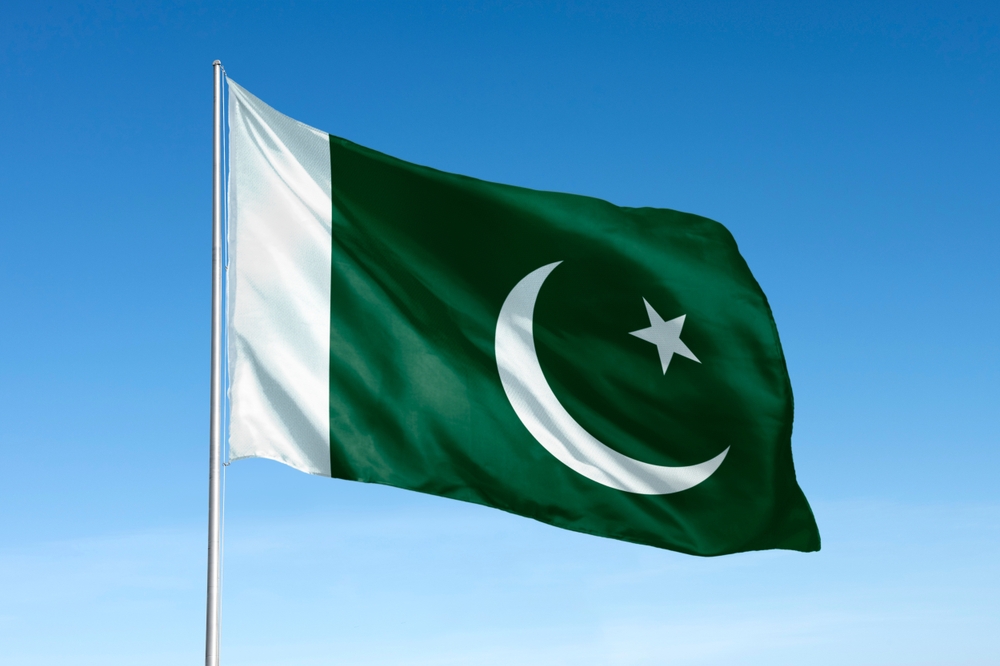
Pakistan has approved and operationalized new land routes to connect Central Asian markets to Pakistani ports and beyond, utilizing strategic corridors through Iran and China to bypass Afghanistan entirely. This shift was solidified in April 2026 when Pakistan Customs launched the first export consignment from the Karachi Export Processing Zone to Kyrgyzstan via the Sost Dry Port in China under the TIR (Transports Internationaux Routiers) regime. Pakistan’s decision to diversify transit away from Afghanistan follows the indefinite closure of the Torkham and Chaman border crossings in October 2025 due to unmanageable security risks and cross-border militancy. By activating the Pakistan-Iran Transit Corridor and the Sost-Kyrgyzstan-China Corridor, Islamabad is dismantling Afghanistan’s traditional transit monopoly. Amidst the ongoing Strait of Hormuz crisis, these land routes, coupled with the rising prominence of Gwadar Port, position Pakistan as a critical, multi-modal bridge between the landlocked Eurasian heartland and global warm-water ports. These new land routes circumvent both maritime chokepoints and regional instability and provide Central Asian nations with secure and diversified avenues for trade and logistics.
BACKGROUND:
For decades, Pakistan’s overland access to the Central Asian countries was almost exclusively dependent on the Chaman and Torkham gateways through Afghanistan. From Pakistan’s perspective, this geographical bottleneck granted Kabul significant leverage, which was frequently used as a political tool during bilateral friction. However, since the Taliban’s return to power in 2021, this lifeline for both Central Asian states and Pakistan has transformed into a strategic liability.
Central Asian leadership has grown increasingly frustrated with the instability of the Afghan route. For instance, recurrent border closures, unpredictable transit fees, and the persistent threat posed by militant groups have undermined the region’s trade ambitions. This collective annoyance reached a decisive moment in October 2025, when in response to persistent cross-border militant attacks from Afghanistan, Pakistan decided to completely shut down the Afghan-Pakistani trade routes connecting Central Asia.
Seeking to bypass traditional transit hurdles, Pakistan recently proposed new trade corridors for Central Asian countries. In April 2026, senior representatives from Uzbekistan, Kyrgyzstan, and Tajikistan gathered in Karachi for a coordination ceremony, where Pakistan offered a permanent alternative to the Afghan route for global connectivity.
The ceremony marked the official activation of the Iran-based land route, with the first convoy of refrigerated trucks carrying frozen meat and assorted exports destined for Tashkent and Bishkek. The development signaled a regional consensus whereby Central Asia is no longer willing to wait for Afghan stability and seem poised to work with Pakistan to operate these new routes. Early data reflects this momentum, with over 14,000 metric tons of cargo successfully processed across both corridors.
Simultaneously, Pakistan’s private sector has already demonstrated that it can work via the northern bypass that sits on China’s Sost border, with the Hemani Group successfully delivering a 23.9-tonne consignment to Kyrgyzstan, cleared electronically via the Pakistan Single Window (PSW) system. This 3,300-kilometer Bishkek-Karachi route under the Quadrilateral Traffic in Transit Agreement (QTTA) has now seen its first reciprocal commercial runs, with Kyrgyz transport fleets bringing minerals and textiles south. Crucially, the cargo proved the viability of two-way transit over high-altitude passes, shifting the framework from a unilateral export pipeline into a functional bilateral trade loop.
These strategic developments are taking place at a crucial time in the region’s geopolitics and are set to have far reaching implications.
IMPLICATIONS:
These new corridors have immense strategic significance for Central Asia, as they offer a permanent exit from the long-standing Afghan dilemma. For instance, by utilizing the Gabd-Rimdan from Iran and Sost that relies on China, landlocked nations such as Uzbekistan and Kyrgyzstan have secured a reliable Southern route to the Arabian Sea. Uzbekistan has been particularly active along the western axis, using the Gabd-Rimdan border terminal, which was recently upgraded by the National Logistics Corporation (NLC) with modern scanning facilities, to consistently move agricultural equipment and industrial raw materials.
The diversification provides these countries with a professionalized trade environment characterized by reduced transit costs, effectively bypassing the unpredictable informal taxes and security delays inherent in the Afghan route.
Furthermore, the distance from the Iranian border to Gwadar port offers a significantly shorter alternative to the traditional northern routes through Russia or the volatile western corridors, while maintaining stability through direct institutional oversight via the TIR regime and electronic tracking under the Pakistan Single Window (PSW) system. This structural predictability has provided Central Asian exporters with a reliable maritime gateway that avoids the costly and multi-border transit loops through eastern Europe.
In the wake of these developments, Pakistan’s Gwadar Port is set to transition from a conceptual hub into the functional heart of Central Asian trade. Within the framework of the China Pakistan Economic Corridor’s Phase 2, the integration of trade from Central Asian countries via Iran and China validates the massive infrastructure investments previously made in Baluchistan.
This development is particularly critical given the ongoing Strait of Hormuz crisis. Gwadar is situated 400 km east of the strait and serves as a virtual bypass of the conflict zone, allowing Central Asian exports to reach international waters without entering the high-risk zones of the Persian Gulf.
For Pakistan, this creates a substantial economic windfall as well. By positioning itself as the primary transit state for a massive market, the country is positioning itself to secure consistent revenue through port handling, logistics, and transit fees. In the wake of the Strait of Hormuz crisis, tariff at the Gwadar port has multiplied.
Ultimately, these shifts represent a permanent structural setback and the long-term erosion of Afghan leverage. For decades, Kabul relied on its geographic status as a bridge between South and Central Asia to extract economic concessions and maintain political relevance. However, by demonstrating that trade can flow efficiently through Iran and China, Pakistan and the Central Asian countries have rendered the Afghan routes entirely optional.
If the Taliban regime remains unable or unwilling to secure its borders and dismantle militant sanctuaries, it faces the grim prospect of total economic isolation as regional trade patterns permanently realign around a more stable and predictable maritime-linked architecture.
Moreover, the strategic expansion of these corridors comes at a pivotal moment in the shifting Eurasian geopolitical landscape.
As the Iran-U.S. war reshapes regional alignments and trade security, these new routes grant Pakistan and Central Asia much-needed strategic maneuverability. They serve as a vital hedge, insulating regional economies from the instability of maritime corridors and the growing risk of chokepoint weaponization.
Furthermore, this realignment signals the emergence of a Middle-Power bloc where regional players like Pakistan, Iran, and the Central Asian Republics are prioritizing economic connectivity over historical ideological or security frictions.
For Pakistan, this transition from a security state to a geo-economic hub is not just about transit fees; it also constitutes an attempt to embed its stability with the economic wellbeing of its neighbors.
By providing a new route for Eurasian goods, Pakistan is trying to ensure that regional powers now have a vested interest in the security of Pakistan and the success of Gwadar port where Central Asian states will now have significant stakes.
CONCLUSIONS:
The approval of these alternative corridors demonstrates an important elevation of Islamabad’s regional standing. By linking Gwadar to Iranian and Chinese land routes to better serve Central Asia, Pakistan is effectively seeking to decouple its economic future from the instability of traditional Afghan transit. This development offers a stable gateway for regional states and signals a shift away from reliance on uncooperative neighbors. As the idea of Eurasian trade flowing through this multi-dimensional network gains relevance, Pakistan is going to position its southern coast as the indispensable hub of a new and more resilient economic order.
AUTHOR’S BIO:
Umair Jamal is a Ph.D. candidate at the University of Otago, New Zealand, and an analyst at Diplomat Risk Intelligence (DRI). His research focuses on counterterrorism and security issues in Pakistan, Afghanistan, and the broader Asia region. He offers analytical consulting to various think tanks and institutional clients in Pakistan and around the world. He has published for several media outlets, including Al-Jazeera, Foreign Policy, SCMP, The Diplomat, and the Huffington Post.
By Jordan N. Troisi
Russia’s recent school enrollment restrictions and rigorous language testing for Central Asian migrant children underscore a fraying post-Soviet educational default. While Russia remains an inherited educational pathway, its relative dominance is being eroded by its own restrictive policies, new external destinations, and Central Asian states becoming destinations in their own right. Consequently, states and institutions seeking a role in the region’s education landscape can no longer rely on old geopolitical defaults or view Central Asia simply as an outbound market. To remain credible, they must build tangible, long-term pathways tailored to the practical push and pull factors shaping student mobility.

BACKGROUND:
As a legacy of its imperial and Soviet past, Russia has remained the default international education pathway for many Central Asian students since the dissolution of the Soviet Union, with language, credentials, professional networks, labor migration, and family mobility reinforcing one another. This is partly why Russian influence has endured; education sits inside a broader inherited system rather than apart from it. However, Russia itself is complicating its position as a welcoming destination. Its crackdown on Central Asian migrants, expanding since 2024, now bars children of immigrants from attending Russian schools unless they pass a difficult Russian-language exam and their parents prove legal registration. Early implementation results showed that only about 19 percent of migrant children applicants were even allowed to take the proficiency exam. Many families, reading the writing on the wall, are considering returning home. These pressures matter because educational mobility, particularly toward former colonial powers, often begins before university through questions of language, schooling, legal status, and future work opportunities.
At the same time, a recent New Lines Institute article argues that the U.S. has an opportunity to expand influence in Central Asia through higher education, framing international education in the region primarily as a contest between Washington and Beijing. This correctly identifies the strategic importance of educational diplomacy but misses the wider regional picture. Flattening Central Asia’s educational mobility into great power competition risks overlooking the perspectives of those making mobility decisions. Central Asian students are part of a global movement of nearly 7.3 million students studying abroad, and while geopolitics shape their available options, the push and pull factors influencing their decisions are inherently practical.
In short, educational mobility in Central Asia is becoming increasingly complex, not because one actor is being displaced by others, but because the old default is eroding under the pressure of overlapping factors and the availability of new options. Those who continue to read the region simply as an outbound market or primarily as an arena of great power competition risk misunderstanding this shift and missing opportunities for deeper ties with an increasingly consequential region.
IMPLICATIONS:
This shift has three major implications. First, recruitment alone is no longer enough. Central Asian students continue to seek educational opportunities abroad, but in an increasingly crowded market, access alone is a thinner basis for engagement. As students gain more options, destinations and programs that offer little beyond admission will be less compelling than those that connect education to recognized credentials, professional mobility, and credible post-graduation opportunities. The countries and institutions that understand this will be better positioned than those that treat student mobility as a matter of simply attracting students outward.
Second, states and institutions are increasingly building within the region, not only recruiting from it. This includes newer entrants, like the EU, which held the first Central Asia–European Union University Congress, in Samarkand in April 2026. The congress framed engagement not only around student exchange to Europe, but as an “important platform to advance academic cooperation,” with Uzbekistan touting more than 50 signed agreements and stronger partnerships with European universities.
It also includes China, which has moved furthest in this direction. Rather than simply trying to displace Russia by student volume, it is folding education into a larger regional presence and longer-term strategy. Education is being linked to technology, infrastructure, language, and vocational capacity, making China one of the most active emerging education actors in the region. Indicative of this shift, in April it opened additional Luban Workshops in Turkmenistan, including at the International University of Oil and Gas during a high-level visit by First Vice Premier Ding Xuexiang. This fits into a broader Chinese regional strategy that is picking up pace. At the June 2025 China-Central Asia Summit in Astana, President Xi said China was ready to expand cultural centers, university branches, and Luban Workshops across the region, while launching new Central Asian language programs in Chinese universities and continuing the China-Central Asia technology and skills improvement scheme. Under this model, education is more than soft power; it supports the development of infrastructure for long-term regional cooperation.
Third, Central Asia itself is becoming a destination, further complicating the old outbound model. Kazakhstan is leading the way, with the government seeking to host 150,000 international students by 2029. Recent news from Uzbekistan illustrates a shift in both directions. In 2025, Uzbekistan’s outbound education travel fell to 28,954 students amid rapid domestic educational growth. Russia, narrowly ahead of Tajikistan, remaining the top international destination. At the same time, the growing presence of Uzbek students in South Korea shows that mobility is spreading across a wider map. Meanwhile, Uzbekistan reported that incoming international students rose over 54 percent, mainly from India, Turkmenistan, and Tajikistan, with smaller increases from Pakistan and China. This expansion occurs alongside deeper institutional engagement, with the number of foreign universities in Uzbekistan increasing to 30 in late 2025. Kyrgyzstan has seen similar results. Among its 49,553 international students by the start of the 2024 academic year, Uzbekistan was the largest sender, followed by India and Pakistan, reported IOM.
Together, these cases trace a shift away from treating Central Asia primarily as a recruitment market, toward a more complicated mobility landscape. Today’s education pathways shape tomorrow’s economic opportunities, which is why the stakes extend beyond student numbers. International educational engagement increasingly depends less on abstract soft-power appeals than on the ability to build credible, usable, and durable pathways. As Central Asian students and families gain more options, they are becoming more discerning decision-makers. Institutions and countries interested in engaging with the region should take note.
CONCLUSIONS:
Russia’s restrictions on Central Asian migrant children are not just a matter of domestic education policy. They are a signal that the old post-Soviet educational default is fraying. Central Asia’s student mobility is not shifting from Russia to another concentrated center, but becoming increasingly pluralistic, shaped by new destinations, regional alternatives, and family calculations about long-term opportunities. The strategic significance is not that students are choosing geopolitical sides; it is that educational engagement now depends less on recruitment alone and more on whether states and institutions can build credible pathways in an increasingly pluralistic landscape.
States and institutions that recognize this shift early will be better positioned to build durable educational ties, while those still relying on dated frames of Central Asia as a recruitment market or secondary arena of great power competition risk falling behind in a region already on the move.
AUTHOR’S BIO:
Jordan N. Troisi is a doctoral researcher in Global Studies in Education at the University of Illinois Urbana-Champaign and former Country Director for American Councils for International Education in Azerbaijan. Based in Tashkent, his research examines how geopolitics shapes student mobility and transnational education. The views expressed in this article are the author’s own and do not represent any institution or organization.
By Suren Sargsyan
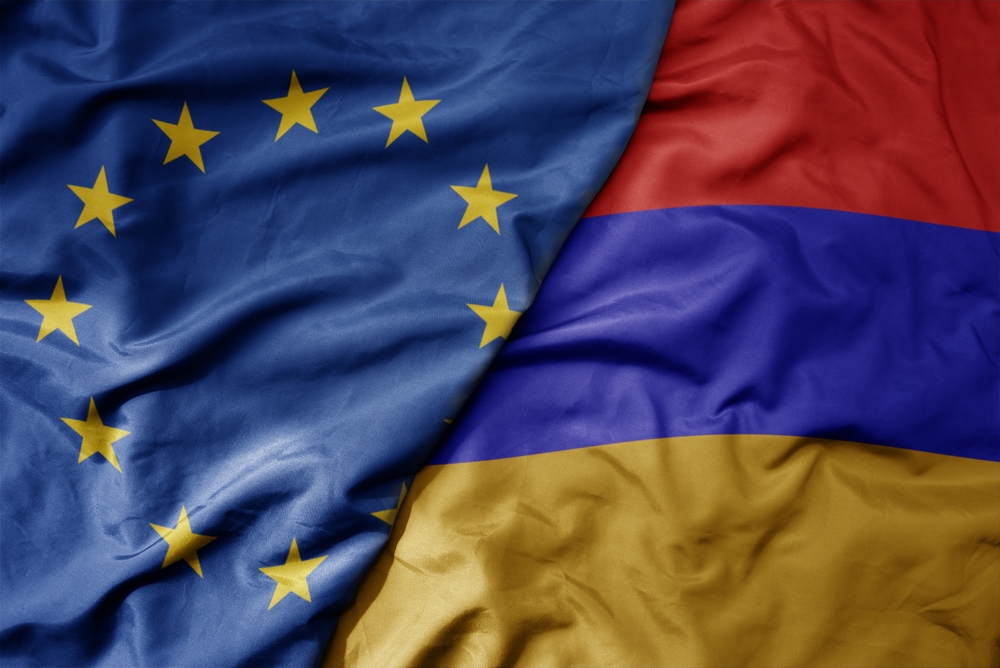
On May 4-5, Yerevan hosted two significant events: the 8th Summit of the European Political Community (EPC) and the first Armenia–EU Summit. The gatherings brought together leaders from EU member states as well as representatives from Canada, the UK, and NATO. The Armenia–EU Summit concluded with a joint declaration and several cooperation agreements, prompting renewed debate over whether Armenia intends to pursue eventual membership in the EU. The question is particularly relevant given Prime Minister Nikol Pashinyan’s ambiguous statements regarding Armenia’s strategic orientation. While the government has expanded cooperation with the EU across numerous sectors, it has simultaneously emphasized that Armenia does not intend to withdraw from the Eurasian Economic Union (EAEU). Consequently, it remains unclear whether Yerevan seeks eventual EU membership or merely aims to deepen relations with the EU while avoiding a confrontation with Russia.
BACKGROUND:
Since Armenia’s 2018 “Velvet Revolution,” political observers, media outlets, and analysts have frequently argued that the country is gradually reorienting itself toward Europe. Many interpreted the rise of a reform-oriented government as a signal that Armenia would seek deeper integration with the EU and possibly pursue membership in the future. Such assessments often portrayed Armenia as distancing itself from Russia and adopting a more Western-oriented foreign policy.
In practice, however, Armenia has not taken concrete steps toward EU accession during the years following the revolution. Instead, the government has continued a long-standing policy of strengthening ties with the EU while maintaining relations with Russia. This approach is consistent with the policies pursued by previous Armenian administrations, which also sought to diversify the country’s external partnerships.
Armenia’s engagement with the EU predates the current government. Key milestones include the signing of the Partnership and Cooperation Agreement in 1996, participation in the European Neighborhood Policy from 2004, involvement in the Eastern Partnership launched in 2009, and the signing of the Comprehensive and Enhanced Partnership Agreement (CEPA) in 2017. These initiatives demonstrate that successive Armenian governments have viewed closer cooperation with Europe as beneficial for political, economic, and institutional development.
At the same time, none of Armenia’s previous administrations formally declared EU membership as a strategic objective. The current government has likewise avoided making such a commitment. Instead, Armenian officials typically provide cautious and often ambiguous responses when asked about accession prospects. This ambiguity allows multiple interpretations and sustains public debate without requiring a definitive policy choice. Public opinion nevertheless remains broadly supportive of the prospect of EU membership in general, and visa liberalization in particular. According to surveys conducted by the International Republican Institute, 51 percent of Armenians would support EU membership if a referendum were held, while 32 percent would vote against. Such attitudes make the topic politically attractive, particularly during election periods. By avoiding a clear rejection of membership aspirations, the government can appeal simultaneously to pro-European constituencies and to voters who favor maintaining strong relations with Russia.
IMPLICATIONS:
The EPC Summit in Yerevan was significant not only because of its scale and high-level participation but also because it was held in a non-EU member state. If Armenia genuinely intended to pursue EU accession, this gathering would have provided an ideal opportunity to announce such ambitions and seek political support from European leaders. Virtually all relevant decision-makers were present, creating a favorable diplomatic environment for such a declaration. No such announcement was made, suggesting that EU membership is not currently a priority within Armenia’s foreign policy agenda. The absence of such a step indicates that Yerevan remains focused on deepening cooperation with the EU rather than initiating a formal accession process. This situation reveals a degree of tension between public sentiment and official policy. While support for European integration appears relatively strong among the Armenian population, the government has avoided translating these preferences into a concrete strategic objective. The primary reason appears to be geopolitical rather than domestic. The decision to pursue EU membership depends not only on Armenia’s political will but also on the willingness of the EU to accept new members. Enlargement remains a complex issue involving economic, political, institutional, and security considerations. Brussels evaluates candidate countries according to extensive criteria, including governance standards, economic performance, social development, and regional stability. Consequently, accession is a lengthy and demanding process even under favorable circumstances.
In Armenia’s case, additional geopolitical factors further complicate the issue. EU member states would inevitably consider Russia’s position when evaluating any Armenian application. Armenia remains a member of the EAEU and maintains extensive security ties with Russia. It also hosts Russia’s only military base in the South Caucasus. Given these realities, many European governments would be reluctant to support a process that could significantly increase tensions with Moscow.
Moreover, EU enlargement requires unanimous approval by all member states. Even countries with stronger institutional links to Europe have faced lengthy and uncertain accession processes. As a result, Armenian membership, even if formally pursued, would likely require many years or even decades to achieve. It would also necessitate extensive economic, political, and legal reforms that could generate significant domestic costs.
Comparisons with Georgia and Ukraine are often made in discussions of Armenia’s European aspirations. These cases provide useful reference points because both countries have actively pursued closer integration with the EU while facing strong Russian opposition. However, Armenia’s geopolitical circumstances differ in important ways.
Unlike Georgia and Ukraine, Armenia does not share a border with Russia. This reduces certain direct security risks associated with Russian pressure. At the same time, Armenia lacks a direct land or maritime connection to any EU member state. This geographical reality limits economic integration and creates logistical challenges.
Furthermore, the EU itself remains divided on the question of further enlargement. While some member states support enlargement, others remain cautious due to concerns about institutional capacity, financial costs, migration, and security implications. The prolonged and uncertain experiences of countries such as Ukraine and Georgia illustrate that membership aspirations do not necessarily translate into rapid progress.
Economic considerations also constrain Armenia’s options. Despite efforts to diversify its international partnerships, Russia remains Armenia’s principal economic partner. Russia accounts for a substantial share of Armenian exports, imports, investment flows, and labor migration. Any move toward EU accession would therefore have significant economic implications and could provoke responses from Moscow that Armenia would need to manage carefully.
Regional dynamics further complicate the issue. Armenia must also consider the interests of neighboring Iran. Although EU membership does not automatically imply NATO membership, Tehran could interpret such a move as part of a broader Western geopolitical alignment. Given the importance of Armenian-Iranian relations, Yerevan is unlikely to disregard Iranian concerns.
The position of the U.S. adds another layer of complexity. Although Washington generally supports European stability and cooperation, U.S. engagement in the South Caucasus has focused primarily on regional stability, economic connectivity, and broader geopolitical initiatives while Armenia’s potential EU accession hardly factor into U.S. strategic priorities.
Among these constraints, Russia’s influence remains the most significant. Armenia’s security dependence, economic integration, and geographic realities create structural limitations that make a rapid strategic shift toward EU membership highly unlikely.
These factors also raise a broader question: if neither Armenia nor the EU is seriously pursuing accession, what was the primary purpose of the summit? Plausibly, the event was intended primarily as a demonstration of political support for Prime Minister Pashinyan and his government ahead of the June 7 parliamentary elections. Hosting such a high-profile international gathering enhanced Armenia’s diplomatic visibility while reinforcing the government’s image as a credible partner for Europe.
CONCLUSIONS:
There is currently little to suggest that Armenia regards full EU membership as an immediate or realistic foreign policy objective. Although the government continues to expand cooperation with European institutions, it has avoided taking the political steps necessary to initiate a formal accession process. The absence of any membership declaration during the Armenia–EU Summit reinforces this assessment. At the same time, none of the principal external actors have strong incentives to support or concede to Armenian accession. Russia remains firmly opposed to such a development, while the EU lacks a clear consensus on further enlargement. Iran would likely view the prospect with concern, and the U.S. interest in the issue is limited.
Discussions about EU membership in Armenia often serve domestic political purposes rather than reflecting an actionable policy agenda. The issue remains attractive to many voters and therefore continues to feature prominently in political discourse. Nevertheless, Armenia’s current strategy appears to focus on maximizing cooperation with the EU while preserving functional relations with Russia and other regional actors.
Accordingly, Armenia’s objective is best understood not as the pursuit of full EU membership but as the maintenance of deep political, economic, and institutional ties with the EU without fundamentally challenging the existing regional balance of power.
AUTHOR’S BIO:
Suren Sargsyan is a PhD candidate Political Science. He holds LLM degrees from Yerevan State University, the American University of Armenia, and Tufts University Fletcher School of Law and Diplomacy. He is the director of the Armenian Center for American Studies.
By Sudha Ramachandran
Since the U.S. and Israel launched their war on Iran on February 28 and especially after the U.S. blockade of the Strait of Hormuz, the Central Asian Republics’ (CARs) trade via Iranian ports has been thrown into jeopardy. However, Pakistan and Iran have operationalized six roads linking the three major Pakistani ports of Gwadar, Karachi and Port Qasim with two Iranian border crossings at Gabd and Taftan. Will the new roads provide the CARs’ trade via the southern route with a lifeline?
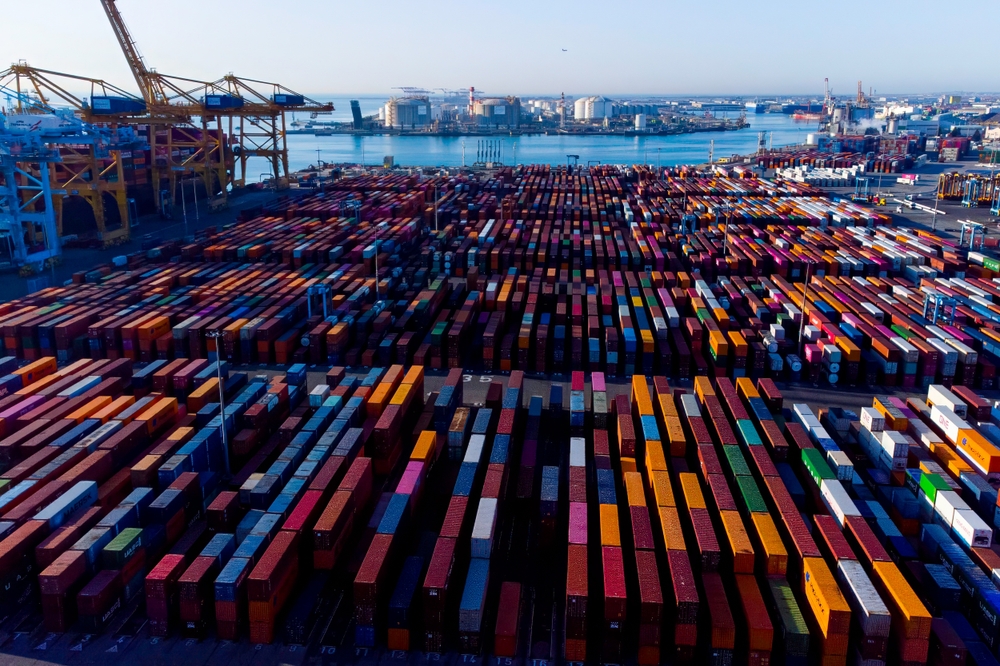
Photo by Davide Bonaldo, 2025
BACKGROUND:
On April 25, Pakistan’s Ministry of Commerce issued the “Transit of Goods through Territory of Pakistan Order 2026.” The order, which allows goods from third countries to pass through Pakistan before entering Iran, provides new routes connecting the three major Pakistani ports at Gwadar, Karachi and Port Qasim with two Iranian border crossings at Gabd and Taftan. The order took immediate effect and trucks have begun carrying cargo from the Pakistani ports, passing through the towns of Turbat, Panjgur, Khuzdar, Quetta and Dalbandin in Balochistan province, before entering Iran. Iran and Pakistan had, in 2008, agreed on this road transport connectivity framework. However, it was not until Iranian Foreign Minister Abbas Araghchi’s visit to Islamabad on April 24-26, when he met with Pakistan Prime Minister Shehbaz Sharif and Pakistan Army chief General Asim Munir, that the decision to implement the order with immediate effect was taken.
Recent developments in the region prompted Pakistan and Iran to operationalize the agreement. On February 28, the U.S. and Israel launched air and missile strikes on Iran, which in turn led to the Strait of Hormuz crisis. The U.S. blockade of the Strait of Hormuz has dealt a severe blow to trade via this vital waterway, prompting the Iran-Pakistan decision on the six land corridors. Ships laden with cargo and headed for Iran and beyond, which would have otherwise docked at the Iranian ports of Chabahar and Bandar Abbas, are now marking time at Pakistan’s ports, which lie outside the Strait of Hormuz. Over 3,000 containers headed for Iran had reportedly piled up at Karachi port in April, adding to the problems of this already congested port. Meanwhile, Gwadar saw an unprecedented surge in activity in recent months. Throughout 2025, Gwadar port processed just around 8,300 standard shipping containers. Over just a few weeks in April this year, the port handled 11,000 containers. With the operationalization of the April 25 order, cargo headed for Iran’s Chabahar and Bandar Abbas ports, which have been lying at Pakistani ports because of the Hormuz blockade, is now being offloaded and packed into trucks heading to the Iranian border crossings at Gabd and Taftan. The fast-moving developments in the region have implications not just for the Iran-Pakistan relationship but, importantly, for how the CARs will access the sea.
IMPLICATIONS:
The six road routes linking Pakistani ports with the Iranian border will provide a shot in the arm to business at these ports, especially at Gwadar, which has been functioning below par. It will also unclog the already congested Karachi port. Importantly, it will boost Iran-Pakistan cooperation. The two neighbors share a volatile border of 909 kilometers, and have on occasion engaged in military hostilities, as in January 2024. However, economic cooperation, especially border trade, is vital not only for border communities and livelihoods but for their larger economies as well. Bilateral economic cooperation can now be expected to deepen and expand via the six new road routes. Iranian trade, which has taken a severe beating since the U.S.-Israel war and the U.S. blockade of Hormuz, will now receive a fresh lease of life. It will increase Iranian dependence on Pakistan, making the latter the dominant partner in the bilateral relationship.
As for Central Asia, the Iran war and consequent developments, while concerning, have opened new trade opportunities. Although the CARs are not dependent on West Asian oil and gas, as they are producers themselves, their trade routes to seaports have been hit hard.
Being landlocked, the CARs have for decades focused their foreign policy on finding and developing routes to access seaports. They have developed several options, including the eastern route through China, the western route through Russia, the route to the Caspian Sea, and the southern route to Iranian and Pakistani ports. Given their wariness of dependence on both China and Russia, the CARs have generally preferred the southern route. Between Pakistani and Iranian ports, they have usually favored the latter as the Iranian ports provide Central Asian cargo with relatively predictable transit regimes, better rail and road connectivity, and clear commercial terms for exporters. In contrast, the CARs’ trade via Pakistani ports had to pass not only through unstable Afghanistan and militancy-vulnerable stretches in Pakistan, but also face poor connectivity infrastructure, unstable trade regimes and poorly managed ports in Pakistan. Pakistan’s deteriorating relations with Taliban-ruled Afghanistan over the past two years and especially since February 2026, when Pakistan launched military strikes on the country, dealt a further blow to the utility of trade routes through Afghanistan and Pakistan. Realizing these challenges, the rest of Central Asia has been looking to bypass Afghanistan. Kyrgyzstan, for example, is exploring the Karakoram route via China to avoid Afghanistan and reach Pakistani ports. Other Central Asian states are said to be keen to use this route as well.
The opening of six trade routes between Pakistani ports and the Iran border crossings has thrown new factors into the CARs’ calculations on sea trade, opening new options and lifelines. Instead of traversing the insecure and uncertain terrain of Pakistan and Afghanistan, their cargo, offloaded in Pakistani ports, can head to the Iranian border crossings, where they can then use the better road and rail connectivity in Iran to enter Central Asia.
Of course, the opportunity that the new road routes have opened up for the CARs depends on whether Pakistan can quickly improve operations at its three major ports and ensure security along the roads for trucks carrying cargo to the Iranian border. The success of the six new road routes in drawing CARs trade and cargo will also depend on the condition of Iran’s roads and rail network. How badly damaged the Iranian overland infrastructure is by U.S. and Israeli strikes, and whether the CARs will be convinced of the security of the Iran route in the coming months will determine the success of the new connectivity option.
CONCLUSIONS:
The opening of six new road routes linking Pakistani ports of Gwadar, Karachi and Port Qasim with two Iranian border crossings is indeed a good plan. It could be a game changer not only for Gwadar port, which has been languishing for long without business, but also provide a lifeline to the damaged Iranian economy and Pakistan-Iran cooperation. Importantly, it will enable truckers from the rest of Central Asia to avoid Afghanistan while reaching Pakistani ports. However, the new route will attract Central Asian cargo only if Pakistan improves port management and security for trucks ferrying cargo along the new road routes.
AUTHOR’S BIO:
Dr Sudha Ramachandran is an independent South Asian political and security analyst. She is also South Asia editor at The Diplomat. Her articles have appeared in publications like The Diplomat, Asia Times, China Brief and Terrorism Monitor.
Feature Articles
|
Earlier Articles
|




The Central Asia-Caucasus Analyst is a biweekly publication of the Central Asia-Caucasus Institute & Silk Road Studies Program, a Joint Transatlantic Research and Policy Center affiliated with the American Foreign Policy Council, Washington DC., and the Institute for Security and Development Policy, Stockholm. For 15 years, the Analyst has brought cutting edge analysis of the region geared toward a practitioner audience.
Sign up for upcoming events, latest news, and articles from the CACI Analyst.