Explaining the Kyrgyz-Tajik Border Clash: Hypotheses in Search of Corroboration
By Richard Weitz
July 14, 2021, the CACI Analyst
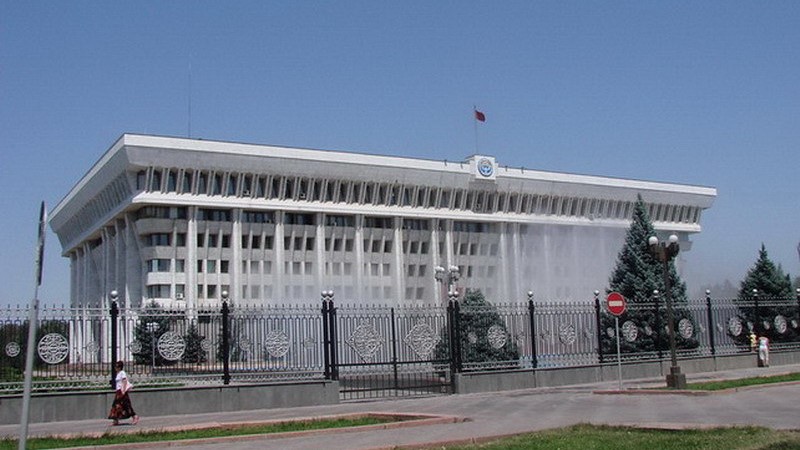
A century ago, the Italian author Luigi Pirandello wrote a three-act play entitled “Six Characters in Search of an Author,” which explored the difficulty of differentiating between illusion and reality. The analyst of the recent border clash between Kyrgyzstan and Tajikistan faces the same challenge. The event, which saw the most serious fighting between independent Central Asian republics, offers several plausible explanations with divergent policy implications.
Azerbaijan-Russia Relations Warm Up
By Natalia Konarzewska
February 3, 2020, the CACI Analyst
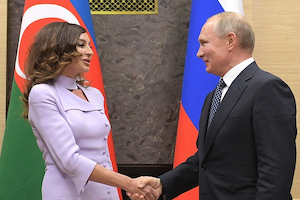
The end of 2019 saw increasing diplomatic activity between Azerbaijan and Russia, at a time when Russia wants to strengthen its profile in Azerbaijan and bring the country closer to Moscow-promoted multilateral initiatives. This is partly due to Azerbaijan’s increasing geopolitical importance to the West and China, being a key participant in the Southern Gas Corridor and a prospectively important one in the Belt and Road initiative (BRI). Russia also wants Azerbaijan to counterbalance its traditional South Caucasus ally Armenia, whereas Azerbaijan expects Russia’s assistance in resolving the Nagorno-Karabakh conflict, which is nevertheless unlikely to materialize.
What Would Membership in the CSTO Mean for Azerbaijan and the South Caucasus?
By Fuad Shahbazov
October 18, 2018, the CACI Analyst
On August 16, the Azerbaijani MP and head of the Azerbaijan-Russia interparliamentary group Ali Huseynli told local media that “It would be advisable to consider Azerbaijan’s participation in the Collective Security Treaty Organization” (CSTO). The sensational statement triggered a public discussion on Azerbaijan’s possible membership in the Russia-led CSTO and its consequences for the region. While some state officials described this prospect as a logical extension of Baku’s cooperation with Moscow, others strictly opposed the idea, stating that it would pose dangerous challenges to the country.
Russia Rehearses Military Intervention in Central Asia and the Caucasus
By Roger N. McDermott
November 17, 2017, the CACI Analyst
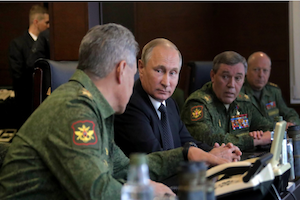
While much international attention has focused upon Russia’s joint strategic exercise with Belarus, Zapad 2017 in September, in its aftermath Moscow also staged important operational-strategic exercises on a wider scale across the South Caucasus and Central Asia. Not only was the geographical scope of these exercises greater than Zapad 2017, but their various vignettes and scenario details provide glimpses into Moscow’s planning and modelling of future conflict on its periphery.
Armenia Seeks to Enhance Cooperation with the West

By Natalia Konarzewska
June 22, 2017, the CACI Analyst
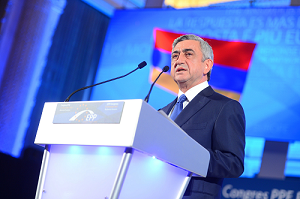
Armenia has recently sought to reinvigorate its relationship with NATO and the European Union, despite its membership in Russia-led Eurasian Economic Union (EEU) and Collective Security Treaty Organization (CSTO). In late March, Armenia initialed a new Comprehensive and Enhanced Partnership Agreement with the EU, intended to upgrade bilateral political and economic ties. Moreover, during his recent visit to NATO’s headquarters in Brussels, President Serzh Sargsyan reaffirmed Armenia’s intent to continue top level political dialogue with NATO and the country’s willingness to enhance the scope of joint activities. The push to rekindle relations with NATO and the EU amidst one of the most serious standoffs between Russia and the West suggests that Armenia, which is one of Moscow’s most loyal allies, is reassessing its ties with Russia and Russia-led international blocks.
Visit also