By Vali Kaleji
While the Armenian government appears to seek a short-term balance between the U.S. and Russia in the railway sector, its long-term objective is to end Russia’s monopoly and extensive influence over this critical infrastructure in Armenia. The realization of this objective, as well as reforms in the electricity and gas sectors, largely depends on the outcome of the decisive parliamentary elections on June 7, 2026. These elections will determine whether Armenia returns to its pre-2018 foreign policy orientation or continues its recent trajectory toward closer alignment with the West.
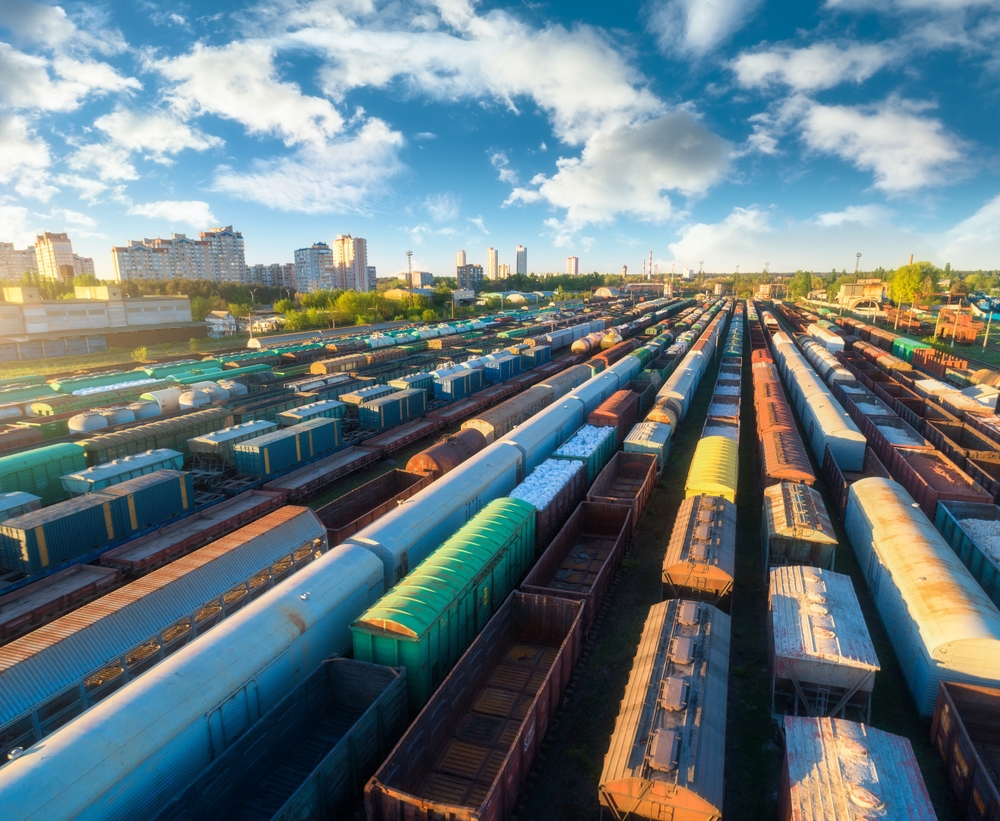
Photo by Denis Belitsky, 2023
BACKGROUND:
On 13 February 2008, Armenia signed an agreement transferring full control of the state-owned Armenian Railways to South Caucasus Railway (Yuzhno-Kavkazskaya zheleznaya doroga, YuKZhD), a wholly owned subsidiary of Russian Railways (RZhD). Subject to mutual agreement, the contract may be extended until 2048. The agreement followed a concession model, transferring operational, managerial, and investment responsibilities to the Russian side. Although ownership of the railway infrastructure formally remained with the Armenian government, operational control, investment decisions, tariff policy, and network development were effectively placed under Russian authority, constituting influence without formal ownership.
The 2008 railway agreement was effectively a continuation, and one of the consequences, of the 2002–2003 “debt-for-assets” agreement between Armenia and Russia, which settled Armenia’s US$ 96 million debt to Russia. The 30-year concession agreement is widely regarded as a major turning point in the development of Russia’s structural influence over Armenia’s economy and infrastructure in the post-Soviet period. Under the debt-for-assets arrangement, ownership or management of six major industrial and economic assets in Armenia, including electricity, gas, electronics, and defense-related sectors, was transferred to Russia, facilitating Russian dominance and influence in other sectors, including railways and telecommunications.
To reduce this monopoly and dependency, the Armenian government signed an agreement with Iran in 2009, one year after the 30-year concession agreement, to construct the “Marand–Norooz–Meghri–Yerevan” railway. Russia opposedthe project, and despite considerable efforts by Armenia, the railway was never realized, leaving Russia’s monopoly over Armenia’s railway network intact.
Plans to revive Soviet-era railway routes in the southern South Caucasus failed to materialize in the transformed regional environment following the Second Nagorno-Karabakh War in 2020. However, the peace agreement signed by Ilham Aliyev and Nikol Pashinyan at the White House on August 8, 2025, marked a new phase in the construction and integration of road and railway routes in southern Armenia. Nevertheless, despite the completion of approximately 80 percent of the 110-kilometer Horadiz–Aghband railway line in southwestern Azerbaijan (around 140 kilometers including auxiliary routes), and Turkey’s initiation of a new 224-kilometer railway line from Kars to the Nakhichevan border, scheduled for completion before 2030, the rehabilitation and construction of the railway line in southern Armenia has yet to begin.
In these circumstances, during a press briefing on February 13, Armenian Prime Minister Nikol Pashinyan stated that a country maintaining “friendly relations” with both Russia and Armenia could “purchase the concession management rights” of Armenia’s railways, which are currently under Russian management. He presented this as a potential solution to Armenia’s loss of “competitive advantage” by having international routes pass through the country. When asked which states could assume such a role, Pashinyan mentioned Kazakhstan, the UAE, and Qatar, while noting that the list was not exhaustive.
IMPLICATIONS:
Pashinyan’s recent statements may represent the latest step by the Armenian government to reduce the country’s dependence on Russia in the infrastructure sector. Following the collapse of the Soviet Union, Russian control and influence over Armenia’s railway network and railway management became particularly significant due to Armenia’s status as a landlocked country. After the First Nagorno-Karabakh War, Armenia’s railway routes with Azerbaijan (the eastern route) and Turkey (the western route) were closed. The disruption of railway connections between Armenia and Azerbaijan also severed Armenia’s rail link with Iran via the Julfa–Nakhichevan route. Consequently, over the past three decades, Armenia’s only active railway connection has been the northern route, a Soviet-era railway line running through Georgia to Russia and the Black Sea. Notably, despite the breakdown of diplomatic relations between Russia and Georgia following the August 2008 war, this railway corridor, like the road route, has remained open and operational.
The absence of Armenia’s railway connectivity in three directions, eastward towards Azerbaijan, southward towards Iran, and westward towards Nakhichevan and Turkey, and the country’s dependence on the northern route through Georgia to Russia significantly strengthened the monopoly position and influence of the Russian-controlled South Caucasus Railway company. The Armenian government’s new approach therefore represents a step toward reducing Russia’s monopoly and influence over Armenia’s railway infrastructure, while also diversifying the country’s rail connections.
However, the most noteworthy aspect is Russia’s continued presence in these developments. Although Russia was excluded from the agreements reached during the Washington summit, it nevertheless expressed readiness to discuss possible participation in the Trump Route with Armenia. Mikhail Kalugin, Director of the Fourth CIS Department at the Russian Foreign Ministry, argued that “there are ample grounds” for such involvement. Among other points, Kalugin referred to South Caucasus Railway, which “holds a concession to manage Armenia’s railway network.”
On the other hand, Armenian Prime Minister Nikol Pashinyan revealed that he had asked Russia to “urgently address” the full restoration of railway sections adjacent to the Azerbaijani exclave of Nakhichevan and the Turkish border. The issue concerns three key railway sections: Yeraskh–Nakhichevan, Gyumri–Kars, and Ijevan–Gazakh. Pashinyan stated that he had raised the matter with Russia more than a month earlier.
However, the Armenian government appears to support Russian participation and investment only in railway sections located outside the so-called “Trump Route.” Addressing possible Russian involvement in the project, Nikol Pashinyan stated that the route is a bilateral initiative with the U.S., adding that “any third-party involvement can be discussed only bilaterally.” Pashinyan also responded to the South Caucasus Railway’s expressed readiness to transfer only the Meghri railway section, through which the Trump Route is expected to pass, from its administration to Armenia, arguing that the statement reflected a “misunderstanding.” “The [Meghri railway] section is not under Russian management for it to be handed over to Armenia. It is Armenia’s sovereign territory, and we have not delegated the management of that sovereign territory to anyone. There is no railway there to be managed by anyone,” Pashinyan stated.
In fact, as Russian Deputy Prime Minister Alexey Overchuk stated, the Russian Federation has decided to begin substantive negotiations on the restoration of two sections of Armenia’s railway network that would reconnect Armenian railways with the railway network of the Republic of Azerbaijan near the town of Yeraskh and with the railway network of the Republic of Turkey near the settlement of Akhuryan. The total length of the sections to be restored has been announced as 1.6 kilometers and 12.4 kilometers, respectively. All of these sections exclude southern Armenia, through which the Trump Route is expected to pass. Nevertheless, the reopening of these railway sections forms part of the Pashinyan government’s Crossroads of Peace project.
CONCLUSIONS:
Armenia’s exit from political and military dependence on Russia is unlikely without ending Russia’s monopoly over the country’s economic infrastructure. The Armenian government took an initial step in this direction by nationalizing the country’s electricity grid, and on July 9, 2025, Armenian President Vahagn Khachaturyan signed a law permitting the nationalization of the national electricity distribution company. However, this decision became politically contentious following the arrest of opposition leader Samvel Karapetyan, who had acquired full ownership of the Armenian Power Grid Company and the Hrazdan Thermal Power Plant in 2017.
Armenia’s dependence on Russian-controlled economic infrastructure extends beyond railways and electricity. The exclusive supplier of natural gas in Armenia’s domestic market is Gazprom Armenia, a Russian-Armenian company established in December 1997, whose shares are wholly owned by Russia’s Gazprom. Consequently, Armenia’s efforts to end Russia’s monopoly and influence over its economic infrastructure face significant obstacles. The realization of this objective will largely depend on the outcome of the crucial parliamentary elections on June 7, 2026, which will determine whether Armenia returns to its pre-2018 foreign policy orientation or continues its recent trajectory toward closer alignment with the West.
AUTHOR’S BIO:
Vali Kaleji, based in Tehran, Iran, holds a Ph.D. in Regional Studies, Central Asian and Caucasian Studies. He has published numerous analytical articles on Eurasian issues for the Eurasia Daily Monitor, the Central Asia-Caucasus Analyst, The Middle East Institute and the Valdai Club. He can be reached at This email address is being protected from spambots. You need JavaScript enabled to view it. .