New Pakistan-Iran Road Routes and Central Asian Trade
By Sudha Ramachandran
Since the U.S. and Israel launched their war on Iran on February 28 and especially after the U.S. blockade of the Strait of Hormuz, the Central Asian Republics’ (CARs) trade via Iranian ports has been thrown into jeopardy. However, Pakistan and Iran have operationalized six roads linking the three major Pakistani ports of Gwadar, Karachi and Port Qasim with two Iranian border crossings at Gabd and Taftan. Will the new roads provide the CARs’ trade via the southern route with a lifeline?
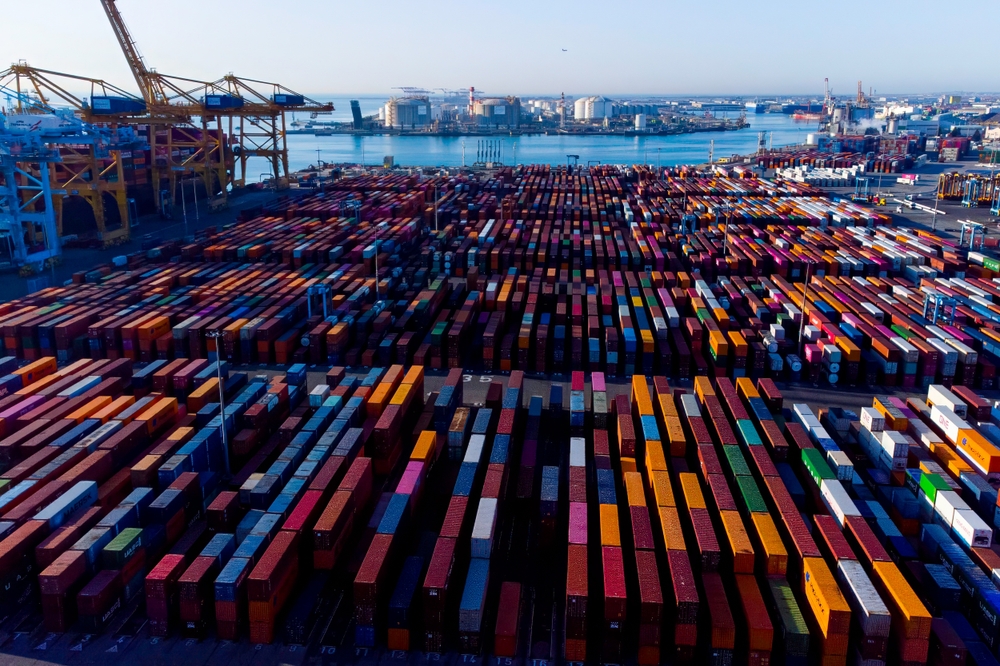
Photo by Davide Bonaldo, 2025
BACKGROUND:
On April 25, Pakistan’s Ministry of Commerce issued the “Transit of Goods through Territory of Pakistan Order 2026.” The order, which allows goods from third countries to pass through Pakistan before entering Iran, provides new routes connecting the three major Pakistani ports at Gwadar, Karachi and Port Qasim with two Iranian border crossings at Gabd and Taftan. The order took immediate effect and trucks have begun carrying cargo from the Pakistani ports, passing through the towns of Turbat, Panjgur, Khuzdar, Quetta and Dalbandin in Balochistan province, before entering Iran. Iran and Pakistan had, in 2008, agreed on this road transport connectivity framework. However, it was not until Iranian Foreign Minister Abbas Araghchi’s visit to Islamabad on April 24-26, when he met with Pakistan Prime Minister Shehbaz Sharif and Pakistan Army chief General Asim Munir, that the decision to implement the order with immediate effect was taken.
Recent developments in the region prompted Pakistan and Iran to operationalize the agreement. On February 28, the U.S. and Israel launched air and missile strikes on Iran, which in turn led to the Strait of Hormuz crisis. The U.S. blockade of the Strait of Hormuz has dealt a severe blow to trade via this vital waterway, prompting the Iran-Pakistan decision on the six land corridors. Ships laden with cargo and headed for Iran and beyond, which would have otherwise docked at the Iranian ports of Chabahar and Bandar Abbas, are now marking time at Pakistan’s ports, which lie outside the Strait of Hormuz. Over 3,000 containers headed for Iran had reportedly piled up at Karachi port in April, adding to the problems of this already congested port. Meanwhile, Gwadar saw an unprecedented surge in activity in recent months. Throughout 2025, Gwadar port processed just around 8,300 standard shipping containers. Over just a few weeks in April this year, the port handled 11,000 containers. With the operationalization of the April 25 order, cargo headed for Iran’s Chabahar and Bandar Abbas ports, which have been lying at Pakistani ports because of the Hormuz blockade, is now being offloaded and packed into trucks heading to the Iranian border crossings at Gabd and Taftan. The fast-moving developments in the region have implications not just for the Iran-Pakistan relationship but, importantly, for how the CARs will access the sea.
IMPLICATIONS:
The six road routes linking Pakistani ports with the Iranian border will provide a shot in the arm to business at these ports, especially at Gwadar, which has been functioning below par. It will also unclog the already congested Karachi port. Importantly, it will boost Iran-Pakistan cooperation. The two neighbors share a volatile border of 909 kilometers, and have on occasion engaged in military hostilities, as in January 2024. However, economic cooperation, especially border trade, is vital not only for border communities and livelihoods but for their larger economies as well. Bilateral economic cooperation can now be expected to deepen and expand via the six new road routes. Iranian trade, which has taken a severe beating since the U.S.-Israel war and the U.S. blockade of Hormuz, will now receive a fresh lease of life. It will increase Iranian dependence on Pakistan, making the latter the dominant partner in the bilateral relationship.
As for Central Asia, the Iran war and consequent developments, while concerning, have opened new trade opportunities. Although the CARs are not dependent on West Asian oil and gas, as they are producers themselves, their trade routes to seaports have been hit hard.
Being landlocked, the CARs have for decades focused their foreign policy on finding and developing routes to access seaports. They have developed several options, including the eastern route through China, the western route through Russia, the route to the Caspian Sea, and the southern route to Iranian and Pakistani ports. Given their wariness of dependence on both China and Russia, the CARs have generally preferred the southern route. Between Pakistani and Iranian ports, they have usually favored the latter as the Iranian ports provide Central Asian cargo with relatively predictable transit regimes, better rail and road connectivity, and clear commercial terms for exporters. In contrast, the CARs’ trade via Pakistani ports had to pass not only through unstable Afghanistan and militancy-vulnerable stretches in Pakistan, but also face poor connectivity infrastructure, unstable trade regimes and poorly managed ports in Pakistan. Pakistan’s deteriorating relations with Taliban-ruled Afghanistan over the past two years and especially since February 2026, when Pakistan launched military strikes on the country, dealt a further blow to the utility of trade routes through Afghanistan and Pakistan. Realizing these challenges, the rest of Central Asia has been looking to bypass Afghanistan. Kyrgyzstan, for example, is exploring the Karakoram route via China to avoid Afghanistan and reach Pakistani ports. Other Central Asian states are said to be keen to use this route as well.
The opening of six trade routes between Pakistani ports and the Iran border crossings has thrown new factors into the CARs’ calculations on sea trade, opening new options and lifelines. Instead of traversing the insecure and uncertain terrain of Pakistan and Afghanistan, their cargo, offloaded in Pakistani ports, can head to the Iranian border crossings, where they can then use the better road and rail connectivity in Iran to enter Central Asia.
Of course, the opportunity that the new road routes have opened up for the CARs depends on whether Pakistan can quickly improve operations at its three major ports and ensure security along the roads for trucks carrying cargo to the Iranian border. The success of the six new road routes in drawing CARs trade and cargo will also depend on the condition of Iran’s roads and rail network. How badly damaged the Iranian overland infrastructure is by U.S. and Israeli strikes, and whether the CARs will be convinced of the security of the Iran route in the coming months will determine the success of the new connectivity option.
CONCLUSIONS:
The opening of six new road routes linking Pakistani ports of Gwadar, Karachi and Port Qasim with two Iranian border crossings is indeed a good plan. It could be a game changer not only for Gwadar port, which has been languishing for long without business, but also provide a lifeline to the damaged Iranian economy and Pakistan-Iran cooperation. Importantly, it will enable truckers from the rest of Central Asia to avoid Afghanistan while reaching Pakistani ports. However, the new route will attract Central Asian cargo only if Pakistan improves port management and security for trucks ferrying cargo along the new road routes.
AUTHOR’S BIO:
Dr Sudha Ramachandran is an independent South Asian political and security analyst. She is also South Asia editor at The Diplomat. Her articles have appeared in publications like The Diplomat, Asia Times, China Brief and Terrorism Monitor.
Armenia Seeks to Reduce Russia's Monopoly on Railway Infrastructure
By Vali Kaleji
While the Armenian government appears to seek a short-term balance between the U.S. and Russia in the railway sector, its long-term objective is to end Russia’s monopoly and extensive influence over this critical infrastructure in Armenia. The realization of this objective, as well as reforms in the electricity and gas sectors, largely depends on the outcome of the decisive parliamentary elections on June 7, 2026. These elections will determine whether Armenia returns to its pre-2018 foreign policy orientation or continues its recent trajectory toward closer alignment with the West.
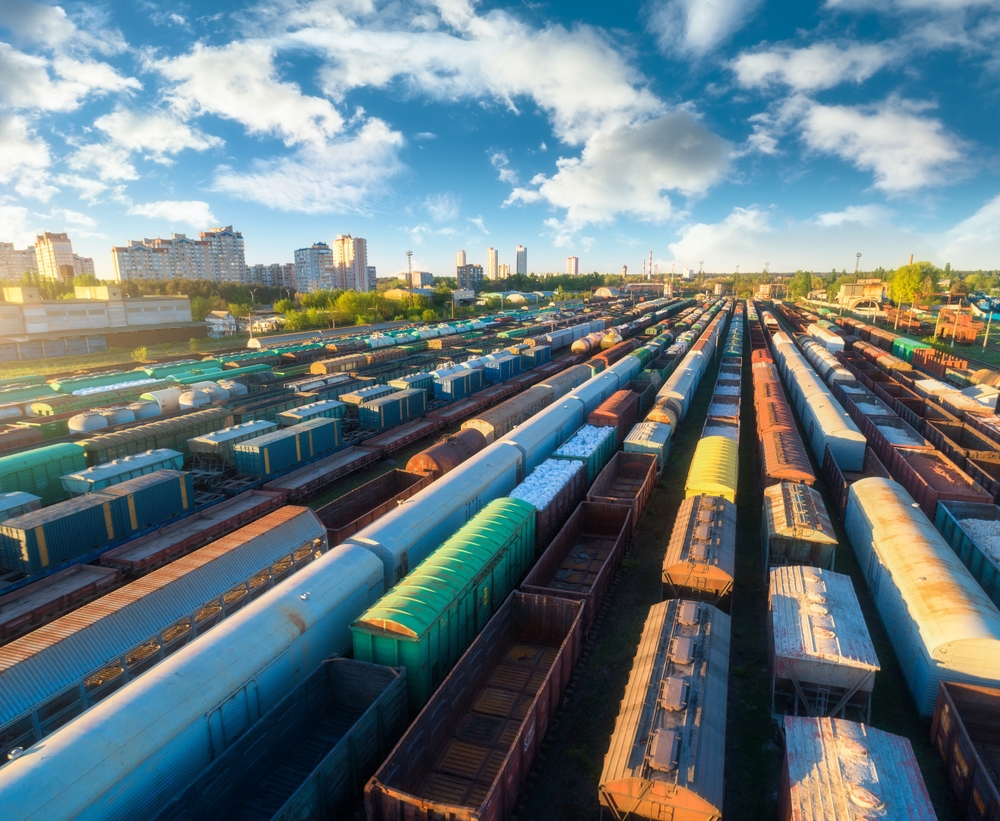
Photo by Denis Belitsky, 2023
BACKGROUND:
On 13 February 2008, Armenia signed an agreement transferring full control of the state-owned Armenian Railways to South Caucasus Railway (Yuzhno-Kavkazskaya zheleznaya doroga, YuKZhD), a wholly owned subsidiary of Russian Railways (RZhD). Subject to mutual agreement, the contract may be extended until 2048. The agreement followed a concession model, transferring operational, managerial, and investment responsibilities to the Russian side. Although ownership of the railway infrastructure formally remained with the Armenian government, operational control, investment decisions, tariff policy, and network development were effectively placed under Russian authority, constituting influence without formal ownership.
The 2008 railway agreement was effectively a continuation, and one of the consequences, of the 2002–2003 “debt-for-assets” agreement between Armenia and Russia, which settled Armenia’s US$ 96 million debt to Russia. The 30-year concession agreement is widely regarded as a major turning point in the development of Russia’s structural influence over Armenia’s economy and infrastructure in the post-Soviet period. Under the debt-for-assets arrangement, ownership or management of six major industrial and economic assets in Armenia, including electricity, gas, electronics, and defense-related sectors, was transferred to Russia, facilitating Russian dominance and influence in other sectors, including railways and telecommunications.
To reduce this monopoly and dependency, the Armenian government signed an agreement with Iran in 2009, one year after the 30-year concession agreement, to construct the “Marand–Norooz–Meghri–Yerevan” railway. Russia opposedthe project, and despite considerable efforts by Armenia, the railway was never realized, leaving Russia’s monopoly over Armenia’s railway network intact.
Plans to revive Soviet-era railway routes in the southern South Caucasus failed to materialize in the transformed regional environment following the Second Nagorno-Karabakh War in 2020. However, the peace agreement signed by Ilham Aliyev and Nikol Pashinyan at the White House on August 8, 2025, marked a new phase in the construction and integration of road and railway routes in southern Armenia. Nevertheless, despite the completion of approximately 80 percent of the 110-kilometer Horadiz–Aghband railway line in southwestern Azerbaijan (around 140 kilometers including auxiliary routes), and Turkey’s initiation of a new 224-kilometer railway line from Kars to the Nakhichevan border, scheduled for completion before 2030, the rehabilitation and construction of the railway line in southern Armenia has yet to begin.
In these circumstances, during a press briefing on February 13, Armenian Prime Minister Nikol Pashinyan stated that a country maintaining “friendly relations” with both Russia and Armenia could “purchase the concession management rights” of Armenia’s railways, which are currently under Russian management. He presented this as a potential solution to Armenia’s loss of “competitive advantage” by having international routes pass through the country. When asked which states could assume such a role, Pashinyan mentioned Kazakhstan, the UAE, and Qatar, while noting that the list was not exhaustive.
IMPLICATIONS:
Pashinyan’s recent statements may represent the latest step by the Armenian government to reduce the country’s dependence on Russia in the infrastructure sector. Following the collapse of the Soviet Union, Russian control and influence over Armenia’s railway network and railway management became particularly significant due to Armenia’s status as a landlocked country. After the First Nagorno-Karabakh War, Armenia’s railway routes with Azerbaijan (the eastern route) and Turkey (the western route) were closed. The disruption of railway connections between Armenia and Azerbaijan also severed Armenia’s rail link with Iran via the Julfa–Nakhichevan route. Consequently, over the past three decades, Armenia’s only active railway connection has been the northern route, a Soviet-era railway line running through Georgia to Russia and the Black Sea. Notably, despite the breakdown of diplomatic relations between Russia and Georgia following the August 2008 war, this railway corridor, like the road route, has remained open and operational.
The absence of Armenia’s railway connectivity in three directions, eastward towards Azerbaijan, southward towards Iran, and westward towards Nakhichevan and Turkey, and the country’s dependence on the northern route through Georgia to Russia significantly strengthened the monopoly position and influence of the Russian-controlled South Caucasus Railway company. The Armenian government’s new approach therefore represents a step toward reducing Russia’s monopoly and influence over Armenia’s railway infrastructure, while also diversifying the country’s rail connections.
However, the most noteworthy aspect is Russia’s continued presence in these developments. Although Russia was excluded from the agreements reached during the Washington summit, it nevertheless expressed readiness to discuss possible participation in the Trump Route with Armenia. Mikhail Kalugin, Director of the Fourth CIS Department at the Russian Foreign Ministry, argued that “there are ample grounds” for such involvement. Among other points, Kalugin referred to South Caucasus Railway, which “holds a concession to manage Armenia’s railway network.”
On the other hand, Armenian Prime Minister Nikol Pashinyan revealed that he had asked Russia to “urgently address” the full restoration of railway sections adjacent to the Azerbaijani exclave of Nakhichevan and the Turkish border. The issue concerns three key railway sections: Yeraskh–Nakhichevan, Gyumri–Kars, and Ijevan–Gazakh. Pashinyan stated that he had raised the matter with Russia more than a month earlier.
However, the Armenian government appears to support Russian participation and investment only in railway sections located outside the so-called “Trump Route.” Addressing possible Russian involvement in the project, Nikol Pashinyan stated that the route is a bilateral initiative with the U.S., adding that “any third-party involvement can be discussed only bilaterally.” Pashinyan also responded to the South Caucasus Railway’s expressed readiness to transfer only the Meghri railway section, through which the Trump Route is expected to pass, from its administration to Armenia, arguing that the statement reflected a “misunderstanding.” “The [Meghri railway] section is not under Russian management for it to be handed over to Armenia. It is Armenia’s sovereign territory, and we have not delegated the management of that sovereign territory to anyone. There is no railway there to be managed by anyone,” Pashinyan stated.
In fact, as Russian Deputy Prime Minister Alexey Overchuk stated, the Russian Federation has decided to begin substantive negotiations on the restoration of two sections of Armenia’s railway network that would reconnect Armenian railways with the railway network of the Republic of Azerbaijan near the town of Yeraskh and with the railway network of the Republic of Turkey near the settlement of Akhuryan. The total length of the sections to be restored has been announced as 1.6 kilometers and 12.4 kilometers, respectively. All of these sections exclude southern Armenia, through which the Trump Route is expected to pass. Nevertheless, the reopening of these railway sections forms part of the Pashinyan government’s Crossroads of Peace project.
CONCLUSIONS:
Armenia’s exit from political and military dependence on Russia is unlikely without ending Russia’s monopoly over the country’s economic infrastructure. The Armenian government took an initial step in this direction by nationalizing the country’s electricity grid, and on July 9, 2025, Armenian President Vahagn Khachaturyan signed a law permitting the nationalization of the national electricity distribution company. However, this decision became politically contentious following the arrest of opposition leader Samvel Karapetyan, who had acquired full ownership of the Armenian Power Grid Company and the Hrazdan Thermal Power Plant in 2017.
Armenia’s dependence on Russian-controlled economic infrastructure extends beyond railways and electricity. The exclusive supplier of natural gas in Armenia’s domestic market is Gazprom Armenia, a Russian-Armenian company established in December 1997, whose shares are wholly owned by Russia’s Gazprom. Consequently, Armenia’s efforts to end Russia’s monopoly and influence over its economic infrastructure face significant obstacles. The realization of this objective will largely depend on the outcome of the crucial parliamentary elections on June 7, 2026, which will determine whether Armenia returns to its pre-2018 foreign policy orientation or continues its recent trajectory toward closer alignment with the West.
AUTHOR’S BIO:
Vali Kaleji, based in Tehran, Iran, holds a Ph.D. in Regional Studies, Central Asian and Caucasian Studies. He has published numerous analytical articles on Eurasian issues for the Eurasia Daily Monitor, the Central Asia-Caucasus Analyst, The Middle East Institute and the Valdai Club. He can be reached at This email address is being protected from spambots. You need JavaScript enabled to view it. .
The Taliban's Diplomatic and Economic Expansion in Central Asia
By Aigerim Turgunbaeva and Fayazuddin Ghiasi
On February 22, 2025, during a meeting with Uzbekistan'ss Prime Minister Abdullah Aripov, Mullah Abdul Ghani Baradar Akhund, representing the Taliban, called for Uzbek investment in repairing crucial infrastructure, including the Mazar-e-Sharif–Herat railway and the second Salang tunnel. These projects are seen as vital for improving communication and trade between Central and South Asia. Baradar reaffirmed the Taliban's commitment to regional stability and enhancing economic relations, while Uzbekistan expressed support for deepening cooperation and advancing joint initiatives. The Taliban's diplomacy in Central Asia is increasingly focused on economic cooperation, prioritizing infrastructure development and trade expansion.
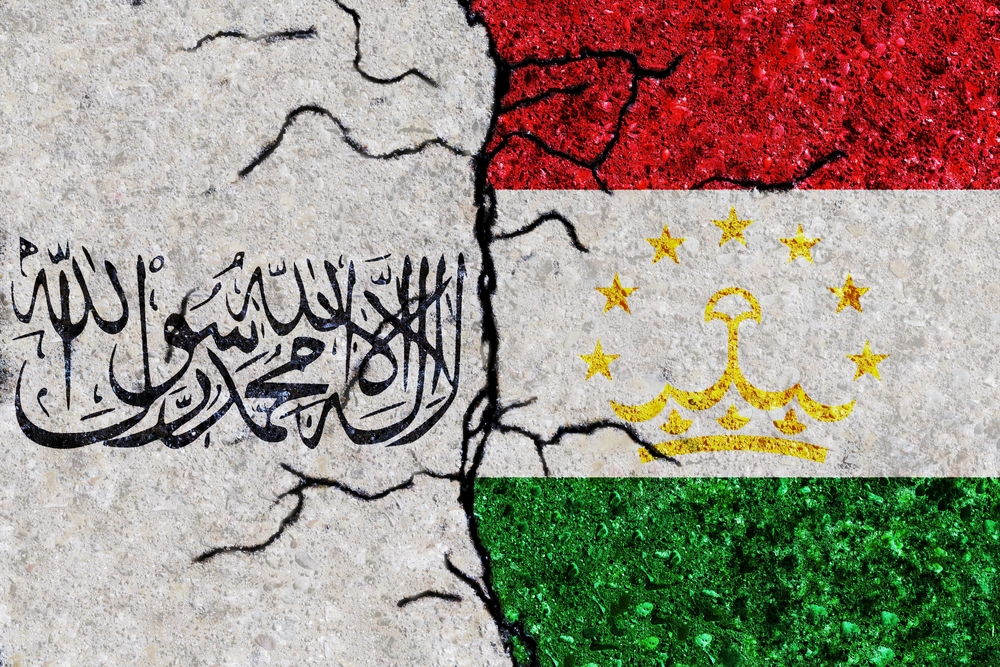
BACKGROUND: Following the 9/11 attacks, the U.S.-led International Security Assistance Force (ISAF) entered Afghanistan, and Central Asian countries aligned with the US by providing military support, road access, and airspace. Initially, these countries opposed the Taliban, backing anti-Taliban movements. However, over time, as the Taliban adapted their strategy and reduced their overt support for Central Asian militant groups, some regional countries shifted to a more neutral stance on Afghanistan.
During the Doha peace process, delegates from Central Asian countries held several meetings with the Taliban negotiating team, laying the groundwork for post-U.S. withdrawal relations. When American forces withdrew in August 2021, the Taliban regained control, creating security concerns for neighboring Central Asian states. This shift in power forced regional actors to reassess their approach, balancing security risks with economic and geopolitical interests.
Despite these concerns, most of Central Asian countries kept their embassies open in Kabul and initiated political and economic engagement with the Taliban. For its part, the Taliban, facing a financial crisis due to sanctions, frozen assets, reduced foreign aid, a water crisis, and a lack of international recognition, pursued an economic-oriented foreign policy. This included announcing expanding transportation infrastructure, such as the Mazar-e-Sharif-Herat-Kandahar railway corridor (1,468 km), approved in May 2023, and the Spin Boldak-Kandahar railway, set to connect Central Asia to South Asia in 2024.
IMPLICATIONS: The Taliban’s return to power has significantly reshaped regional geopolitics and economic ties. With the US withdrawal creating a power vacuum, regional actors have sought to strengthen their positions. The Taliban, in turn, have sought new partnerships to break their political and economic isolation.
As Central Asian nations engage with the Taliban while remaining wary of potential instability, they have also strengthened ties with other powers like China and Russia. This shifting landscape raises critical questions about Afghanistan's evolving role in the region, particularly in terms of security cooperation, counterterrorism efforts, and border management.
Uzbekistan was the first Central Asian country to host a Taliban delegation, receiving Acting Deputy Prime Minister Mawlawi Abdul Salam Hanafi in Termez in September 2021. Both sides signed a security and trade protocol, exchanged diplomats, and expanded economic relations. On April 13, 2023, Uzbekistan hosted the 4th meeting of Afghanistan’s neighboring foreign ministers in Samarkand to discuss the Afghan situation.
As the Russia-Ukraine war disrupts trade, Uzbekistan—where three of its eight transit corridors depend on Russia—has accelerated efforts to find alternative routes. In August 2024, the Uzbek Prime Minister visited Kabul to discuss trade and investment projects, resulting in 35 MoUs worth $2.5 billion. Trade between the two countries reached $860 million. Additionally, Uzbekistan has played a key role in infrastructure development, co-signing a trilateral agreement with Afghanistan and Pakistan in July 2023 for the Trans-Afghan Railway, linking Mazar-e-Sharif to Pakistan’s ports, with a projected cost of $6 billion.
In February 2025, Mullah Abdul Ghani Baradar led a high-ranking Taliban delegation to Uzbekistan to deepen economic, trade, and transport cooperation. Tashkent also committed to completing the "Khalqlaar Bazar" border market and providing Afghan citizens with a 15-day visa-free regime.
As for Kazakhstan, Afghanistan's top wheat, flour, and edible oil supplier, it maintained its embassy in Kabul after the Taliban’s takeover. Both sides exchanged ambassadors, strengthening diplomatic ties. Since 2023, three business forums in Astana, Almaty, and Kabul have facilitated agreements worth $1.5 billion. In April 2024, Kazakhstan’s Prime Minister led a delegation to Kabul for an Afghanistan-Kazakhstan business forum, exploring investment in the chemical, mining, and metallurgical industries. Bilateral trade grew to $700 million in 9 months of 2024, a 14% increase from 2023, with projections reaching $3 billion in five years.
Kazakhstan also joined Turkmenistan’s initiative to build a logistics hub in Herat and expressed interest in the Trans-Afghan Railway, initially agreed upon by the Taliban, Pakistan, and Uzbekistan in 2021, to access South Asian and Gulf markets.
Historically neutral, Turkmenistan has maintained close ties with the Taliban since the 1990s. It remains a major oil and gas supplier to Afghanistan, with trade valued at over $500 million. Turkmen investments in Afghanistan exceed $1.5 billion, including infrastructure projects such as the Turkmenistan-Afghanistan-Pakistan-India (TAPI) gas pipeline. In 2024, top Taliban officials met Turkmen leaders to resume work on TAPI, sign MoUs worth $200 million, and explore oil and gas transit routes linking Russia to South Asia via Afghanistan. Additionally, the two sides signed a $7 million agreement for three railway projects in September 2024.
With a 1,360 km border with Afghanistan, Tajikistan was initially the most vocal opponent of the Taliban, demanding an inclusive government with ethnic and gender representation. Anti-Taliban figures gathered in Tajikistan, drawing criticism from Kabul. However, economic cooperation persisted, with Tajikistan continuing electricity exports and opening five joint border markets in September 2023. The Jalaluddin Mohammad Balkhi-Sher Khan Port railway project, first signed in 2019, resumed, enhancing connectivity with Central Asia. Trade between Afghanistan and Tajikistan reached $120 million in 2024. A recent unofficial meeting between top Tajik security officials and the Taliban signaled a thaw in relations.
Concerned about the rights of the Afghan Kyrgyz minority in the Pamir region, Kyrgyzstan established early contacts with the Taliban. In September 2021, Deputy Chairman of Kyrgyzstan’s Security Council Taalatbek Masadykov met with the Taliban Foreign Minister. Trade and transit discussions continued, with Kyrgyzstan serving as a transit route for Afghan goods to China and playing a key role in the CASA-1000 electricity transmission project.
In September 2024, Kyrgyzstan’s Cabinet Chairman Akylbek Japarov met with Taliban representatives, expressing interest in expanding trade, transportation, energy, and agriculture cooperation. Some Afghan Kyrgyz, facing economic hardship and limited educational opportunities, have requested relocation to Kyrgyzstan. In response, the Taliban recently established the “Pamir” district for the Kyrgyz ethnic minority.
CONCLUSIONS: To better understand the Taliban’s role in Central Asia, it’s crucial to examine their balancing act between China and Russia, two regional powers with different interests. While China seeks stability in Afghanistan to secure trade routes under the Belt and Road Initiative (BRI) and prevent extremism near Xinjiang, Russia focuses on managing the security risks spilling over into its Central Asian sphere. The Taliban, in turn, is strategically leveraging its position as a buffer state, engaging both countries diplomatically while positioning itself as a key player in regional security.
Since retaking power, the Taliban have pursued economic diplomacy, reassuring Central Asian neighbors of border security and promoting trade expansion. This shift has redirected Afghanistan’s trade partnerships from Pakistan toward Central Asia and Russia. The Taliban have leveraged Afghanistan’s geographic position to sign infrastructure MoUs, including railways and transit corridors, inviting regional investment in large-scale projects.
Central Asian states are balancing their engagement with Afghanistan while securing their interests. However, ongoing security risks, potential shifts in Taliban leadership, and external geopolitical pressures could alter the region’s engagement strategy. Future developments, such as increased intelligence cooperation or shifts in global economic alignments, may further impact Afghanistan’s regional role.
AUTHORS’ BIO: Aigerim Turgunbaeva is a journalist and researcher focusing on Central Asia. She writes about press freedom, human rights, and politics in the former Soviet space, and delves into China’s interests in the region for publications like The Diplomat, The Guardian, Reuters, and Eurasianet. Dr. Fayazuddin Ghiasi is a Rumsfeld Fellow and senior Researcher on Afghanistan and Central Asia at the Centre for Afghanistan and Regional Studies. He writes about regional geo-economics and geo-strategy, connectivity and politics in various national and international news outlets and journals.
The Middle Corridor and the Russia-Ukraine War: the Rise of New Regional Collaboration in Eurasia?
By Selçuk Çolakoğlu
January 31, 2023
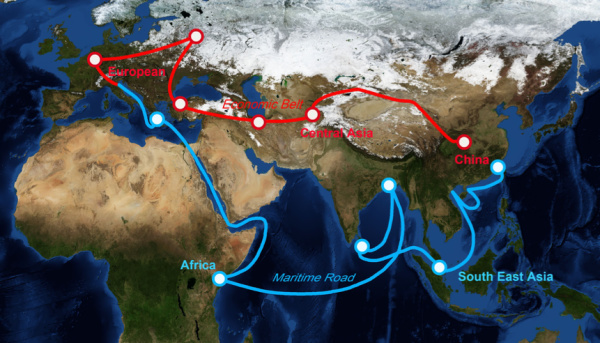
After Russia’s invasion of Ukraine, the West‑led sanctions regime against Russia, coupled with Russian counter-sanctions, has affected everything from energy resources and logistics to banking transactions and customs procedures. Western countries have realized that Moscow can weaponize its geopolitical position and logistic networks. Strategic over‑dependence on Russia’s energy, markets, and logistics has created significant challenges to neighboring countries due to increasing political tensions between the West and Russia. This development is undermining the Northern (Russian) Corridor’s position as the main overland East-West corridor. In turn, the alternative Middle Corridor is currently facing its best opportunity ever to take a leading position in connecting Europe and Asia.
Visit also