By Masom Jan Masomy and Eldaniz Gusseinov
Among external stakeholders, China bears the heaviest cost from the ongoing Afghanistan-Pakistan tensions along the Durand Line. The conflict erodes Beijing’s credibility as a regional mediator on the dispute-resolution front, even as its short-term containment record remains defensible. Both Afghanistan and Pakistan continue to depend on Chinese economic engagement, and both are seeking to expand investment flows from Beijing. China has hosted at least seven formal rounds of the China-Afghanistan-Pakistan Foreign Ministers’ Dialogue, its primary platform for structured mediation between the two countries and has intervened repeatedly with emergency shuttle diplomacy during acute crises, most recently during the open military confrontation.
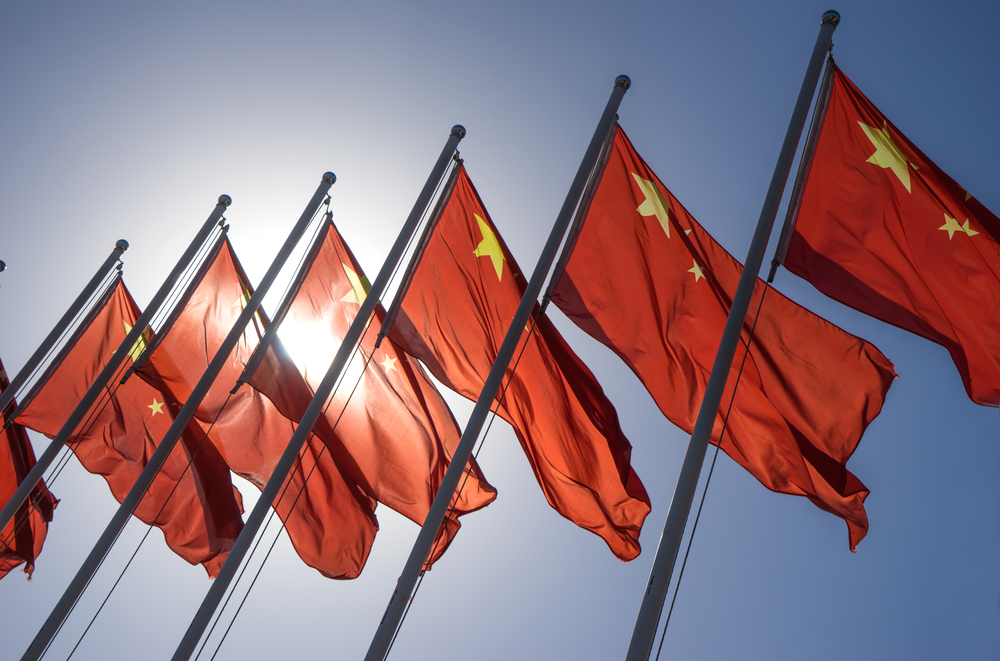
Photo by Crystal51, 2015
BACKGROUND:
For a state positioning itself for a more influential role in the emerging global order, mediation has become a core instrument of strategic projection. This ambition found formal expression in Beijing’s May 2025 white paper, “China's National Security in the New Era.” Released by the State Council Information Office on May 12, the document represents the first dedicated national security policy statement since the founding of the People’s Republic. Its opening chapter frames China as a source of certainty and stability in a turbulent world, and the same self-positioning runs throughout the text. By tying political security to international order within a single "holistic" framework, with economic development as the connecting axis, Beijing presents its own internal stability and modernization as stabilizing forces for the broader international system. The Afghan-Pakistan file is currently the closest test of that framing on China’s periphery.
The results have been limited. China has not resolved the underlying disputes between Afghanistan and Pakistan, and each failed mediation round makes the next one harder to frame as credible. Experts generally agree that Chinese mediation acts as a “band-aid” over structural wounds. The long-term drivers of hostility remain untouched: Islamabad’s demand that the Taliban crack down on TTP safe havens, and the historically unrecognized Durand Line that sits beneath nearly every bilateral grievance. Strategic distrust between Kabul and Islamabad has only hardened since 2021. On short-term crisis containment, however, Beijing’s record is defensible. It pulls both sides back from open war and keeps communication lines open, with the promise of the Belt and Road Initiative (BRI) used as an economic incentive to buy time, even when this does not produce durable agreements. For Beijing, short-term containment is “good enough” provided it prevents a regional collapse that threatens Chinese investments.
Pakistan’s declaration of “open war” on Afghanistan in late February 2026 produced significant civilian casualties across the country. On March 16, Pakistani airstrikes hit the Omid Addiction Treatment Hospital in Kabul. Afghan officials placed the death toll at approximately 400 patients, a figure that has not been independently corroborated. Human Rights Watch verified at least 143 killed and over 250 injured. Islamabad denied intentionally targeting the facility. By April 5, Taliban officials reported cumulative civilian casualties of 761 killed and 626 injured since late February, figures the United Nations has not fully verified. Prior to the hospital strike, UNAMA had documented 76 civilian deaths and 213 injuries from clashes beginning on February 26 and called for compliance with international humanitarian law.
The most recent mediation round, hosted by China in Urumqi, did not yield a permanent ceasefire between Kabul and Islamabad. It did, however, halt active kinetic conflict and keep further negotiation tracks open. Earlier mediation attempts by Qatar and Turkey, with parallel engagement from Saudi Arabia, sought to reduce escalation. Afghanistan and Pakistan have nonetheless experienced their most serious deterioration in relations since the Taliban seized power in 2021. Major trade routes at Torkham and Spin Boldak have remained closed since the October 2025 clashes, disrupting bilateral trade flows.
IMPLICATIONS:
Tensions between Afghanistan and Pakistan stem largely from Islamabad’s claim that the TTP operates from Afghan territory and conducts attacks inside Pakistan. Kabul’s immediate rejection of this claim has strained the bilateral relationship since August 2021. The unresolved dispute undermines Pakistan’s capacity to control its borderlands and opens space for non-state armed groups to regroup in remote border regions, a development that also concerns regional neighbors.
In this context, China’s mediation efforts stem from deeper structural stakes, linking border security and regional connectivity. For China, any instability or rise in militant mobility across the narrow Wakhan corridor or in the Pak-Afghan region raises long-term security questions. This issue is critical to China’s implementation of transportation projects across Eurasia. Discussions between China and Central Asian states also covered the potential integration of transport projects, including proposals to connect the China-Kyrgyzstan-Uzbekistan railway, currently under construction, with Uzbekistan’s proposed Trans-Afghan railway. Under this configuration, the combined route would originate in Kashgar and, via Afghanistan and the CPEC, terminate in Gwadar. The result is a ring of Chinese influence spanning Central and South Asia. China would be positioned to integrate high-tech production supply chains along this corridor.
In such a situation, the Islamic State of Khorasan Province (ISKP) may reorganize and reestablish itself across the Afghanistan-Pakistan region. Its propaganda has consistently identified Chinese assets as legitimate targets. The early-2026 suicide bombing at a Chinese-run restaurant in a district of Kabul reinforced these security concerns. Separately, an armed assault using grenades dropped from drones killed five Chinese nationals and injured five others near the Afghan-Tajik border in December 2025. The pattern suggests that militant groups may be finding operational space along the porous Afghan-Tajik frontier from which to threaten Chinese interests across Central Asia.
Beijing is concerned that groups such as ETIM and ISKP may exploit periods of confrontation between Kabul and Islamabad. When Afghanistan-Pakistan tensions rise, militant activity in Khyber Pakhtunkhwa and Balochistan tends to increase, generating a volatile environment for Chinese personnel and CPEC-related projects.
To strengthen border security, China has established three new counties within a year. The He'an and Hekang counties sit near the disputed Ladakh border with India, and the newly formed Cenling county lies close to Afghanistan’s Wakhan Corridor and Pakistan-administered Kashmir. The administrative restructuring is designed to expand border surveillance and constrain the movement of anti-China Uyghur militants through Xinjiang's porous frontiers. Strategically, the move tightens governance over Kashgar in Xinjiang, the urban anchor for both the Wakhan corridor and the CPEC Karakorum Highway.
CONCLUSIONS:
While South Asia and the Middle East are experiencing heightened military confrontations that strain international peace, China addresses these crises through diplomatic engagement and economic cooperation. Its official statements emphasize de-escalation through restraint rather than coercion. Diplomatic brokering between Afghanistan and Pakistan offers potential strategic advantages for Beijing at both regional and global levels. The limits of this approach, however, are visible. Following the Urumqi negotiations, border skirmishes resumed, with Pakistani strikes hitting Kunar province on 27 April 2026.
By combining formal trilateral platforms with quieter shuttle diplomacy, China positions itself as central to regional crisis management and as a hedge against the regrouping of transnational terrorist networks. The Afghanistan-Pakistan case nonetheless demonstrates that economic incentives alone are insufficient to produce durable settlements between parties locked in active confrontation.
AUTHOR’S BIO:
Masom Jan Masomy is an Assistant Professor and Deputy Director at the Regional Studies Centre of the Afghanistan Science Academy in Kabul. His work focuses on South and Central Asian affairs with a particular emphasis on Afghanistan and on the dynamics of great power politics across the wider Central and South Asian regions. His research interests span political and economic developments, security and migration, climate change, diplomacy, and regional connectivity. Email: This email address is being protected from spambots. You need JavaScript enabled to view it. . Eldaniz Gusseinov is Head of Research and co-founder at the political foresight agency Nightingale Int., and a non-resident research fellow at the Haydar Aliyev Center for Eurasian Studies of Ibn Haldun University, Istanbul. Email: This email address is being protected from spambots. You need JavaScript enabled to view it. .