China Tests its Global Stabilizer Role in the Afghan-Pakistan Conflict
By Masom Jan Masomy and Eldaniz Gusseinov
Among external stakeholders, China bears the heaviest cost from the ongoing Afghanistan-Pakistan tensions along the Durand Line. The conflict erodes Beijing’s credibility as a regional mediator on the dispute-resolution front, even as its short-term containment record remains defensible. Both Afghanistan and Pakistan continue to depend on Chinese economic engagement, and both are seeking to expand investment flows from Beijing. China has hosted at least seven formal rounds of the China-Afghanistan-Pakistan Foreign Ministers’ Dialogue, its primary platform for structured mediation between the two countries and has intervened repeatedly with emergency shuttle diplomacy during acute crises, most recently during the open military confrontation.
Photo by Crystal51, 2015
BACKGROUND:
For a state positioning itself for a more influential role in the emerging global order, mediation has become a core instrument of strategic projection. This ambition found formal expression in Beijing’s May 2025 white paper, “China's National Security in the New Era.” Released by the State Council Information Office on May 12, the document represents the first dedicated national security policy statement since the founding of the People’s Republic. Its opening chapter frames China as a source of certainty and stability in a turbulent world, and the same self-positioning runs throughout the text. By tying political security to international order within a single "holistic" framework, with economic development as the connecting axis, Beijing presents its own internal stability and modernization as stabilizing forces for the broader international system. The Afghan-Pakistan file is currently the closest test of that framing on China’s periphery.
The results have been limited. China has not resolved the underlying disputes between Afghanistan and Pakistan, and each failed mediation round makes the next one harder to frame as credible. Experts generally agree that Chinese mediation acts as a “band-aid” over structural wounds. The long-term drivers of hostility remain untouched: Islamabad’s demand that the Taliban crack down on TTP safe havens, and the historically unrecognized Durand Line that sits beneath nearly every bilateral grievance. Strategic distrust between Kabul and Islamabad has only hardened since 2021. On short-term crisis containment, however, Beijing’s record is defensible. It pulls both sides back from open war and keeps communication lines open, with the promise of the Belt and Road Initiative (BRI) used as an economic incentive to buy time, even when this does not produce durable agreements. For Beijing, short-term containment is “good enough” provided it prevents a regional collapse that threatens Chinese investments.
Pakistan’s declaration of “open war” on Afghanistan in late February 2026 produced significant civilian casualties across the country. On March 16, Pakistani airstrikes hit the Omid Addiction Treatment Hospital in Kabul. Afghan officials placed the death toll at approximately 400 patients, a figure that has not been independently corroborated. Human Rights Watch verified at least 143 killed and over 250 injured. Islamabad denied intentionally targeting the facility. By April 5, Taliban officials reported cumulative civilian casualties of 761 killed and 626 injured since late February, figures the United Nations has not fully verified. Prior to the hospital strike, UNAMA had documented 76 civilian deaths and 213 injuries from clashes beginning on February 26 and called for compliance with international humanitarian law.
The most recent mediation round, hosted by China in Urumqi, did not yield a permanent ceasefire between Kabul and Islamabad. It did, however, halt active kinetic conflict and keep further negotiation tracks open. Earlier mediation attempts by Qatar and Turkey, with parallel engagement from Saudi Arabia, sought to reduce escalation. Afghanistan and Pakistan have nonetheless experienced their most serious deterioration in relations since the Taliban seized power in 2021. Major trade routes at Torkham and Spin Boldak have remained closed since the October 2025 clashes, disrupting bilateral trade flows.
IMPLICATIONS:
Tensions between Afghanistan and Pakistan stem largely from Islamabad’s claim that the TTP operates from Afghan territory and conducts attacks inside Pakistan. Kabul’s immediate rejection of this claim has strained the bilateral relationship since August 2021. The unresolved dispute undermines Pakistan’s capacity to control its borderlands and opens space for non-state armed groups to regroup in remote border regions, a development that also concerns regional neighbors.
In this context, China’s mediation efforts stem from deeper structural stakes, linking border security and regional connectivity. For China, any instability or rise in militant mobility across the narrow Wakhan corridor or in the Pak-Afghan region raises long-term security questions. This issue is critical to China’s implementation of transportation projects across Eurasia. Discussions between China and Central Asian states also covered the potential integration of transport projects, including proposals to connect the China-Kyrgyzstan-Uzbekistan railway, currently under construction, with Uzbekistan’s proposed Trans-Afghan railway. Under this configuration, the combined route would originate in Kashgar and, via Afghanistan and the CPEC, terminate in Gwadar. The result is a ring of Chinese influence spanning Central and South Asia. China would be positioned to integrate high-tech production supply chains along this corridor.
In such a situation, the Islamic State of Khorasan Province (ISKP) may reorganize and reestablish itself across the Afghanistan-Pakistan region. Its propaganda has consistently identified Chinese assets as legitimate targets. The early-2026 suicide bombing at a Chinese-run restaurant in a district of Kabul reinforced these security concerns. Separately, an armed assault using grenades dropped from drones killed five Chinese nationals and injured five others near the Afghan-Tajik border in December 2025. The pattern suggests that militant groups may be finding operational space along the porous Afghan-Tajik frontier from which to threaten Chinese interests across Central Asia.
Beijing is concerned that groups such as ETIM and ISKP may exploit periods of confrontation between Kabul and Islamabad. When Afghanistan-Pakistan tensions rise, militant activity in Khyber Pakhtunkhwa and Balochistan tends to increase, generating a volatile environment for Chinese personnel and CPEC-related projects.
To strengthen border security, China has established three new counties within a year. The He'an and Hekang counties sit near the disputed Ladakh border with India, and the newly formed Cenling county lies close to Afghanistan’s Wakhan Corridor and Pakistan-administered Kashmir. The administrative restructuring is designed to expand border surveillance and constrain the movement of anti-China Uyghur militants through Xinjiang's porous frontiers. Strategically, the move tightens governance over Kashgar in Xinjiang, the urban anchor for both the Wakhan corridor and the CPEC Karakorum Highway.
CONCLUSIONS:
While South Asia and the Middle East are experiencing heightened military confrontations that strain international peace, China addresses these crises through diplomatic engagement and economic cooperation. Its official statements emphasize de-escalation through restraint rather than coercion. Diplomatic brokering between Afghanistan and Pakistan offers potential strategic advantages for Beijing at both regional and global levels. The limits of this approach, however, are visible. Following the Urumqi negotiations, border skirmishes resumed, with Pakistani strikes hitting Kunar province on 27 April 2026.
By combining formal trilateral platforms with quieter shuttle diplomacy, China positions itself as central to regional crisis management and as a hedge against the regrouping of transnational terrorist networks. The Afghanistan-Pakistan case nonetheless demonstrates that economic incentives alone are insufficient to produce durable settlements between parties locked in active confrontation.
AUTHOR’S BIO:
Masom Jan Masomy is an Assistant Professor and Deputy Director at the Regional Studies Centre of the Afghanistan Science Academy in Kabul. His work focuses on South and Central Asian affairs with a particular emphasis on Afghanistan and on the dynamics of great power politics across the wider Central and South Asian regions. His research interests span political and economic developments, security and migration, climate change, diplomacy, and regional connectivity. Email: This email address is being protected from spambots. You need JavaScript enabled to view it. . Eldaniz Gusseinov is Head of Research and co-founder at the political foresight agency Nightingale Int., and a non-resident research fellow at the Haydar Aliyev Center for Eurasian Studies of Ibn Haldun University, Istanbul. Email: This email address is being protected from spambots. You need JavaScript enabled to view it. .
China's Quiet Digital Conquest of Central Asia
By Anatoly Motkin
In late April 2026, Tencent - the Chinese technology conglomerate behind WeChat - completed the acquisition of a 3.2 percent stake in Kaspi.kz, Kazakhstan's dominant super app, at approximately US$ 518 million. Just months earlier, Tencent led a financing round in Uzum, Uzbekistan's first tech unicorn, lifting the startup's valuation to US$ 1.5 billion and opening the door for the Chinese giant to enter Central Asia's digital economy. Taken together, these two moves constitute something far more consequential than routine investment decisions. They represent the arrival of Chinese digital power at the heart of post-Soviet Eurasia and Washington has yet to formulate a coherent response.
Photo by Pixels Hunter, 2020
BACKGROUND:
Kaspi.kz is not a typical fintech startup. In Kazakhstan, it operates as a powerful super app that integrates payments, e-commerce, and consumer services into a single platform, commanding roughly 75 percent of digital payments and nearly 89 percent of e-commerce activity in its home market. Critically, the platform seamlessly integrates payments, online commerce, fintech services, travel, classifieds, and access to government services, meaning it is directly plugged into state administrative databases. Similarly, Uzum in Uzbekistan combines e-commerce with fintech and banking services, touching millions of citizens’ financial and transactional lives daily.
The strategic logic of Tencent's acquisitions is straightforward. The investments align with strengthening economic ties between China and Kazakhstan, where Chinese investors are already backing 224 industrial projects valued at an estimated US$ 66.4 billion. But the digital dimension of this relationship is qualitatively different from physical infrastructure. When a company like Tencent acquires a meaningful stake in platforms that mediate the daily financial, commercial, and civic transactions of tens of millions of people, it gains something invaluable: structured, real-time access to population-scale behavioral data.
This is not an abstract concern. China has developed a data governance architecture predicated on domestic security, in which the party-state enjoys extensive data access power over domestic big tech companies. Under China’s National Intelligence Law of 2017, any Chinese organization or citizen must support, cooperate with, and collaborate in national intelligence work. There is no meaningful legal firewall between a Tencent minority stake in a Central Asian super apps and the Chinese state’s appetite for foreign data.
Large datasets about local populations can be transferred to China under conditions where weak local regulation provides little protection. The cautionary tale is well documented: Huawei’s provision of digital infrastructure for the African Union headquarters in Addis Ababa was later found to have been transferring server contents to Shanghai every day for five years. Central Asian governments should study this precedent carefully.
Tencent’s fintech plays are only the most visible thread of a much broader Chinese digital expansion across the region. Huawei has been deeply embedded in Central Asian telecommunications networks for over a decade, building 4G and 5G backbone infrastructure across Kazakhstan, Uzbekistan, Kyrgyzstan, and Tajikistan. The company is scaling its open source platforms OpenHarmony and openEuler to accelerate what it calls ”digital sovereignty” across Central Asia, deploying the language of sovereignty while consolidating its own architectural control over the region’s digital nervous system. Meanwhile, Alibaba Cloud has established data center operations in the region, and Chinese e-commerce platforms increasingly intermediate cross-border trade flows between China and its Central Asian neighbors under the Belt and Road Initiative.
Beijing’s Digital Silk Road initiative promotes the development of transnational network infrastructure and aims to enhance information connectivity across BRI countries - and Central Asia sits squarely at the geographic core of this project. Chinese technologies increasingly mediate social, political, and economic activities in recipient countries, creating layered dependencies that are difficult to unwind once established.
IMPLICATIONS:
The data sovereignty implications are severe. Super apps connected to government service portals do not merely capture consumer preferences, they capture identity verification records, tax filings, property registrations, healthcare interactions, and travel histories. For an intelligence service, this is not commercial data. It is a population census updated in real time.
Central Asian governments have begun to sense the risk. Kazakhstan has enacted data localization requirements. Uzbekistan has been strengthening its cybersecurity regulatory framework. But regulatory intent and enforcement capacity are very different things, particularly when the investment relationship itself creates structural dependencies and political incentives for governments to look the other way.
What can the U.S. offer as an alternative? The answer lies not in prohibition, Washington cannot tell sovereign governments whom to accept investment from, but in competition and capacity-building. Three lines of effort are essential.
First, the U.S. and its partners should actively promote alternatives in the fintech and digital infrastructure space. American and European venture capital has largely ignored Central Asia. The region’s digital markets are growing rapidly, and the vacuum left by Western investors is being filled by Chinese capital on terms that suit Beijing’s strategic interests. The U.S. International Development Finance Corporation (DFC), established during President Trump’s first term and granted expanded authorities in 2025, and its European counterparts should prioritize co-investment in Central Asian digital platforms, with data governance conditions attached.
Second, Washington should expand the Pax Silica framework, the emerging U.S.-led digital technology alliance, to explicitly address data security standards for countries in the region. Establishing clear criteria for trusted digital investment, analogous to the Clean Network initiative for 5G but adapted for the fintech and super app era, would give Central Asian governments a positive framework to reference when evaluating foreign stakes in systemically important digital platforms.
Third, the U.S. government should invest in building Central Asian regulatory capacity on data governance, cybersecurity auditing, and foreign investment screening in the digital sector. Technical assistance programs through the State Department’s Digital Connectivity and Cybersecurity Partnership and bilateral cooperation agreements can help governments develop the institutional tools to assess the risks embedded in transactions like Tencent's acquisition of Kaspi.kz - before the deal is done, not after.
CONCLUSIONS:
China’s digital expansion into Central Asia is not accidental. It is a deliberate, coordinated strategy executed through commercially rational transactions that each, individually, appear benign. The Tencent–Kaspi deal will be reported as a fintech investment. The Uzum funding will be celebrated as a startup success story. But viewed in aggregate and in strategic context, they represent the systematic acquisition of data leverage over populations that sit at the intersection of China’s continental ambitions and America’s competitive blind spot. Washington needs to start paying attention, and start competing, before the architecture of Central Asia’s digital future is set in Beijing.
AUTHOR’S BIO:
Anatoly Motkin is President of StrategEast Center for a New Economy, a leading independent institution advancing digital economy in developing countries, in collaboration with international financial institutions, development agencies, global tech companies, and governments.
China’s Free Riding in Central Asia’s Security Arrangements
By Vali Kaleji
June 20, 2024
Contrary to the economic, financial, and commercial domains where China has supplanted Russia in the five Central Asian states, Beijing is reluctant to assume a similar role in defense and security. China’s strategy, characterized by “free riding” at the expense of Russia and the Collective Security Treaty Organization (CSTO), has significantly influenced the Shanghai Cooperation Organisation’s (SCO) passive and conservative stance. Indeed, this aspect of China’s “soft power” has been instrumental in mitigating the escalation of anti-Chinese sentiments and “Sinophobia” within the region. By adopting a free riding approach and refraining from direct intervention in Central Asia’s security arrangements, China has been able to concentrate on economic, trade, and transit relations, particularly the Belt and Road Initiative. This strategy has facilitated China’s ability to address competition and strategic threats in other regions, notably Asia-Pacific and the Indian subcontinent.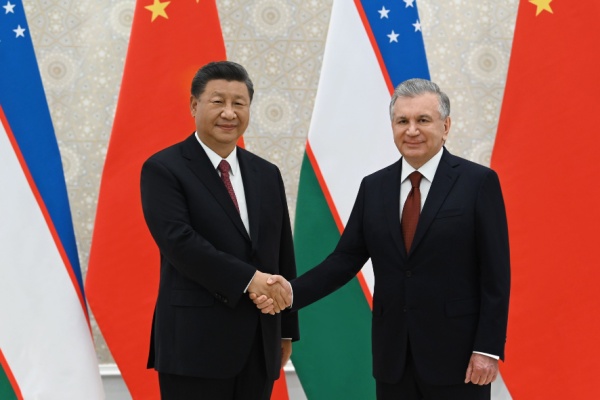
Russia’s Retreat and Counterattack in Central Asia
By Stephen Blank
May 9, 2024
Russian power is retreating from the Caucasus and Central Asia, most prominently with the withdrawal of Russian peacekeepers from Nagorno-Karabakh and Washington’s concurrent decision to open discussions with Yerevan on military support. The same process is discernible in Central Asia in the lukewarm support for the war in Ukraine and Kazakhstan’s critique of that war. Other harbingers of the trend are the gradual erosion of Russian language use and China’s dominance in regional finance, trade, and investment. Nevertheless, Moscow still deploys substantial leverage over Central Asia and individual states and can conduct purely domestic policies that negatively affect Central Asian governments and citizens. Moreover, recent indicators suggest that Russia is launching a campaign to restore its hegemonic position in Central Asia. Thus, despite the war in Ukraine and the burdens it has imposed, current Russian policies in Central Asia amount to a determined resistance to its equally observable retreat.
Visit also