Georgia’s Technology Export Sector: Growth Drivers and Structural Constraints
By Giorgi Tsikolia
In 2025, Georgia’s information technology sector generated $1.15 billion in export revenue—a 67 percent increase year-on-year and more than a thirteen-fold rise from the sector’s 2017 baseline.[1] This paper traces the policy, diplomatic, and private-sector decisions that produced that outcome. It then examines three constraints—labor market restrictions on foreign workers, the absence of government as a technology customer, and Georgia’s exclusion from U.S.-led AI infrastructure investment—that directly affect whether the sector’s growth continues.
[1] National Bank of Georgia, Statistics Portal, https://nbg.gov.ge/en/statistics
Read Georgia’s Technology Export Sector

War As Integration: How The Pakistan-Afghanistan Conflict Is Pulling Kabul Into Central-Asia
By Eldaniz Gusseinov and Rassul Kospanov
Pakistan's declaration of “open war” on Afghanistan in late February 2026, following sustained airstrikes on Kabul, Kandahar, and Bagram airbase under Operation Ghazab Lil Haq, has effectively closed the principal corridor through which Afghan trade reached the sea. While attention has been concentrated to the immediate military dimension, a structurally more consequential process is unfolding in parallel: a reorientation of Afghanistan’s external economic links away from Pakistan and toward Central Asia. This shift was already underway, driven by periodic border disruptions, trade friction, and the steady maturation of northern infrastructure, but the war has compressed its timeline considerably. Three concurrent developments: the collapse of Pakistan-Afghanistan commerce, the ratification of a preferential trade agreement between Uzbekistan and Kabul, and the near-completion of the CASA-1000 power transmission project, suggest that Afghanistan's economic geography is quickly being redrawn.
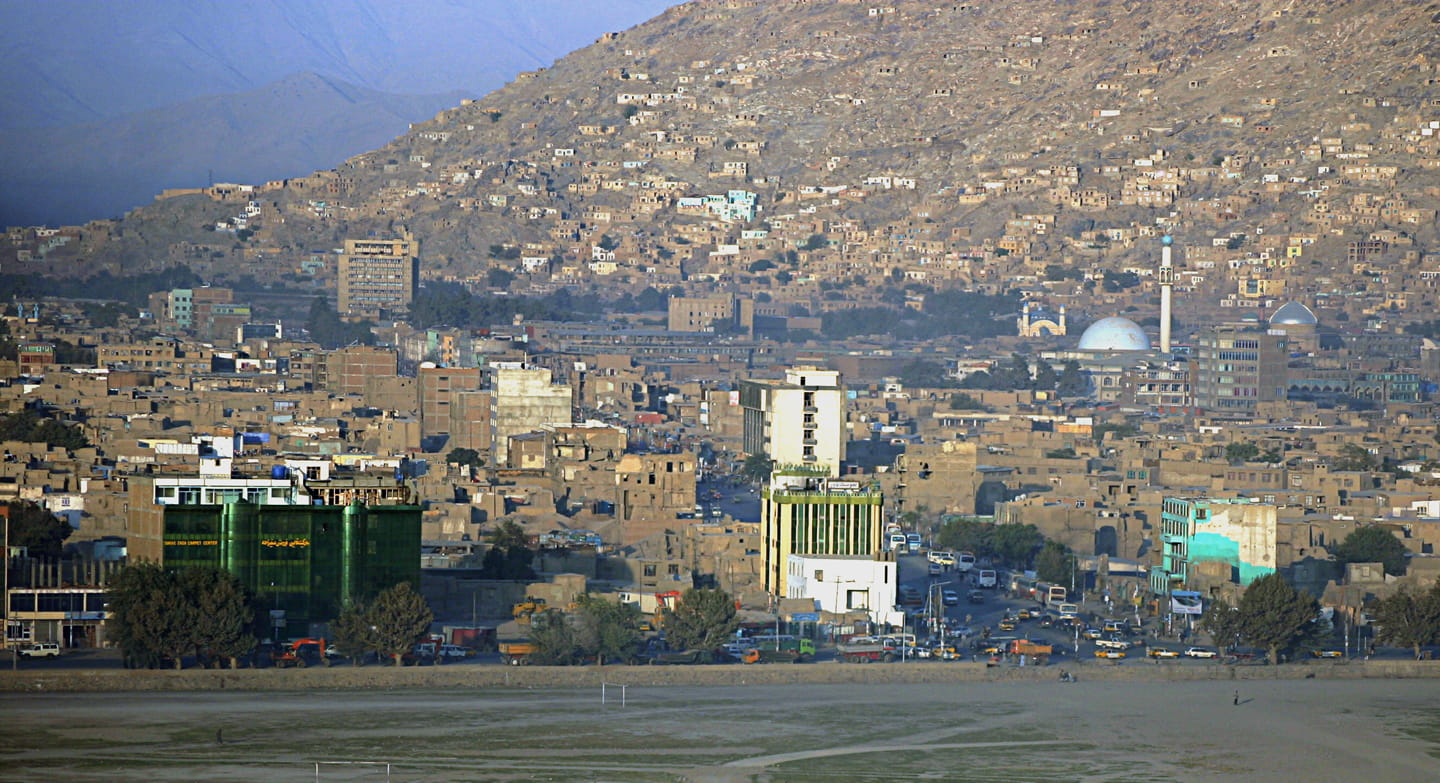
Image Credit: View of the old city of Kabul, Afghanistan, first uploaded on Wikipedia Commons [http://en.wikipedia.org/wiki/User: Casimiri]
BACKGROUND:
Afghanistan’s economic dependence on Pakistan long predated the current escalation. The Torkham and Chaman crossings served as the country’s principal gateways to Karachi and Gwadar, providing access to maritime trade routes that Central Asian landlocked corridors could not replicate. Yet the relationship was structurally vulnerable. Kabul’s refusal to formally recognize the Durand Line as an international border underpinned recurring post‑2001 border closures and trade disruptions, and the Taliban’s return to power in August 2021 added a new layer of friction as Islamabad’s demands that Kabul curb TTP sanctuaries went largely unmet. By 2024, divergence was increasingly visible: Pakistan substituted Afghan coal for sea‑borne coal imports and other suppliers while Afghan exporters faced tightening customs and transit restrictions. Bilateral commerce between Pakistan and Afghanistan contracted from approximately USD 2.46 billion in 2024 to USD 1.77 billion in 2025. At the same time, Afghanistan’s trade with Central Asian countries increased significantly, rising by 77 percent. The main driver of this growth was trade between Uzbekistan and Afghanistan, which expanded by 53 percent, reaching approximately US$ 1.6 billion.
The February 2026 escalation removed whatever residual reliability the southern corridor retained. Pakistani airstrikes under Operation Ghazab Lil Haq targeted Taliban military infrastructure across multiple provinces, a full trade suspension was imposed, and buffer-zone operations along the Durand Line added a physical barrier to the political and commercial obstacles already in place. For Afghan business networks and logistics operators, the southern route shifted from periodically unreliable to operationally closed.
Uzbekistan’s Hairatan border crossing on the Amu Darya handled approximately 76 percent of Afghanistan’s northern freight transit before the current escalation, channeling goods toward Russia, China, and the Caspian. Afghanistan’s dependence on Central Asian electricity suppliers, principally Uzbekistan, Tajikistan, and Turkmenistan, which together provide 80-85 percent of the country's power imports, had established dense operational relationships at the border long before formal trade policy followed. Total transit volumes through Afghanistan reached 5 million tons in 2024, demonstrating that the trans-Afghan corridor had become integral to Central Asian commerce with South Asia. The Central Asian factor in Afghanistan’s economy was already structural; yet the war changed its relative weight.
IMPLICATIONS:
The most immediate institutional development is the Uzbekistan-Afghanistan Preferential Trade Agreement, signed at the Tashkent International Investment Forum on June 10, 2025, and ratified by President Mirziyoyev in March 2026. The agreement eliminates customs tariffs on 14 categories of goods, prioritizing Afghan agricultural exports, streamlines phytosanitary certification for Afghan farm produce, and formalizes 24-hour operations at the Hairatan-Termez border crossing to accommodate increased volumes. Tashkent’s stated ambition is to raise bilateral trade from roughly US$ 1.6 billion toward US$ 5 billion within five years. It is significant not merely as a commercial target but as a political signal. By institutionalizing preferences and creating a structured long-term framework, Uzbekistan has moved well beyond the ad hoc transactional engagement that characterized the immediate post-2021 period.
The CASA-1000 project, which will add approximately 300 megawatts to Afghanistan’s power supply via a transmission line from Kyrgyzstan and Tajikistan, has reached an advanced stage of completion on the Afghan segment, with commissioning targeted for 2027. Uzbekistan has separately committed US$ 1.15 billion in deals for gas-fired generation and transmission infrastructure within Afghanistan, while a 25-year contract for development of the Toti-Maidan gas field deepens the bilateral energy relationship further. In parallel, following the Kazakhstan–Afghanistan business forum held in Shymkent, Astana announced plans to begin geological exploration in Afghanistan’s Laghman province. As part of this initiative, the Kazakh companies Kazatomprom and Kazakhmys conducted two geological missions to assess the potential development of beryllium and lead deposits.
These linkages carry strategic weight beyond their technical specifications: a country that depends on Central Asia for the electricity powering its cities and industries has strong incentives to sustain institutional connectivity with the region, irrespective of the diplomatic nuances in its relations with individual Central Asian capitals.
The Trans-Afghan Railway, whose feasibility framework was signed in July 2025, constitutes the third pillar of this emerging architecture. The corridor, linking Uzbekistan through Mazar-i-Sharif toward South Asian ports, had historically been conceived as a north-south bridge serving Central Asian exporters seeking sea access through Afghanistan.
Kazakhstan does not oppose Uzbekistan’s project but is promoting an alternative corridor through western Afghanistan. The route Turgundi–Herat–Kandahar–Spin Boldak is considered technically simpler due to its largely flat terrain, compared to the Uzbek route that passes through the high-altitude Salang Pass. Kazakhstan plans to invest around US$ 500 million, including the construction of railway segments and the creation of a logistics hub in Herat, which is expected to become a key “dry port” for Kazakh cargo.
If realized, this project would represent the first attempt since the nineteenth century to build a railway corridor in this direction. In 1879, British authorities considered constructing a railway to Kandahar. It was never implemented due to resistance from local tribal elites and the ongoing Anglo-Afghan War. After the Russian Empire captured the Panjdeh area north of Herat in 1885, Russian officials explored but never realized the possibility of extending the Trans-Caspian Railway from Krasnovodsk (now Turkmenbashi) through Merv to Herat. Kazakhstan is now demonstrating political boldness by advancing an ambitious initiative seeking to accomplish what the great empires of the past ultimately failed to achieve.
While the Pakistani military campaign has not eliminated the long-term logic of that corridor, it has introduced a medium-term disruption that reinforces Afghanistan’s own interest in northern connectivity, not merely as a transit function enabling others.
The structural dynamic underlying all three of these processes is that Central Asian states, particularly Uzbekistan, have pursued a consistently pragmatic engagement with the Taliban since 2021. Tashkent, Astana, and Ashgabat have avoided formal recognition while building dense working relationships on trade, border management, energy supply, and security coordination. For the Taliban, whose options have narrowed sharply as a result of the Pakistan conflict, this transactional model is comparatively attractive. Central Asian partners do not demand regime change or condition economic engagement on governance reforms and are geographically indispensable for the country’s energy supply. Tashkent and Kabul are not natural allies but increasingly unavoidable partners.
The risks in this trajectory lie in its structural fragility. Afghanistan’s trade deficit reached approximately US$ 9.4 billion in 2024, its export base remains concentrated in agricultural goods and coal, and its settlement infrastructure relies heavily on informal hawala transfers rather than banking channels. Northern trade growth has been accompanied by a persistent imbalance: Central Asian exports to Afghanistan are growing in volume while narrowing in variety, concentrated in flour, fuel, and electricity, with volatility coefficients suggesting that these supply chains remain sensitive to disruption. A durable transformation will require not merely preferential tariff access but energy and industrial investment capable of shifting Afghanistan from a consumer of basic goods to a contributor of productive capacity. For Central Asian states, this is not merely an altruistic objective: without a functional industrial base in Afghanistan, Central Asian exporters will face continued concentration risk in a market that is simultaneously growing and fragile.
CONCLUSIONS:
The Pakistan-Afghanistan war has accelerated Afghanistan’s northward economic pivot. By severing the southern corridor at precisely the moment that Central Asian infrastructure like CASA-1000, the Hairatan-Termez corridor, and the Trans-Afghan Railway framework are reaching operational maturity, the conflict has compressed a decade-long structural transition into a period of months. Uzbekistan has moved most aggressively to institutionalize this realignment through the Preferential Trade Agreement and its energy investment commitments, but the broader dynamic reflects a regional logic that extends to Kazakhstan, Tajikistan, and Turkmenistan: Central Asian states require a stable Afghanistan as a transit corridor and buffer against militant spillover, while Afghanistan requires Central Asian energy, markets, and institutional connectivity as substitutes for a now-hostile southern partner. Whether this convergence of interests consolidates into durable integration will depend on whether both sides can address structural fragilities such as payment infrastructure, export diversification, and logistics gaps, which continue to constrain the corridor’s full potential. The war has resolved an ambiguity in Afghanistan’s foreign economic orientation; the harder task of building a resilient northern integration architecture now begins.
AUTHOR’S BIO:
Eldaniz Gusseinov is Head of Research and сo-founder at the political foresight agency Nightingale Int. and a non-resident research fellow at Haydar Aliyev Center for Eurasian Studies of the Ibn Haldun University, Istanbul. Rassul Kospanov is a Senior Researcher at the National Analytical Center under Nazarbayev University, where he coordinates socio-political research projects and prepares analytical reports and policy recommendations for central and local government bodies. His work focuses on political processes in Kazakhstan and across Central Asia, as well as issues of regional cooperation.
Despite Optimistic Growth Estimates, Georgia's Economy Is Entering A Period of Insecurity
By Tomáš Baranec and Giorgi Khishtovani
Long-term rapid GDP growth is one of the pillars on which the Georgian government builds its legitimacy amid social and political instability following the October 2024 parliamentary elections. The numbers seemingly confirm the government’s argument. Georgia's GDP growth was 7.8 percent in 2023 and 9.7 percent in 2024. In 2025, overall growth is expected at 7.5 percent and International financial institutionsexpect GDP growth at 5-5.5 percent for 2026. The growth of recent years, however, was driven by several temporary and random factors rather than structural reforms. Numerous indicators suggest that growth in 2025 was artificially inflated and that the Georgian economy is in fact entering a turbulent phase.

BACKGROUND:
Georgia’s high GDP growth after 2020 was driven by three primary and two secondary factors. The first, most short-term, primary factor was natural growth after a sharp decline during the first year of the COVID-19 pandemic. After a contraction caused by the pandemic in 2020, when GDP fell by 6.3 percent, GDP grew by 10.6 percent the following year. The economy grew rapidly, primarily due to the fading of the initial shock from the pandemic and adaptation of the labour market and supply chains to the new pandemic reality.
While the effect of adaptation to the pandemic gradually faded, two other strong primary factors of GDP growth emerged, both associated with the Russian invasion of Ukraine in the spring of 2022. These were the mass arrival of Russian citizens and the opening of a transport corridor for sanctioned goods to Russia via Georgia. Following 2022, more than 80,000 Russian citizens settled in Georgia, mostly IT professionals, small businesspeople, and other members of higher-income groups. Their arrival stimulated overall demand, particularly growth in housing prices and development of the construction and IT sectors. In addition, Russian capital in the form of deposits from Russian citizens began flowing into Georgian banks in large quantities in 2022.
After 2022, Georgia became one of several transport corridors for the (re)export of sanctioned goods to Russia. Official statistics indicate Georgia’s role as an export corridor for passenger cars. In 2025, Kyrgyzstan (export from Georgia US$ 1.49 billion) and Kazakhstan (export from Georgia US$ 909 million) became Georgia’s main trading partners, and the main official export destinations for passenger cars from Georgia. The export value of this commodity reached US$ 2.81 billion. Passenger cars were also the largest import item to Georgia with a total value of US$ 3.87 billion. It should be noted that the “Georgian corridor” is partly absent from Kyrgyz and Kazakh statistics. While there is an immense increase of Georgian exports to Asia, the corresponding imports from Georgia are missing in the statistics of these countries. For instance, Kyrgyzstan’s official imports from Georgia are at least ten times lower than exports from Georgia to Kyrgyzstan.
The war in Ukraine also became the impetus for the emergence of two secondary factors of GDP growth in Georgia: foreign students and Russian tourists. Before the war, universities in eastern Ukraine were the main competitors of Georgian universities for international students, especially from India. After the war broke out, large numbers of students instead came to Georgia, increasing by an average of 20 percent year-on-year. In the 2024-2025 academic year, 37,100 international students studied in Georgia, more than double the 17,500 foreign students in Georgian universities in 2021-2022. This factor is an often overlooked yet significant secondary driver of Georgia’s GDP growth over the past few years.
Moreover, unlike many Western countries, Georgia has not banned flights to Russia, thereby stimulating growth in tourism. Russians represented 23.32 percent of total visits to the country in 2025.
Increased state revenues are an additional element that have contributed to strong growth figures and increased government spending in the years 2021-2025. Central government tax revenues rose from US$ 3.5 billion in 2021 to US$ 8.0 billion in 2025, reflecting a 128 percent increase, while state budget appropriations increased from US$ 6.19 billion to 10.3 billion, a 66.3 percent rise.
IMPLICATIONS:
Several trends indicate that the main drivers of Georgia’s growth have already peaked and are beginning to fade. The economic growth in 2025 was likely inflated mainly by the International Company Status Act adopted in 2020. The Act grants certain types of companies in the IT and maritime sectors the opportunity to qualify for significant tax breaks. The changes adopted in 2020 allow foreign IT companies to register in Georgia, having to pay only a 5 percent corporate tax and 5 percent on employee wages. The ultimate catalyst for growth under the legislation was the arrival of Russian and Belarusian IT experts in 2022. In parallel with this law, the government also introduced simplified permanent residence for employees in the Information and Communication Technology (ICT) sector in 2025.
In the third quarter of 2025, the ICT sector grew by 21.1 percent; in the second quarter of 2025, by 37.1 percent; and in the first quarter of 2025, by 28.6 percent. In the third quarter of 2025, the sector reached 7.4 percent of the country’s GDP, from only 3 percent in 2020. While the state’s revenues from this scheme are rather insignificant, it does contribute to inflating growth statistics.
At the same time, almost all sectors relevant to the real economy and the state budget recorded a decrease in growth or a decline in the third quarter of 2025: energy (-3.3 percent), agriculture (-5.4 percent), construction (0.2 percent), trade (+3 percent) and manufacturing (+2,5 percent).
Other trends also contribute to the slowdown of the real Georgian economy. The number of people employed in the Georgian economy has decreased (most probably due to emigration) in the third quarter of 2025. Meanwhile, growth rates of imports are decreasing as compared to 2024.
While state budget revenues increased by approximately 25 percent in 2024, they increased by only 10 percent in 2025, with 4 percent offset by current inflation. These trends contradict the estimated 2025 GDP growth rate.
The Georgian economy’s growth was not only an important PR tool for the Georgian government but also a practical means for maintaining its public support in the critical years of 2024 and 2025.
During its time in power, Georgian Dream has created a self-dependent layer of civil servants and citizens receiving various social benefits. Over the past two years, the ruling party has further strengthened their loyalty by increasing salaries and benefits. This was permitted by strong economic figures in 2022-2024. After 2025, Georgian Dream is starting to run short of resources to continue buying the support of these groups.
Most probably, the Georgian government is aware of the real slowdown in economic growth and the threats it poses to its legitimacy. It is currently taking several steps to address this threat. In the summer of 2025, the National Bank of Georgia managed to restore its dollar reserves to the same level as in 2024, before it started to sharply sell US$.
Keeping a stable currency is one of Georgian Dream’s main priorities. The government has also become more careful in spending budgetary funds in comparison to previous years, and is actively building a financial reserve to limit the impact of slowing economic growth.
Georgian Dream’s ability to prepare for a period of economic turbulence will depend on several factors. These factors cannot currently be estimated accurately, however, the duration of Western sanctions against Russia stands out among the most relevant. Maintaining Georgia’s relevance as a transport corridor to Russia would significantly help Tbilisi weather the upcoming economic turbulence. On the other hand, a quick resolution of the conflict in Ukraine and the restoration of trade relations between Moscow and the West could, indirectly but significantly, weaken Georgian Dream’s position.
CONCLUSIONS:
The slowdown in the Georgian economy’s real growth will likely be the next big challenge for the ruling Georgian Dream party in the coming years, following the protest year of 2025. Unlike the mass protests, a significant deterioration in the population’s socio-economic situation could undermine support for the ruling party, even among its core electorate. Several current government actions indicate that Georgia’s de facto leader, Bidzina Ivanishvili, is aware of this threat and is taking steps to maintain the government’s capacity to support the existing social system. However, several key factors in this direction are shaped by other actors and trends and depend only marginally on the actions of the Georgian government. Of these, an end to the war in Ukraine could have the most severe negative impact. Moreover, the data accounted for here precedes the recent outbreak of war in Iran. The fallout from the conflict adds uncertainty to an already precarious economic situation in Georgia.
AUTHOR’S BIO:
Tomáš Baranec is a Research Fellow and Head of the Caucasus Program of the Slovak think tank Strategic Analysis. He currently works as a field researcher on the Georgian-Ossetian ABL. Tomas studied Balkan, Central European and Eurasian Studies at Charles University in Prague. Giorgi Khishtovani is a Full Professor and Head of the Department of Finance at Ilia State University (Georgia). He holds a PhD in Economics from the University of Bremen (Germany), an MSc in Business Administration, and an LLM in Law from the University of Trier (Germany). His research focuses on political economy, governance, economic and fiscal policy.
Japan Enters Central Asia's Congested Geoeconomic Market
By Emil Avdaliani
On December 19–20, 2025, the heads of state of the five Central Asian countries met with Japanese Prime Minister Sanae Takachi in the C5+1 format. This marked the fifth such summit involving Central Asian leaders in 2025. Japan’s growing engagement with the region is driven primarily by interest in mineral extraction and processing, sectors that have attracted increasing competition from major Asian and Western powers. Tokyo’s evolving approach reflects broader global dynamics and heightened tensions over supply chains. Rather than seeking to exclude other external actors or assume a leading security role in Central Asia, Japan is pursuing a pragmatic strategy centered on economic cooperation. Through economically attractive initiatives, it aims gradually to strengthen its geopolitical position in the region.
BACKGROUND:
In December 2025, Tokyo hosted its first Central Asia Plus Japan Dialogue, representing an upgraded version of a cooperation framework originally established in 2004. The region has thus evolved from a relatively peripheral area into a significant area in Japan’s foreign policy.
A series of agreements was concluded during the summit. Uzbekistan and Japan elevated their relationship to an expanded strategic partnership, prioritizing cooperation in green energy, the IT sector, deep industrial decarbonization, and the development of critical minerals, including uranium supplies. The two sides plan to implement projects worth over US$12 billion through a joint investment platform and the establishment of an economic zone in the Samarkand region.
Japan will also extend yen-denominated loans to Uzbekistan for the procurement of medical equipment and to improve small and medium-sized enterprises’ access to financial resources. In addition, Uzbek President Shavkat Mirzioev proposed holding biennial summits at the head-of-state level and initiating the development of a Cooperation Strategy between Central Asia and Japan.
For Japan, Kazakhstan and Uzbekistan stand out because of their geographic position, economic potential, and human resources. However, Tokyo is also deepening engagement with other regional actors. Turkmenistan, for example, concluded eight investment agreements with Japanese firms. In Tajikistan, Japan has expressed interest in developing logistics and transport infrastructure, as well as in the extraction and processing of minerals and rare earth elements.
Japan and the Central Asian states also established cooperation in the fields of artificial intelligence and medicine. The parties proposed the creation of a Central Asia–Japan digital hub to promote collaboration in artificial intelligence, cybersecurity, the Internet of Things, and digital technologies.
Following the summit, a multilateral business forum was convened at which several joint projects were announced. These included the construction of solar power plants in Uzbekistan by Sumitomo, Chubu Electric Power, and Shikoku Electric Power, supported by the Japan Bank for International Cooperation (JBIC) and Nippon Export and Investment Insurance (NEXI); the establishment of a medical center by Sojitz; and critical minerals mining projects involving the Japan Organization for Metals and Energy Security (JOGMEC).
IMPLICATIONS:
For the Central Asian states, closer ties with Japan form part of a broader strategy to pursue a more multi-aligned foreign policy, extending beyond reliance not only on Russia and China but also on the EU and the U.S. Japan is regarded as a reliable and responsible source of investment, particularly in sectors such as green energy and infrastructure. With its considerable technological expertise and development experience, Tokyo is in a strong position in the competition for influence in Central Asia.
Japan nevertheless faces structural constraints as an investor that limit its geopolitical weight in Central Asia. Geography constitutes the primary obstacle: there are no direct overland or maritime routes linking Japan to the region. Central Asia’s landlocked position, combined with its considerable distance from Japan, will continue to impose significant constraints on bilateral relations. Consequently, Japan is unlikely to emerge as a major geopolitical actor in the heart of Eurasia. It will remain structurally disadvantaged especially vis-à-vis Russia and China, but also in comparison to the EU and the U.S.
Second, Japan interest in security and military cooperation in the region is limited. Instead, it has primarily relied on soft power as its principal instrument of influence in Central Asia. For example, Tokyo has long supported Kazakhstan in assisting victims of Soviet-era nuclear testing by providing medical and technical aid, particularly to residents of the Abay region, where the Semipalatinsk nuclear test site is located. Other Central Asian states likewise receive substantial financial assistance from Japan. Notably, Tokyo offers various forms of partnership that are not formally conditioned on requirements related to democracy or human rights reforms.
Tokyo has demonstrated particular openness to cooperation in the extraction and processing of minerals and rare earth elements (REEs). This focus reflects the heightened global attention Central Asia has received in recent years due to its resource base, which is critical for global supply chains. Japan seeks to diversify its mineral and REE imports away from China. This is not the first indication of Japanese interest in the region’s rare earth sector. In the 2010s, Tokyo participated, albeit briefly, in the Stepnogorsk project in Kazakhstan before withdrawing from the initiative. The December summit, however, signaled a renewed commitment to the mineral sector, underscored by a pledge to invest approximately US$ 19 billion over the next five years in developing supply chains in the region.
In this context, Kazakhstan introduced the Next-Generation SmartMining Plus initiative, aimed at digitalizing the mining industry. Discussions also addressed the first-ever shipment of gallium, a rare metal used in electronics and semiconductors, from Kazakhstan, a development of particular significance given China’s dominant position in global gallium production.
The intensifying competition for Central Asia’s REEs and other critical minerals forms part of a broader contest over the region’s resource base. The EU, Russia, China, the U.S., and other actors all perceive substantial untapped potential in Central Asia.
Although Japan is a relatively late entrant into this competition, its pledge to invest US$ 19 billion is notable, as no other external power has committed a comparable sum. The closest parallel is the EU’s plan to mobilize €12 billion under its Global Gateway initiative, which aims to enhance connectivity across Eurasia and strengthen the Union’s competitiveness vis-à-vis China’s Belt and Road Initiative (BRI).
Tokyo is capitalizing on Central Asia’s preference for engaging a wide range of external partners. It has also identified sectors in which the region remains particularly vulnerable and receptive to external support. One such domain is the rapidly evolving landscape of Eurasian connectivity.
In the context of the war in Ukraine and the increasing efforts by the EU, India, China, and other actors to develop alternative overland trade routes, the so-called Middle Corridor, linking the Black Sea to China’s western region of Xinjiang, has gained strategic prominence. Japan’s support for strengthening east–west connectivity in Central Asia reflects an effort to reduce Russia’s historically entrenched influence over the region’s infrastructure and economic networks. This strategic logic underpins Tokyo’s commitment to further development of the Middle Corridor.
CONCLUSIONS:
Japan’s expanding engagement with Central Asia reflects both its own foreign policy recalibrations and the intensifying competition among Asian and Western powers for access to the region’s strategic resources. Rivalry among Asian actors in particular has grown more pronounced, with China, South Korea, India, and several ASEAN member states all seeking to deepen their ties with Central Asia.
Compared to Russia and China, however, Japan’s ambitions remain more cautious. Rather than pursuing dominance, Tokyo aims to position itself as a facilitator of existing regional dynamics. Support for the expansion of the Middle Corridor and for the extraction and processing of REEs and other critical minerals aligns with Japan’s objective of mitigating Moscow’s and Beijing’s potential monopolistic influence in these sectors.
AUTHOR’S BIO:
Emil Avdaliani is a research fellow at the Turan Research Center and a professor of international relations at the European University in Tbilisi, Georgia. His research focuses on the history of the Silk Roads and the interests of great powers in the Middle East and the Caucasus.
The Organization of Turkic States' Push into Green Finance and Digital Innovation
By Lindsey Cliff
The Organization of Turkic States has expanded beyond its cultural foundations to address regional challenges through green finance, digital innovation, and artificial intelligence initiatives. Led by Kazakhstan and Uzbekistan, the OTS established the Turkic Green Finance Council and proposed collaborative AI networks, responding to economic pressures from sanctions and oil price fluctuations. Key initiatives include the Turkic Green Vision promoting renewable energy development and the Green Middle Corridor for sustainable transport, alongside digitalization programs for customs procedures and cybersecurity cooperation. The establishment of institutional mechanisms—councils with rotating leadership, working groups of technical experts, and concrete investment vehicles—suggests organizational maturation. Whether these programs deliver tangible results will determine if the OTS evolves from primarily aspirational declarations into substantive economic and technological cooperation.

BACKGROUND:
The Organization of Turkic States has recognized the interconnected nature of climate, technology, and economy-related challenges. As such, the OTS has recently pushed, with Kazakhstan and Uzbekistan leading the charge, for greater collaboration and integration in response to these threats. The fields of green energy, digital transformation, and smart innovation have become areas of pragmatic cooperation.
At the 2025 Gabala Summit, OTS leaders stressed "the importance of cooperation in the field of artificial intelligence and promote the integration of AI, green and digital technologies, and smart manufacturing systems into industrial strategies of the Member States, with a view to enhancing productivity, sustainability, and regional competitiveness through coordinated innovation and capacity-building efforts." This declaration marks a significant evolution for an organization that began with primarily cultural ambitions.
These initiatives respond to practical challenges facing landlocked Central Asian states. The growing global confrontation between the West and a loose anti-Western axis has added economic challenges for countries in the region. Mutual sanctions imposed by Russia and the West from 2014 onward hit the region hard, in combination with dramatic fluctuations in oil prices. Large-scale devaluations took place in the years following 2014, lowering purchasing power. While some entrepreneurs benefited from helping Russia circumvent sanctions, this hardly benefited the economy as a whole or reduced unemployment.
IMPLICATIONS:
In the domain of green finance and sustainability, the OTS has taken several concrete action steps. In Bishkek in November 2024, the Turkic Green Finance Council was established, with the Kazakh Astana International Finance Centre taking the lead. The Council will "provide OTS member states with an additional boost for developing green finance and attracting sustainable investments into regional projects."
The Council's inaugural meeting in September 2025 was attended by "heads and representatives of financial regulators, ministries of economy and finance, as well as stock exchanges from OTS Member States and Observers," supporting the possibility of tangible integration among all levels of the region's public and private sectors. Unlike summit-level photo opportunities, this meeting brought together the officials responsible for day-to-day implementation and strategy. The meeting resulted in the adoption of a joint communique expressing commitment to progress in sustainable development and environmental protection, "guided by the principles of Turkic Green Vision, as well as the Turkic World Vision 2040, and the OTS Strategy for 2022-2026."
The practical objectives of the Council, along with attendance by multiple levels of government and business leaders, suggest the OTS is moving from broad declarations toward institutional mechanisms for sustainable finance. The Turkic Green Vision proposes creation of several working groups: the Turkic Renewable Energy Alliance would promote renewable energy development; the Green Middle Corridor would create a sustainable transport route; the Turkic Biodiversity and Ecosystem initiative would promote collaboration in environmental protection and restoration; the Climate Change and Educational Awareness Program would promote study of climate issues and community disaster resilience.
Artificial intelligence and digitalization have also become main focuses of OTS integration. At the 2024 Bishkek Summit, Secretary General Kubanychbek Omuraliev highlighted collaborative projects across "e-commerce, technoparks, digital infrastructure development and cybersecurity" and suggested creation of a Turkic AI network and further investment in AI innovation and education. The organization also aims to streamline trade through digitized customs procedures, enabling more efficient transportation of goods.
Uzbekistan has been at the center of much of the AI and digitization agenda. Domestic investment in the digital sector has led to rapid modernization, increasing domestic internet access and speed, expanding IT service exports from $170 million to $1 billion, and attracting foreign investment. In AI, Uzbekistan has been investing within the framework of its "Strategy for the Development of AI Technologies through 2030." The goal is to "create a national AI model and train 1 million specialists." Already, the country has spent $50 million toward this goal, with 86 projects started and free online training programs launched. Through OTS AI Forums, the organization hopes to follow Uzbekistan's lead toward a more digital future with international investment in local IT and AI.
Kazakhstan is also attempting to lead in areas of AI and digital innovation, suggesting an intra-OTS Digital Monitoring Center. Kazakhstan's President Tokayev recently proposed dedicating an upcoming informal OTS summit to the theme of Artificial Intelligence and Digital Development, and he made digitalization and AI the centerpiece of Kazakhstan's national strategy in a September 2025 public address. The aim is to set up Kazakhstan as a "fully digital country" within three years, establishing a dedicated ministry for digitalization and AI, developing legal codes for AI governance, and developing digital currencies.
In these areas, Kazakhstan and Uzbekistan are taking leading roles. Kazakhstan not only hosted the inaugural Green Finance Council but also suggested its creation. Of course, Uzbekistan now leads the region in AI readiness and is making significant domestic progress on its digitization and AI agendas. Future OTS summits will likely maintain continued focus on AI, digital innovation, and sustainable development.
CONCLUSIONS:
The Kazakh-proposed Digital Monitoring Center represents potential cybersecurity and defensive integration—a real avenue for pragmatic cooperation. The transnational nature of climate threats and the internet necessitate a collective regional response. While the Turkic Green Vision adds language about supporting "cultural and natural values of the region," and third-party observers recognize IT as a way to "preserve cultural heritage," the primary drivers are practical: economic development, energy security, and regional competitiveness.
These initiatives respond to genuine needs. The rapid development of initiatives in finance, digitalization, and green energy demonstrates that the OTS is expanding beyond its cultural foundations. However, questions remain about implementation. As with many OTS initiatives, movement from declarations to concrete results will determine whether these programs represent genuine integration or remain primarily aspirational.
The establishment of institutional mechanisms—councils with rotating leadership, working groups of technical experts, and concrete investment vehicles like the Turkic Investment Fund—suggests a maturing organization. If these initiatives deliver tangible results in coming years, they will mark the OTS's evolution from a primarily cultural organization into a platform for substantive economic and technological cooperation.
AUTHOR’S BIO: Lindsey Cliff is a junior fellow at the American Foreign Policy Council, who is also pursuing a Master’s degree at Georgetown University in Eurasian, Russian, and East European Studies.
Visit also