As Protestors Tire, Can Georgian Dream Consolidate Authoritarian Rule?
By Alexander Scrivener
Georgia’s political crisis rumbles on as the government of the increasingly anti-Western Georgian Dream party faces widespread protests from the country’s overwhelmingly pro-EU populace. But as the number of demonstrators dwindle due to a combination of oppression, fatigue, and demoralisation, the question of how Georgian Dream will manage the situation going forward becomes crucial.
Will Georgian Dream choose to “muddle through” and ignore the dissenters, or will it seek to cement a more fully-fledged authoritarian regime through brute force? It is too early to make definitive predictions, but the current status quo may evolve into a longer-term state of permanent low-level political crisis in which neither government nor opposition possesses the resources to gain a decisive victory over the other.

BACKGROUND: Georgia’s street protest movement has now entered its third month. The protests began on November 28 in response to the announcement by Prime Minister Irakli Kobakhidze that the country would be suspending its bid to join the EU until 2028.
The announcement came soon after a disputed parliamentary election on October 26, in which the ruling Georgian Dream party claimed victory with almost 54 percent of the vote. None of the four opposition forces recognised the result, which they allege was falsified. This position was also supported by President Salome Zourabichvili who claims to remain in office despite her term ending on 29 December. International and domestic observer missions gave at best mixed verdicts about the conduct of the election, casting further doubt on the result’s legitimacy. For example, the OSCE mission found that in 24 percent of observations, voter secrecy was “potentially compromised.”
But the election itself only prompted small-scale, relatively subdued protests. It was not until PM Kobakhidze’s suspension of membership talks with the EU that hundreds of thousands of Georgians came out onto the streets spontaneously. Polls have indicated that at least 80 percent of Georgians support EU membership, and the abrupt announcement caused a significant eruption of public anger.
Unlike previous protests, which had been mostly centred on the capital Tbilisi, the protests this time included sizable demonstrations in the regions, including the cities of Kutaisi, Batumi, Ozurgeti, and even the normally politically quiescent small town of Khashuri.
The protests were at first accompanied by a steady stream of resignations, including Georgia’s ambassadors to the US, France, the Netherlands, and Bulgaria. Footage of widespread police brutality against protesters in the initial weeks fuelled further anger. This violence was also perpetrated by unofficial regime enforcers, the so-called titushky, who targeted opposition leaders and activists for unprovoked beatings, in some cases with police looking on and refusing to intervene.
Meanwhile Georgian Dream-aligned media attempted to paint the protesters as violent, pointing at demonstrators’ use of fireworks against police.
As domestic and foreign pressure on Georgian Dream increased, the government changed tack. The use of indiscriminate violence fell, replaced instead by more targeted actions. Fines for breaking the rules around protest rose tenfold, and the blocking of “strategic” roads of international importance was made a criminal offense.
The combination of fatigue, holidays, and government crackdowns have meant that numbers at the street protests are not currently as high as at their peak in early December. But a determined core of activists continue to protest and shut roads.
Georgia is now at a crossroads. It is unclear whether the protests will slowly peter out, or whether they will gain new strength as spring approaches. It also remains to be seen whether Georgian Dream continues to follow a policy of balancing crackdowns with a policy of ignoring the demonstrators.
IMPLICATIONS: Georgia’s domestic politics is at an impasse, with supporters of the ruling Georgian Dream party and opposition-minded Georgians increasingly inhabiting parallel realities.
The reality Georgian Dream is attempting to project is one of business-as-usual. It is assisted in this by the fact that, since the end of President Zourabichvili’s term on December 29, Georgian Dream now has monopoly control of all major state institutions. Georgian Dream MPs sit alone in Parliament, and officials shuttle between Tbilisi and its remaining foreign partners such as Hungary and the UAE.
The other reality is one in which none of these institutions are now recognised as legitimate by the opposition. Many Western countries maintain strategic ambiguity, neither recognising the government’s legitimacy, nor formally cutting ties. Despite Georgian Dream’s hopes that the Trump Administration would agree to a reset in frayed U.S.-Georgia relations, it was pro-opposition Salome Zourabichvili, and not her Georgian Dream-appointed successor as president, Mikheil Qavelashvili, who was invited to attend President Trump’s inauguration.
What happens next is difficult to predict.
Perhaps the most likely scenario is one in which both domestic society and foreign partners remain split between those who recognise the Georgian government as legitimate and those who do not. This stalemate between a government that maintains sufficient resources to cling to power, and a pro-EU protest movement that is both too weak to topple Georgian Dream but too strong to be comprehensively defeated could endure for an extended period.
In this scenario, Georgian Dream may continue to oscillate between broad crackdowns on protesters and more passive and targeted methods of dealing with dissent, including merely ignoring demonstrations until they peter out by themselves. It is possible that, especially in a world in which Georgia is far from the top of international agendas, Georgian Dream manages to “muddle through” and serve out its term until the 2028 parliamentary election, despite large sections of the population refusing to recognise its legitimacy. A similar situation ensued between 2008 and 2012 when large parts of the then opposition to the United National Movement government of President Mikheil Saakashvili boycotted Parliament.
However, a more troubling scenario is also possible. Georgian Dream’s recent rhetoric has often suggested a lurch towards fully fledged authoritarianism. Senior officials including PM Irakli Kobakhidze have vowed that “co-habitation” with the opposition would soon come to an end and that many parties would be banned. Threats against the country’s largest liberal-leaning university, Ilia State University, machinations around the ownership of the main pro-opposition TV channel Mtavari, and systematic beatings and arrests of opposition leaders all point to a rapid deterioration in democratic freedoms.
At worst, Georgia could end up more closely resembling Azerbaijan or Belarus than it ever has before. Authoritarian consolidation in Georgia is unlikely to look exactly like it does in those countries – but the emergence of a syncretic “Khachapuri Putinism” that borrows from both the Hungarian and Russian models of governance cannot be ruled out.
Finally, many Georgians hope that somehow the government can be forced to leave office or make major concessions. Some hope that the Trump Administration will continue to pile pressure on Georgian Dream through sanctions. Others talk of the falling value of the Georgian lari as evidence that prolonged political crisis could impact investor confidence, forcing Georgian Dream to the negotiating table in order to save the economy.
These hopes may be exaggerated. Trump’s initial actions in office have only emboldened Georgian Dream as its civil society critics are stripped of USAID funding and support. And while a major economic shock cannot be ruled out, the double-digit growth Georgia has enjoyed as a result of the influx of Russian money has so far more than cancelled out the impact of any jitters amongst the relatively small number of Western investors in the country. A recently announced US$ 6 billion in investment from the UAE demonstrates that investors that do not prioritise democratic values are more than happy to fill economic gaps vacated by more scrupulous investors.
It is difficult to avoid the conclusion that if the pro-EU protest movement in Georgia is to have any chance of success, it must cease waiting for external deliverance and focus on mobilising its supporters more strategically.
CONCLUSIONS: Georgia’s pro-EU protest movement is far from dead. But the prospect of it succeeding in replacing the ruling Georgian Dream party look slimmer by the day. A combination of fatigue, weak leadership, and foreign allies distracted by the upheaval being wrought by the Trump Administration, do not amount to favourable conditions for Georgia’s opposition.
Georgian Dream, on the other hand, are not in an ideal position either. Increasingly isolated on the international stage, they alternate between going through the motions of day-to-day ordinary governance and lurches into outright authoritarianism that leave the impression of a government under siege.
It is difficult to predict how this stalemate ends. But a broad range of outcomes between full authoritarian consolidation and a fracturing of the regime is possible. However, despite the opposition’s apparent fixation on securing foreign support to bolster its position, it seems increasingly likely that the fate of Georgia will be largely decided by the balance of domestic forces, rather than in some grand bargain between global powers whose main priorities lie elsewhere.
AUTHOR BIO: Alexander Scrivener works at the Democratic Security Institute (DSI) in Tbilisi, where he leads policy research on advancing democratic security across Eurasia. His work spans policy advocacy and media analysis, with past roles at the BBC, International Criminal Court, and Transnational Institute.
Russia’s Central Asian Underbelly: The Case of Uzbekistan
By Farkhad Tolipov
January 29, 2025
The remnants of the Russian imperial modus vivendi is revealing in current Moscow’s manipulative policy in Central Asia where Moscow tries to embody its own version of Monroe Doctrine. This region looks like the last bastion of Russian imperialism. Uzbekistan, the biggest Central Asian country by population and the most central by location, provides an obvious illustrative case to observe and analyze this new/old regional order. Moscow’s manipulation of Uzbekistan and leverage-keeping policy is conducted with the help of a specific toolkit including propaganda, information attacks, geopolitical pressure and show visits.
Read Russia’s Central Asian Underbelly: The Case of Uzbekistan (PDF)

The China-Kyrgyzstan-Uzbekistan Railway: China's Strategic Expansion in Russia's Backyard
By Syed Fazl-e-Haider
China is moving forward with the long-delayed 523-kilometer railway connecting Kashgar in northwest China to Kyrgyzstan and Uzbekistan as part of its Belt and Road Initiative (BRI). The China-Kyrgyzstan-Uzbekistan (CKU) railway, proposed in the 1990s, officially began construction on December 27 in Jalalabad, Kyrgyzstan. This route offers a faster, cheaper alternative to existing connections between China and Europe via Kazakhstan and Russia.
Excluding Russia from the project has drawn criticism from Moscow, which views Central Asia as its sphere of influence. However, Russia, heavily reliant on China due to Western sanctions over its 2022 Ukraine invasion, is unable to oppose the development.
The CKU railway, seen as a regional game-changer, promises to enhance trade and connectivity across Central xAsia. However, it also raises security concerns, as the route may facilitate cross-border activities of drug traffickers, terrorist groups, and militant organizations.
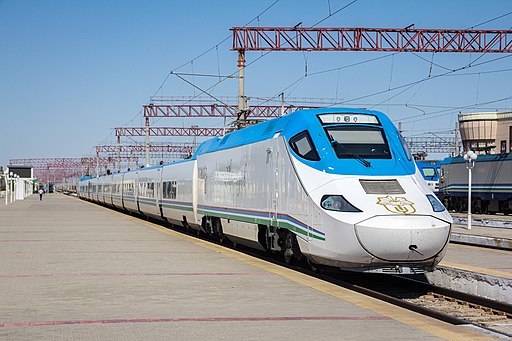
BACKGROUND: The CKU railway, first conceived in 1997, faced significant delays due to financial, political, technical, and geopolitical challenges. A major obstacle was political instability in Kyrgyzstan, which stalled progress for 15 years. The project was revitalized in 2012 following a visit to Beijing by then-Kyrgyz President Almazbek Atambayev, renewing momentum for this strategic initiative under China’s Belt and Road Initiative.
Geopolitical factors also contributed to delays in the CKU railway project. Kazakhstan and Russia opposed the new route connecting China to Europe, as they benefited significantly from the existing northern corridor via Russia, which generated substantial revenue. Concerns over losing this economic advantage fueled their resistance. Financing the mega-project was another major challenge. In 2023, reports emerged suggesting the CKU railway’s postponement for an indefinite period due to unresolved funding issues.
Technical complexities have also hindered the execution of the CKU railway project. A key issue is the incompatible railway gauges between China and Central Asian countries. While China uses a standard gauge of 1,435 mm, Kyrgyzstan and Uzbekistan rely on a broader gauge of 1,520 mm. This mismatch has posed significant logistical and engineering challenges to the project's implementation.
Another factor contributing to delays was the failure of participating countries to reach a consensus on the railway route due to conflicting interests. China and Uzbekistan favored a southern route, which offered shorter and faster transit to Europe. In contrast, Kyrgyzstan advocated for a northern route that, while longer and more expensive, would connect the north and south of Kyrgyzstan, fostering development and boosting its economy. Ultimately, under pressure from China and Uzbekistan, Kyrgyzstan conceded to the shorter and less costly southern route.
In May 2023, China and Kyrgyzstan reached an agreement to commence the CKU railway project during an official visit by the Kyrgyz President to Beijing, with the China Railway Construction Corporation completing a feasibility study the same year.
In June 2024, officials from China, Kyrgyzstan, and Uzbekistan signed a trilateral agreement to implement the project, establishing a robust legal framework for constructing the railway. The line will begin in Kashgar, Xinjiang, pass through Kyrgyzstan, and extend into Uzbekistan, with future plans for extensions to West and South Asia.
After nearly three decades of deliberation, the CKU rail corridor is now progressing. The project promises to reduce freight transit times by one week and shorten the China-Europe route by 900 kilometers, marking a significant milestone in regional connectivity.
IMPLICATIONS: Beijing's decision to advance the CKU railway project represents a strategic masterstroke, poised to deepen China's influence across Central Asia and beyond. The initiative comes at a critical juncture, as Russia remains embroiled in the Ukraine conflict and faces crippling Western sanctions, creating a vacuum in the region's geopolitical landscape.
The CKU railway will allow China to transport goods to Europe seven to eight days faster than existing land routes by providing a direct, efficient corridor to the continent. This development not only strengthens China’s connectivity but also enhances its role as a dominant trade and infrastructure player in the region.
In the future, the CKU railway could become a central hub for rail connectivity in Asia, linking Central Asia with South and West Asia. Once completed, the railway may be expanded east-west or north-south by integrating it with other countries' rail networks. Potential extensions include a route from Uzbekistan to Pakistan through Afghanistan. Additionally, Uzbekistan's existing connections with Turkmenistan and Iran could position the CKU railway as one of the shortest routes between China and Western Europe.
With the CKU corridor operational, Uzbekistan and Kyrgyzstan are set to emerge as vital transit countries for Chinese exports. Both nations stand to gain significant economic benefits from transit fees, enhancing their economic roles in regional and global trade.
As a pivotal element of China’s Belt and Road Initiative (BRI), the CKU railway represents a strategic project to enhance China's connectivity with Central Asia. This landmark railway will traverse the challenging terrain of western China and Kyrgyzstan’s highest mountains, linking the railway networks of China, Kyrgyzstan, and Uzbekistan. In its final phase, the project aims to integrate with railway systems in Europe, Turkmenistan, Iran, and Türkiye.
The CKU rail corridor is poised to boost regional trade, foster economic cooperation, and provide the landlocked nations of Kyrgyzstan and Uzbekistan with critical access to global markets. Furthermore, the project will deliver essential infrastructure to both countries, strengthening their economic resilience and regional standing.
The CKU railway project is estimated to cost US$ 8 billion, with US$ 4.7 billion allocated for constructing the Kyrgyz section. Given Kyrgyzstan’s GDP of $9 billion, this expenditure represents a significant economic burden. As a result, the financially constrained country has sought a US$ 2.35 billion loan from China to fund its portion of the project, raising concerns about Kyrgyzstan potentially falling into a Chinese debt trap.
Once completed, the CKU railway will allow China to transport goods to Europe seven to eight days faster than existing land routes. Geopolitically, this project is crucial for China, offering an alternative to the current route through Russia and reducing reliance on Moscow for trade with Europe.
On the other hand, the CKU railway raises significant security concerns as it will pass through opium-producing areas, potentially creating a new route for drug smuggling. The corridor could also facilitate the cross-border movement of terrorist and militant groups. This poses a particular threat to China’s Xinjiang province, which has been targeted by separatist and Islamic extremist groups. The railway’s potential to exacerbate regional security challenges underscores the need for robust measures to address these risks.
CONCLUSIONS: The CKU railway has the potential to be a transformative project for Central Asia, elevating the region’s significance as a transit hub between China and Europe. It marks the realization of Beijing’s decade-long ambition to expand its connectivity with Eurasian countries.
The ongoing Ukraine war and Western sanctions against Russia, following its 2022 invasion of Ukraine, have further amplified the importance of the CKU corridor. This new route provides an alternative to the Northern Corridor through Russia, currently the primary transit route between East and West, thereby diminishing Moscow’s strategic relevance in regional trade.
Geopolitically, Beijing views the timing as opportune to advance the CKU railway project in Russia's so-called backyard, leveraging the Kremlin’s preoccupation with the Ukraine war. The launch of this mega project is poised to enhance China’s influence in Central Asia, potentially shifting the balance of power between Beijing and Moscow in the region.
However, the project carries significant security risks. The presence of drug smugglers and militant groups in the region raises concerns that the CKU corridor could be exploited by these armed groups, further complicating Central Asia's already fragile security environment.
AUTHOR’S BIO: Syed Fazl-e-Haider is a Karachi-based analyst at Wikistrat. He is a freelance columnist and the author of several books. He has contributed articles and analysis to a range of publications. He is a regular contributor to Eurasia Daily Monitor of Jamestown Foundation Email, This email address is being protected from spambots. You need JavaScript enabled to view it. .
How Washington can Reconnect With Central Asia
By Stephen Blank
As a second Trump Administration takes power it is worth inquiring of its future policies towards Central Asia and the Caucasus. While neither region is likely to be a priority of U.S. policy, both offer Washington numerous opportunities to advance its interests, vis-à-vis the regional states as well as the larger actors bordering them, most prominently Russia, China, and Iran. If the incoming administration adheres to the framework that Trump’s first team propounded of this being an era framed by great power competition, it may indeed come to see the value of upgrading U.S. policy towards these countries. Across Central Asia and in the Caucasus, particularly among the Georgian population now rising against its government, and in Armenia, a stronger U.S. profile would certainly be welcome.
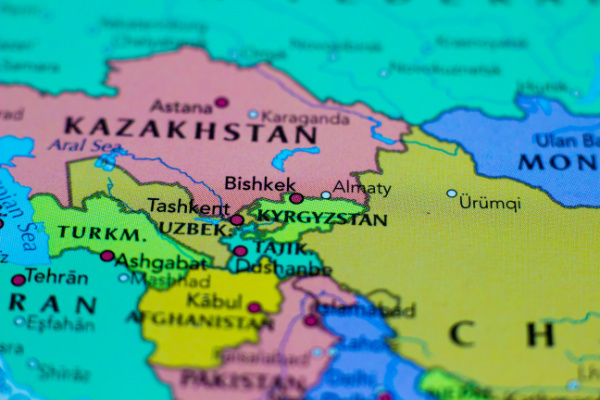
BACKGROUND: For Washington to fully benefit from enhanced relations with the governments of Central Asia and the Caucasus, it must acknowledge and adapt to the current regional realities. These regions have transformed significantly over the past generation, necessitating a rethinking of U.S. engagement strategies.
First, it is imperative to recognize that Central Asian states, as well as Russia and China, have come to terms with the Taliban’s control of Afghanistan and now consider Afghanistan an integral part of Central Asia. Despite Washington’s current reluctance to adopt a similar stance, advancing economic and political engagement with Central Asia and the Caucasus creates a foundation for future dialogues involving Afghanistan. These engagements would prepare the groundwork for meaningful regional discussions and collaborations when conditions become favorable.
Second, Azerbaijan is rapidly emerging as a key player in Central Asia. President Aliyev is frequently invited to and actively participates in regional presidential summits and Azerbaijan takes full part in significant regional economic, trade, and transportation initiatives. These projects, either in progress or under serious consideration, underscore Azerbaijan’s importance in shaping the region’s geopolitical and economic landscape. Consequently, any effective U.S. policy towards the Caucasus or Central Asia must account for these evolving regional dynamics. Recognizing and leveraging the interconnectedness between these regions will allow the U.S. to engage more effectively and with greater agility in advancing its strategic interests.
U.S. policymakers must also rethink both regions in a broader context. Central Asia and the Caucasus have established lasting inter-regional connections and ties to major global actors, including Turkey, Iran, India, South Korea, and Japan, alongside Russia and China. On economic grounds alone, Washington should increase its presence through trade, investment, environmental initiatives, and security cooperation, especially as the European Bank for Reconstruction and Development forecasts robust growth for these states. Wider U.S. engagement is needed in contrast to its neglect for the region during the Afghanistan war—when U.S. policy was narrowly focused—and subsequent disengagement after Afghanistan fell to the Taliban.
Continued U.S. and Western inattention gives Moscow and Beijing opportunities to solidify hegemonic influence, despite local governments’ explicit preference for multivector foreign policies. While the Biden Administration accepted Kazakhstan’s 5+1 presidential summit, this event has not become a recurring engagement, nor have there been significant high-level visits. Initiatives like the Economic Resilience in Central Asia (ERICEN) program are underfunded and lack alignment with an overarching strategy. This pattern of inadequate resources and strategic disconnect has long characterized U.S. initiatives in the region.
Similarly, strategy documents, such as the Trump Administration’s Central Asia Strategy to 2025, have achieved little, reflecting a lack of both intellectual and institutional commitment to the strategic importance of these regions. This is further evidenced by the absence of a strong U.S. response to Russian interference in Georgia, minimal involvement in the Armenia-Azerbaijan peace process, and the overall lack of a comprehensive strategy for Central Asia. Such bipartisan neglect highlights the critical need for a reformed and proactive approach to U.S. policy in the region.
IMPLICATIONS: To reverse this record of failure, the new administration must rethink its approach to these regions, recognizing their growing linkages and the potential of regional and international cooperation. Such collaboration will strengthen these states’ independence from Beijing and Moscow, aligning with vital U.S. interests. However, this objective requires large-scale institutional reform.
The State Department, Pentagon, and the National Security Council should establish a dedicated structure for Caucasus and Central Asian affairs. At the State Department, this would involve appointing an Assistant Secretary of State to oversee this portfolio, to whom the corresponding country desks report directly. In turn, he or she can report directly to the Under Secretary, Secretary of State, their opposite numbers at the Pentagon, and the White House at the National Security Council. Such a structure would elevate these regions’ importance in policymaking and provide the president with a more transparent and effective process for addressing issues in Central Asia and the Caucasus.
This reorganization would enable an integrated “whole-of-state” approach, ensuring that that U.S. policies align with its strategic interests and that regional voices are heard. It also allows the U.S. government to conduct policies towards these areas based on its interests rather than on the values of junior bureaucrats as in the State Department’s Bureau of Labor and Democracy. Its members previously boasted that they were going to impose democracy on Central Asian states and achieved merely an ignominious failure. They failed because they refused to take into account that every one of these governments has alternatives to Washington and factions within them who lean towards Moscow and Beijing. Therefore, in the absence of sustained U.S. engagement, all that these lectures achieved was increased anti-American resentment and a turn to other powers who took these states as they are. This outcome is visible in U.S. relations with Azerbaijan, which has many other patrons and several pro-Russian figures in its government. Baku spurned Congressional and Administration demands for democratization and subsequently moved closer to Russian policy. Undoubtedly, they saw these demands as moves initiated by this bureau and the Armenian lobby who influenced Congress in the absence of any coherent U.S. strategy.
Structural and intellectual reorganization will allow Washington to engage strategically and consistently with regional governments. By connecting democratization efforts with significant economic, political, and defense projects, these governments will find it harder to forgo the benefits of cooperation. Additionally, this structure minimizes the
influence of single-interest Congressional lobbies by emphasizing comprehensive and strategic policies. As Central Asia and the Caucasus gain prominence, increased administrative capability will enable better collaboration with Congress to shape balanced and forward-looking strategies. A proactive, strategic approach will not only enhance U.S. influence but also support the independence and development of Central Asia and the Caucasus. Addressing the importance of these regions in U.S. policymaking is critical to securing long-term stability and countering hegemonic ambitions by other powers.
CONCLUSIONS: The opportunities of the future and lessons from the past are unmistakable. Previous U.S. policies failed for reasons detailed in academic and professional literature. However, the Trump administration has a chance to respond to the region’s desire for enhanced U.S. economic, political, and military cooperation. Possibly excepting the pro-Moscow Georgian government, every state in the region seeks greater U.S. engagement, albeit on their terms.
This desire signifies a positive development that Washington should support by implementing the structural and policy changes outlined here. These adjustments would bolster the independence of Central Asia and the Caucasus and facilitate their cooperation with international institutions to spur regional development. This progress would empower these states to shape their futures independently, and not according to the wishes of Moscow or Beijing.
Failure to seize these opportunities and continuing inaction will leave these regions vulnerable to becoming backward, conflict-ridden dependents of Russia and China. The new generation, more aligned with Western values, may lose its chance for a brighter future. Rather than becoming stable regions fostering global cooperation, Central Asia and the Caucasus risk devolving into conflict zones where international rivalries escalate.
The U.S. must act decisively to prevent such an outcome. By prioritizing these regions and adopting a proactive strategy, Washington can mitigate great power competition and avert prolonged instability across Eurasia. The stakes are too high to ignore the transformative potential of effective engagement in Central Asia and the Caucasus.
AUTHOR’S BIO: Stephen Blank is a Senior Fellow with the Foreign Policy Research Institute, www.fpri.org.
Russia’s Grip on Georgia: Will the Oligarch’s Attempt to Move Georgia Away from the West Succeed?
Vasil Sikharulidze and Malkhaz Mikeladze
December 6, 2024
Following Russia's occupation of Abkhazia and Tskhinvali post-2008, Georgia's sovereign integrity has been increasingly compromised, prompting the ruling Georgian Dream party to adopt a cautious approach towards Moscow. This shift has led to polarization within Georgian society, complicating its Euro-Atlantic integration. The country's reliance on Russian investment and trade has raised concerns about maintaining genuine independence. Russia employs various levers, including political manipulation, economic ties, disinformation campaigns, and likely interference in the parliamentary elections of 2024, in order to sustain its influence. Following these rigged elections, Georgia’s turn away from the West and toward Russia intensified rapidly.
Read Russia's Grip on Georgia (PDF)

Visit also