Russia and South Ossetia Move Toward de facto Union
By Nicola Ilario
South Ossetia's recent presidential transition, in which Alan Gagloev resigned in favor of Russian administrator Marat Kambolov, marks the latest step in a long-running process of Russo-Ossetian integration. The May 2026 "Treaty on Deepening Allied Interaction," marks a significant step in South Ossetia's integration, signifying Moscow's broader strategy toward Georgia and the South Caucasus as well as its limitations.
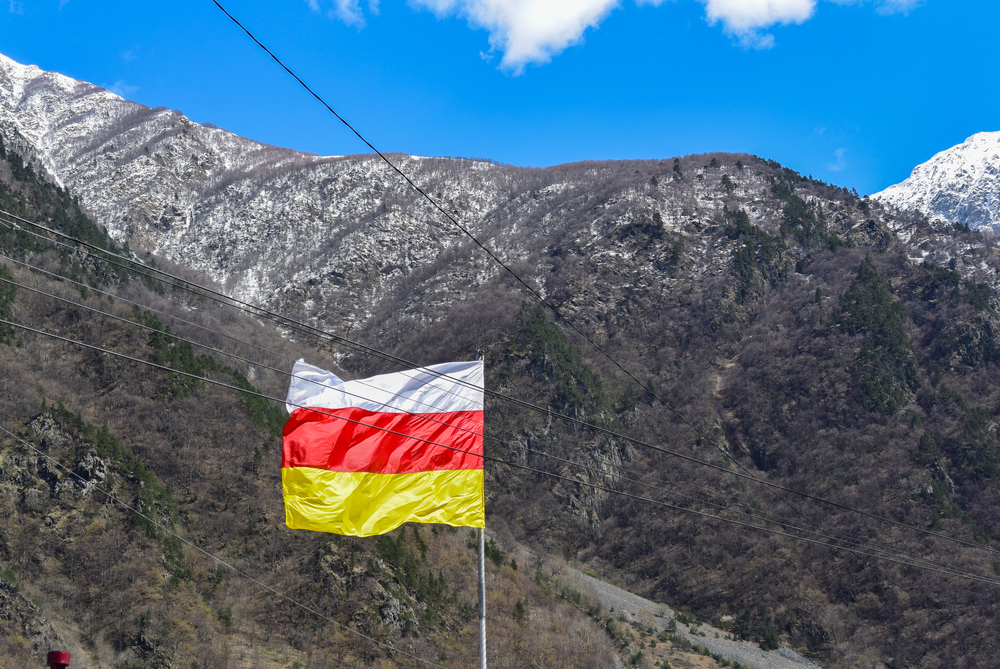
BACKGROUND:
On June 23, Alan Gagloev resigned from his post as President of the small breakaway republic of South Ossetia, taking a new position as an aide to Russian President Vladimir Putin. The move happened suddenly. Gagloev, in a televised address to the Ossetian people, claimed that after meeting Putin on June 22, he agreed to become an advisor to the Office of the Russian President. The next day he resigned. In his place, Prime Minister Marat Kambolov assumed the responsibilities of the presidency.
Kambolov is, notably, not a native to South Ossetia. A Russian national, Kambolov was sworn in as South Ossetia’s Prime Minister on June 17, 2026, but had until 2025 not been involved in the domestic affairs of the breakaway republic. Born in North Ossetia in 1965, he graduated from Moscow State Social University and the Russian Academy of Public Administration, going on to work in the Russian government. In May, he was tapped to be Gagloev’s advisor, and soon became Gagloev’s nominee for the premiership. Kambolov is expected to deepen Russo-Ossetian ties, implementing provisions of a bilateral treaty signed between Russia and Ossetia on May 9, 2026. Kambolov is expected to become the President of South Ossetia after snap elections planned September 18.
Kambolov’s ascension is part of a continuous effort of Ossetian aspirations for annexation into the Russian Federation. Indeed, since 1991 and with Russian backing, the Ossetians have maintained de facto independence from Georgia and alignment with Russia.
Generally, the South Ossetian separatist project is concerned with the unification of their people, whether it be within a sovereign state or under Russian rule. Indeed, the Ossetians are a transnational people, inhabiting Georgia, the unrecognized Republic of South Ossetia, as well as the Russian federal subject, the Republic of North Ossetia–Alania. As the vast majority of Ossetians reside in North Ossetia, it has been the wish of many in the south form a union with the north, to share a common state.
Ossetian demands for union with the north began in the early 90s, when the region broke from Tbilisi. In 1992, South Ossetia held a referendum that saw overwhelming support for independence by Ossetians and a 99.89 percent vote in favor for “reunion” with Russia.
Serious promotion of annexation did not begin until 2008, however, when Russia formally recognized the small de facto republic. After the election of Leonid Tibilov as South Ossetian president in 2012, it began making moves towards unionship. Tibilov stated after winning the 2012 elections that “We will certainly continue along the course towards Russia that has been chosen by our people – a course of further integration ... in all existing spheres, including the economy, as well as military, technical, and defense cooperation.” Other efforts towards union, such as the partial integration of the South Ossetian armed forces into the Russian army, also occurred during this period. In 2016, Ossetia signed the bilateral Treaty on Union Relations and Integration with the Russian Federation, strengthening ties between the two countries. Further plans for full annexation emerged at this time as well, with Tibilov suggesting closer union with Russia.
Plans for an annexation referendum did not pan out until 2022, where in March, South Ossetian president Bibilov announced a referendum following the 2022 presidential elections. Bibilov suggested it should take place the day after the presidential elections, thus constituting concrete executive action in contrast with earlier parliamentary debates on the organization of referendums. The referendum was delayed, however, by Gagloev who after winning the elections stated that the time was not right and signed a decree cancelling it.
Despite continued delays, Russo-Ossetian cooperation has continued with the culmination of talks leading to the signing of a bilateral treaty in 2026. On May 9, Vladimir Putin and Alan Gagloev signed a “Treaty on Deepening Allied Interaction,” which the Russian Duma ratified on May 13. The document outlines provisions that would enable Russian citizens to hold office in South Ossetia and establish greater energy, transportation, telecommunication integration between the Russian Federation and the de facto republic. In effect, the agreement would bring de facto annexation. Gagloev, the former president of South Ossetia, called it, a “step towards the reunification of the Ossetian people,” further emphasizing that “South Ossetians perceive Russia as [their] great homeland.”
IMPLICATIONS:
The recent appointment of Marat Kambolov as Prime Minister and his ascension to the role of acting president is a continuation of the integration and unification of Russia and South Ossetia, a process that has been ongoing since the South Ossetian war in 1991. Kambolov is a demonstration that Moscow is now installing administrators rather than cultivating local elites.
The events in South Ossetia demonstrate Moscow’s continuing exercise of influence in the South Caucasus, which is otherwise waning against the backdrop of its economic, military and political overextension due to its ongoing invasion of Ukraine. Russia has lost considerable influence in Armenia, as Prime Minister Pashinyan moves the country Westward and as President Aliyev of Azerbaijan continues to elevate Baku’s strategic autonomy.
This is evident as Gagloev noted that one of the reasons for the delay of the 2022 referendum was Russia’s invasion of Ukraine. As he stated, “I believe that the current authorities of the Russian Federation, represented by President Vladimir Putin, are still busy with other issues, I think with more serious ones.”
Setting aside Russia's insufficient political capital for outright de jure annexation, indirect rule is also part of Moscow’s strategy to manage Russo-Georgian relations. Since the Georgian Dream (GD) party’s rise to power in the early 2010s, Georgia began to employ a foreign policy that was multi-axis oriented, engaging in attempts at rapprochement with Russia. When Russia invaded Ukraine in 2022, the GD government refused to engage in the Western sanctions imposed on Moscow. GD likely believed that a swift Russian victory in 2022 was inevitable, and that maintaining friendly relations with Russia was Georgia’s most rational course of action. It is unclear whether there is a definitive grand strategy to GD’s foreign policy, yet the Georgian government clearly believes that cultivating better relations with Russia is in their interest.
This certainly incentivizes Moscow to maintain a friendlier attitude Georgia, however, at the same time Moscow acknowledges the utility of both South Ossetia and Abkhazia in the relationship. By continually utilizing South Ossetia as a bargaining chip, Moscow can promise Georgia speculative future talks on the fate of South Ossetia, and in return Georgia retains a neutral, or even semi-positive attitude towards Moscow. Of course, Russia has no intention of giving away South Ossetia, yet this strategy continues to work as GD continues its attempts at a multi-axis oriented foreign policy.
CONCLUSIONS:
Georgia remains strategically important for Russia, which hopes to control a North-South Axis, from the North Caucasus through Georgia and Armenia, cutting through the Middle Corridor and further linking up with Iran. This competes with the ongoing establishment of a West-East Axis from Turkey, through Armenia/Georgia and Azerbaijan and further to the Caspian and Central Asia.
It is evident that Russia, at least under the current strategic policies of the Putin regime, will seek to retain its influence in the South Caucasus for the foreseeable future. Moscow’s approach to integration in South Ossetia demonstrates its continued interest in the region, but also the limitations to its capacity for fulfilling them.
AUTHOR’S BIO:
Nicola Ilario is an undergraduate at the University of Pennsylvania. He studies Economics and History, with a concentration in the history of diplomacy. Nicola interned at the Central Asia-Caucasus Institute the Summer of 2026, assisting fellows in their research. He can be reached at This email address is being protected from spambots. You need JavaScript enabled to view it. .
De Facto Government of South Ossetia Paralyzed Amid Severe Crisis
By Tomáš Baranec
December 21, 2023
In 2022, the opposition-minded part of the South Ossetian population received the victory of Alan Gagloyev in de facto presidential elections with a mix of hope and uncertainty. Although Gagloyev was an opposition candidate against the increasingly unpopular de facto President Anatoly Bibilov, he was not the first or second choice for most of the voters. Bibilov indirectly paved Gagloyev’s path to power after local authorities did not allow other popular opposition leaders to run. Today Gagloyev’s administration, paralyzed by the interests of influential grey eminences, is paving the way for Bibilov’s return to power amid a deep crisis. Gagloyev’s end might come already in 2024, following the planned parliamentary elections.
South Ossetian Territorial Claims Overlap With "Fear Zones" Already Controlled by Russian Forces

By Tomáš Baranec, Giorgi Bilanishvili, Davit Katsarava, Lana Ghvinjilia
March 1, 2022, the CACI Analyst
On November 19, 2021, the South Ossetian de-facto State Commission for the Border with Georgia published its work, concluding that de facto South Ossetia had lost about 200 square kilometers to Georgia. This statement fueled a political crisis in the separatist region as local opposition sought to impeach de-facto president Anatoly Bibilov. Most experts studying these developments focus on their domestic roots and impacts. However, analysis of the Commission’s territorial claims in the context of the continuous borderization of the Georgian-Ossetian Administrative Boundary Line (ABL) and the creeping annexation of Georgian territory by Russian forces also indicates another possible dimension of this development: coordination between Tskhinvali and the Kremlin to annex stripes of land with military-strategic importance.
Tensions Remain around Georgia's Breakaway Regions Nine Years After Five-Day War
By Natalia Konarzewska
October 26, 2017, the CACI Analyst
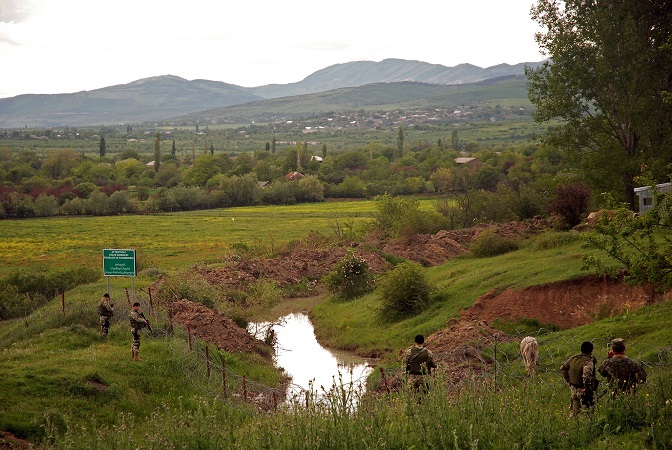
In August, Georgia commemorated the ninth anniversary of its five-day war with Russia over the breakaway regions of Abkhazia and South Ossetia and the 25th anniversary of the war in Abkhazia. Although years have passed since the hostilities, the conflicts remain unresolved while the political situation around the two de facto entities as well as Russia-Georgia relations remain tense. Russia’s President Vladimir Putin visited Abkhazia and reiterated Russia’s military support for the region. In the preceding months, Russia increased its military pressure on Georgia by conducting large-scale military exercises in South Ossetia and Abkhazia. In parallel, Russia continues the illegal demarcation of the so-called frontier between Georgian-controlled territory and the separatist regions, moving the occupation line further into Georgian territory.
EU–China trade to bolster security in the South Caucasus

By Boris Ajeganov
January 23, 2017, the CACI Analyst
Foreign investment in Georgia is strengthening the country’s importance in connecting East Asia with Europe, which has positive implications for the broader region. The rise in FDI in commercial and transportation infrastructure in combination with the signing of international free trade agreements will reduce Georgia’s vulnerability in terms of economic and, ultimately, ‘hard’ security. The growing importance of the South Caucasus as node for EU-China trade will weaken Russia’s incentives to undermine its southern neighbors by military, political, and economic means as it has done in the past. Accordingly, Tbilisi’s ability to conduct an independent foreign policy is set to improve despite the absence of Western security guarantees.
Visit also