Could Floods in Dagestan Trigger a Tectonic Shift?
By Laura Linderman and Lydia Sawatsky
The catastrophic flooding that struck Dagestan and northern Azerbaijan in late March and early April 2026, the worst rainfall event the republic has seen in over a century, has done more than damage homes and infrastructure. It has exposed the limits of Russian state capacity on its southern periphery at a moment when Moscow's grip on the wider Caucasus is already loosening, and it has done so along the precise ethnic and territorial seam where the Kremlin has long kept what the Chechen analyst Inal Sherip has called the "Lezgin card" in reserve. The Kremlin's belated and rhetorically defensive response, set against a more coherent Azerbaijani posture to the same storm, will accelerate Baku's strategic recalibration away from Moscow and rearrange political loyalties along the Lezgin cross-border zone in ways Russia has no current means to repair.
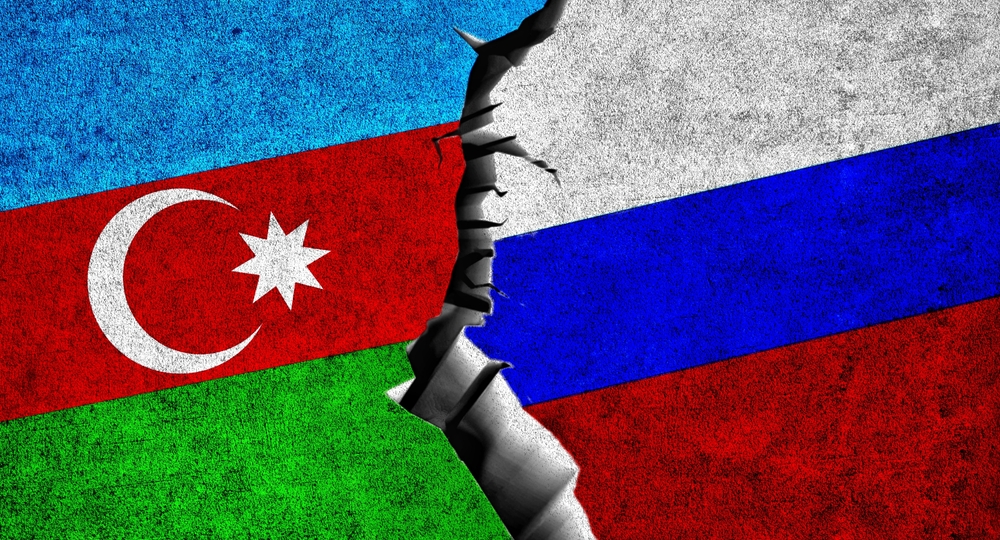
BACKGROUND:
Between March 27 and April 8, an unusually intense Caspian cyclone delivered rainfall to Dagestan and northern Azerbaijan that meteorologists in both countries have described as a record-breaking event of a scale not seen in 107 years. At an April 9 meeting on the disaster, Vladimir Putin himself observed that "since meteorological observations began, in 1882, such figures have never been recorded in the region." By that point, at least seven people had been confirmed dead in Dagestan, more than 6,200 had been evacuated, around 1.5 million had been affected in some way, and over 6,000 residential buildings had been damaged or submerged. The Gedzhukh reservoir dam in Derbentsky district was overtopped on April 5, sweeping cars off the federal motorway. Sections of the Caucasus federal motorway and the North Caucasus Railway were severed, and three substations in Makhachkala (Primorskaya, Vostochnaya, and Makhachkala-110) were flooded and temporarily knocked offline. Yuri Chaika, the Presidential Plenipotentiary in the North Caucasus Federal District, put initial damage at over one billion rubles. On April 7, Putin directed the elevation of the regional emergency to federal status, with the formal designation issued by the government commission on April 9.
The same storm did not stop at the international border. In Azerbaijan, it caused fatal flooding in Baku's Yeni-Ramana settlement on March 27 and 28, the death of a man swept away by floodwaters in Gusar district on April 5, and the collapse of a house in Baku's Sabunchu district on the night of April 7. The worst-affected Azerbaijani districts (Gusar, Khachmaz, and Quba) are precisely those where the country's Lezgin minority is most heavily concentrated.
The official Russian response combined high-profile federal visits with a striking reluctance to take responsibility. Emergency Situations Minister Alexander Kurenkov, Construction Minister Irek Faizullin, and Natural Resources Minister Alexander Kozlov all traveled to Dagestan. Sergei Melikov, the head of Dagestan, nevertheless attributed the loss of life among motorists swept off the federal motorway to local "carelessness," and blamed flooding in Makhachkala on "reckless" real estate development. Residents were not persuaded. Novaya Gazeta Europa quoted a resident of Mamedkala who said that the only reason fatalities had not run into the dozens was that locals were pulling each other from the floodwaters themselves. Moscow's instinct to manage the crisis through televised commission meetings rather than visible mobilization on the ground reflects a federal centre that is overstretched, not one choosing restraint.
IMPLICATIONS:
The political significance of the floods extends beyond the disaster itself, because they have arrived at a moment when several reinforcing trends across the Caucasus are converging.
The first is the visible thinness of Russian state capacity outside the Kremlin's core priorities. In the same week Moscow elevated the Dagestan emergency, it absorbed the loss of its last functioning railway ferry across the Kerch Strait to Ukrainian drone strikes. Federal budget transfers, once routine for the North Caucasus, are now constrained by wartime spending and sanctions. Chronic unemployment, entrenched corruption, underdeveloped infrastructure, and reliance on heavy-handed security policies remain unresolved across the North Caucasus, continuing to fuel local grievances. The entire Kadyrov model of patronage-based stability rests on a federal balance sheet that is no longer flush, and the perception of decline now circulates openly in exile and opposition spaces. In late April, the former Chechen deputy prime minister Ruslan Kutaev, who now leads the Assembly of Peoples of the Caucasus, publicly claimed that "everyone knows Putin has lost" and that the great majority of Kadyrov's forces would switch sides at the right moment. The claim is contested, but its open airing is itself a marker of what exile figures now feel free to assert.
The second is the changing posture of Baku. Azerbaijan, hit by the same storm, has handled its response more conventionally. The country has its own constraints; residents in Baku's Yeni-Ramana settlement blocked a road in late March to protest inadequate drainage after rainfall killed two people near a damaged power cable, and Baku city authorities attributed some of the worst flooding to housing built without compliance with safety codes. But Baku has not attributed specific deaths to the carelessness of the dead. Through its Ministry of Emergency Situations, it has evacuated more than 450 people from flood zones, issued regular briefings, announced an expansion of its agricultural insurance regime to cover flood losses on April 8, and on April 28 President Ilham Aliyev allocated 85.9 million manat (approximately 50 million USD) from his reserve fund for flood relief. The political tone in Azerbaijani state media has been one of administrative competence and immediate action rather than recrimination.
This contrast matters because Azerbaijan has spent the past eighteen months systematically distancing itself from Moscow. Following the December 2024 destruction of Azerbaijan Airlines Flight 8243 by Russian air defenses over Grozny, and the June 2025 Yekaterinburg raids in which two ethnic Azerbaijani brothers died in Russian custody, Baku closed the Russian House, suspended Sputnik Azerbaijan, sued Russia internationally, and at the February 2026 Munich Security Conference President Aliyev publicly accused Moscow of three deliberate strikes on Azerbaijani diplomatic facilities in Kyiv. The trajectory has only accelerated. On April 25, four days after the federal emergency was declared in Dagestan, Aliyev hosted Volodymyr Zelensky in Gabala on the Ukrainian leader's first visit to the South Caucasus since the Russian invasion of Ukraine began, and the two presidents signed six bilateral agreements concentrated on defense-industrial cooperation, joint production, and the deployment of Ukrainian drone specialists in Azerbaijan. Every image of Russian inadequacy on Azerbaijan's northern doorstep validates Baku's strategic choice.
Baku's confidence rests on more than rhetoric. The early-2026 strikes on Iran have reduced the third regional power with traditional interests in the borderlands to silence born of weakness rather than restraint, and the Iran war has paralysed the International North-South Transport Corridor through banking and insurance restrictions, redirecting Eurasian cargo to the Trans-Caspian route through Azerbaijan and Kazakhstan, where demand surged 450 to 500 percent in a single week. Baku has also kept its land borders, including with Russia, closed since the COVID-19 pandemic, retaining the closure for political reasons. There are no longer direct flights from Baku to any Dagestani or Chechen city. That Azerbaijan can simultaneously absorb a war next door, manage the diversion of Eurasian transit through its own ports, and project administrative competence in a domestic flood response is itself a measure of how far the regional balance has shifted.
The third element, and the most underappreciated, is the cross-border ethnic dimension. The areas of Dagestan worst affected, Derbentsky and Magaramkentsky districts and the southern coastal belt, are the historic homeland of the Lezgin people, who number roughly 800,000 in southern Dagestan and between 180,000 and 260,000 in northern Azerbaijan. As Sherip notes, demographics heighten fragility: Dagestan alone hosts an Azerbaijani community of roughly 120,000, more than a third of the population of Derbent, while Azerbaijan hosts approximately 250,000 Lezgins and Avars, meaning any cross-border incident would almost inevitably spill across the frontier. Sergei Melikov, notably, is the first ethnic Lezgin to head Dagestan; with a Lezgin father and a Russian mother, he was born in Orekhovo-Zuyevo near Moscow and made his career in the federal security services, with no ties to Dagestan or its local elites before Putin appointed him acting head in October 2020. The Samur River that forms much of the international border is itself part of the flood story. Moscow has historically managed this frontier by holding the "Lezgin card" in reserve, quietly cultivating the Sadval movement and other Lezgin nationalist organizations in the 1990s as leverage against Baku and then letting them wither when Azerbaijani concessions were required. The flood inverts this calculation. A perception that Moscow neither protects nor compensates Lezgins on its side of the border, while Baku at least musters a coherent administrative response on its side, is the kind of fact that reshapes long-term political loyalties at the margins.
The fourth element is recent political memory. The September 2022 anti-mobilization protests in Makhachkala and Endirei were the largest in the North Caucasus and the first significant public unrest in the republic in a decade. They were touched off by the same dynamic now visible in the flood response: a federal centre that extracts more from Dagestan than it provides. The flood does not, by itself, manufacture a protest movement. But the conditions that produced 2022 (the perception of federal extraction, official contempt for local life, and the absence of meaningful Dagestani representation in Moscow's calculations) are all reinforced by what Dagestanis are seeing this month. Dagestan has been disproportionately mobilized for the war in Ukraine, has been chronically underfunded for infrastructure, and is now being told by its own governor that its dead were simply careless.
CONCLUSIONS:
The Dagestan floods of 2026 will not, in themselves, dislodge Sergei Melikov or destabilize the Russian Federation's hold on its southern periphery. Melikov's regional security apparatus remains coherent, and the federal centre has committed visible resources. What the floods will do is accelerate trends already in motion. Baku will read the contrast between the two responses as further confirmation that its strategic distancing from Moscow carries declining costs, a reading already legible in the Gabala signings of April 25. Yerevan, watching from across the South Caucasus, will draw the same conclusion: that a Russian state which cannot compensate flood victims on its own southern periphery is unlikely to provide the security guarantees it has long been asked to provide. The Lezgin cross-border community will quietly absorb the lesson that the federal centre will mobilize cameras before it mobilizes pumps. Western policymakers, who have spent the past year recalibrating their approach to the South Caucasus in the wake of the TRIPP framework and Vice President Vance's February 2026 visit to the region, will find that Moscow's regional credibility has eroded slightly further in a part of the Russian Federation where that erosion was supposed to be impossible. As AFPC Senior Fellow Mamuka Tsereteli has argued, the war in Ukraine has produced a paradox for American strategy: it has reduced Russia's long-term strategic power even as it has hardened Moscow into a more risk-tolerant adversary. The window for Western policymakers to lock in this regional shift remains open, but it will not stay open forever. The floodwaters in Dagestan will recede in the coming weeks. The political water table in the Caucasus has shifted by a measurable amount, and it is shifting in the same direction in which the rivers are running, south, away from a centre that no longer commands them.
AUTHOR’S BIO:
Laura Linderman is a Senior Fellow and Director of Programs at the Central Asia-Caucasus Institute at the American Foreign Policy Council, and a nonresident fellow at the Atlantic Council's Eurasia Center. Lydia Sawatsky is a researcher at the Central Asia-Caucasus Institute.
Russian Elite Infighting Highlights North Caucasus Tinderbox
By Laura Linderman and Michael Hikari Cecire
In early October, Chechen leader Ramzan Kadyrov declared a blood feud against three North Caucasian federal lawmakers, accusing them of plotting his assassination amid a power struggle over the Wildberries e-commerce platform. This incident highlights the escalating tensions and fragility of power within Russian politics, revealing vulnerabilities in the Kremlin's governance amid ongoing conflicts. As regional elites assert their interests, the potential for broader instability increases, particularly against the backdrop of Russia's war in Ukraine. The situation underscores the complex interplay of patronage networks and regional autonomy that could lead to significant shifts in Russia's internal power dynamics.
BACKGROUND: In early October, Chechen strongman Ramzan Kadyrov declared a blood feud against three federal lawmakers—two Dagestani and an Ingush deputy—whom he accused of planning his assassination. The dispute is tied to control over the Russian Wildberries e-commerce website, which had been wrested by forces backed by the Dagestani and Ingush deputies against Kadyrov’s allies, culminating in a deadly shootout at the company’s Moscow headquarters. The company's contentious expansion has also led to intimidation beyond Russia's borders - in October 2024, a JAMnews editor in Georgia received threats of violence from an apparent Chechen supporter after criticizing Wildberries' entry into the Georgian market despite international sanctions. Kadyrov’s rhetoric indicates a profound willingness to use violence and intimidation, highlighting Kadyrov’s belief that he operates beyond Moscow’s control.
More broadly, the Wildberries saga highlights an ongoing scramble among Russian elites for key economic assets, and a deepening sense of growing instability throughout the contest Russian political economy arena. The North Caucasus, is a notable theater for this contestation given its historically restive and fractured contexts. Further, Kadyrov’s willingness to level threats—and the limited reaction it elicited—highlight the privileged position that Kadyrov continues to enjoy in Russia, but also the way other factions are contesting his authority. Kadyrov's comments also mark an escalation in the tensions between regional leaders and the Kremlin, illustrating the fragile balance of power within Russian politics. Kadyrov has long been known for his authoritarian rule, and this incident further showcases his leverage in the ongoing political competition among regional and federal authorities.
The ongoing conflict has drawn attention not only for its immediate violence but also for what it reveals about Russian and North Caucasus patronage networks. The region has long been characterized by real and fictive kinship affiliations that shape local governance and economic relationships. The fallout from the incident may embolden other North Caucasian factions to assert their interests in Moscow, potentially leading to further, and spiraling, destabilization. The Kremlin's haphazard approach to governance in the North Caucasus only further complicates matters. Moscow has historically relied on regional strongmen like Kadyrov to maintain stability, yet this reliance simultaneously breeds conditions for potential conflict.
Against the backdrop of an exhausting military quagmire in Ukraine, institutionally fragile security services and military apparatus made hollower by that war, and elite infighting and uncertainty as Russian President Vladimir Putin ages, the Wildberries incident reveals how Russia’s weak institutions and semi-feudal mode of control may be contributing to feedback loops of internal deterioration and instability. As the situation unfolds, it will be critical to monitor the responses from both the Kremlin and North Caucasian regional power centers, as this may foreshadow larger shifts in Russia's internal power dynamics.
IMPLICATIONS: The broader implications extend far beyond a mere violent confrontation between business interests and political factions. This event reveals profound vulnerabilities in the Russian state, which are particularly exacerbated amid its ongoing war in Ukraine.
The dynamics exposed by this recent incident suggest shifting balance between Moscow and the North Caucasus, highlighting the Kremlin’s internal fragility and the growing assertiveness of regional elites. As the war in Ukraine continues to stretch Russian resources and resolve, the Kremlin’s reliance on figures like Kadyrov to maintain control—or at least the simulacrum of control—can backfire and may kindle wider instability that can be expressed as a broader challenge to Moscow's authority.
The instability generated by Kadyrov and his patronage-based power structure, or other such triggers, could spiral into larger conflicts, not only within Chechnya but across the entire region. The interconnected nature of intertwined North Caucasian business and family groupings means that tensions in one republic can quickly spill over into others, potentially igniting violence that could further destabilize Russia's southern flank. This spillover effect extends beyond Russia's borders into the South Caucasus, as evidenced by threats against journalists in Georgia who criticize Wildberries' regional expansion. Such incidents demonstrate how Russian patronage networks attempt to exert influence through both economic penetration and intimidation in neighboring states, particularly as sanctions push Russian businesses to seek new markets
In addition, the situation signals a growing challenge to the Kremlin’s narrative of centralized control. The framented web of factional loyalties and business interests belie the formal appearance of a centralized state. As North Caucasian elites gain more visibility and influence in Moscow, the Kremlin may find itself increasingly unable to exert authority over these networks. Distracted and increasingly incapable state security structures and empowered regional elites where societal alienation from the Russian body politic is strong (or, as in the case in the North Caucasus, arguably endemic) could boost nationalist sentiments and separatist movements—particularly in the North Caucasus, which have their own historical grievances against the central government.
Finally, the likely distant but non-zero potential for federal disintegration looms. If the Kremlin's grip continues to weaken, the North Caucasus could witness a resurgence of separatist movements, echoing the conflicts of the 1990s and early 2000s. As regional elites compete for power and influence, those efforts could escalate into open conflict with each other and federal authorities—themselves fragmented patronage networks. This suggests not the need for Russia to more adequately fill the regional power vacuum, but perhaps that its tentative dominion over the region has been fundamentally illegitimate and ill-fitting.
CONCLUSION: North Caucasus instability underscores the intricate power dynamics within the region and its fundamentally contingent relationship with the Kremlin. As the Kremlin grapples with material and systemic exhaustion from nearly three years of full-scale war, the North Caucasus could be a leading indicator for generalized instability and regime weakness.
While President Putin has broadly sought to consolidate power and eliminate challenges to federal authority, the reality is Moscow—and Putin himself—have come to rely on regional elites who has operated with semi-independence and in sometimes open defiance of state structures. Kadyrov's brazen threats against federal lawmakers highlight the potential for personal and political rivalries to escalate into violence. This power struggle reveals the dissonance between Moscow's objectives and the realities on the ground, where informal networks and personalistic loyalties can often dictate political outcomes.
Moreover, the ongoing war in Ukraine is exacerbating existing tensions in the North Caucasus, making it increasingly difficult for the Kremlin to maintain stability. The region, with its historical grievances and complex interethnic dynamics, is a potential flashpoint for renewed conflict, especially as federal resources diminish. In a generalized scramble for influence and assets, the North Caucasus may be particularly prone to instability, and under certain circumstances, potentially renewed national movements or separatism. The Wildberries incident thus serves as a harbinger of potential unrest, suggesting that the Kremlin's focus on external conflicts may leave it vulnerable to internal challenges—cultivated by the very system of political economy that it has depended upon to maintain its writ.
More broadly, growing signs of instability in the North Caucasus ask questions of wider regional dynamics, including in the South Caucasus. While separated by certain geographic and especially political features (i.e., borders of the Russian Federation itself), in many respects the North and South Caucasus are a more coherent and permeable cultural space than geopolitical dynamics suggest. Narratives of ethno-linguistic segregation can be politically expedient, but often belie reality. Political controversies aside, Nakh-speaking Chechens and Ingush share a common cultural sphere in many respects with each other and the smaller but prominent Nakh and Georgian-speaking Kist and Bats communities in Georgia’s highlands. Similarly, Ossetians in the Russian Federation have far more regular interaction and exchange with a substantial Ossetian population in Georgia, not to mention with Georgians themselves. Avars and Lezgins, two of the largest ethnic groups in Dagestan, also form substantial minorities in Azerbaijan. And so on.
As such, instability in the Caucasus have dynamic effects on other parts of the Caucasus. Should the situation continue to deteriorate in the North Caucasus, it should be expected to have an effect on the South Caucasus as well, given the inherent and durable (notably, despite broader political conflicts) connectivity and interplay between north and south. Beyond cross-hatched ethnic affinities, comparable patronage dynamics exist in Azerbaijan, increasingly in Georgia, and residually in Armenia—all with business and social interests that have ties to Russia. Just as North Caucasus elites are scrambling for influence in the region and Russia’s power centers, so too are South Caucasus oligarchs and their own networks of allies and clients. Overall—what happens in the North Caucasus cannot be a strictly localized affair, and is likely to trigger instability elsewhere in Russia, and potentially spill over into the South Caucasus as well.
AUTHORS' BIOS: Laura Linderman is a Senior Fellow at the Central Asia-Caucasus Institute of the American Foreign Policy Council. Michael Hikari Cecire is an adjunct associate professor at Georgetown University’s Security Studies Program and a former senior policy advisor at the Commission on Security and Cooperation in Europe.
June 23 Makahchkala Attacks: Implications for the Kremlin
By Emil A. Souleimanov and Huseyn Aliyev
July 3, 2024
On June 23, a series of coordinated attacks were carried out in Dagestan’s two largest cities Makhachkala and Derbent, targeting Orthodox churches, synagogues, and a traffic police post. The attacks left 26 people dead (including five attackers) and dozens injured. This attack signaled the apparent revival of the jihadist scene in Russia’s largest and demographically most populous North Caucasus republic, fuelled in part by increasing antisemitic tension and militarism due to the ongoing war in the Gaza Strip and Russia’s invasion of Ukraine. This new upsurge of violence can also be attributed to the worsening socio-economic conditions in the republic, the over-engagement of the law enforcement and security services with the war in Ukraine, and the accumulation of general discontent among Dagestani youth with limited channels for peaceful expression.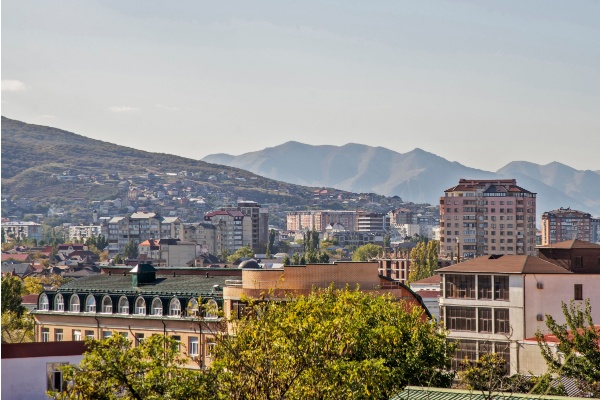
Quelling Anti-Mobilization Unrest in Dagestan
By Alexander Yeo
October 27, 2022
The eruption of protests in Dagestan, followed by an announced/organized protest that failed to materialize, reveal an opposition in flux and a local regime that, while somewhat weakened, is still able to reliably quash a protest movement. Aside from efforts by the authorities, subsequent protests failed to materialize just as much due to a lack of political leadership and the quiet of Dagestani athletes – usually a focus of respect among Dagestanis. While some disquiet remains, Dagestan’s Head Sergei Melikov has for now successfully prevented the emergence of an opposition movement similar to the one that toppled Yunus-Bek Yevkurov in Ingushetia.

Emerging North Caucasus Civil Society Presents New Challenges for Authorities
By Neil Hauer
November 8, 2019, the CACI Analyst
The summer of 2019 saw a crackdown on civil society across the North Caucasus. Ingushetia experienced the most severe repressions, with more than 30 individuals still detained, but Dagestan and Kabardino-Balkaria experienced arrests as well. The proximate causes of the crackdown varied among the three republics, but all reflected the fact that a region-wide civil society has flourished since the near-end of the former Islamist insurgency. Authorities are evidently unprepared to deal with this new challenge, and forceful measures against their new, nonviolent opponents have proven ineffective at best.
Visit also