Azerbaijan, Kazakhstan and China Coordinate Logistics Along The Middle Corridor
By: Vusal Guliyev
Azerbaijan, Kazakhstan, and China increasingly seek to strengthen the Middle Corridor as a trans-Eurasian trade and logistics route. China’s proposal to extend Lianyungang Port’s existing logistics chain to Baku, alongside expanding container capacity at Aktau and new multimodal transport agreements, reflects a shift toward integrating previously separate infrastructure projects. Building on the existing Lianyungang–Khorgos–Aktau “Three Nodes” logistics chain, the proposed extension to Baku could further integrate transport networks across China, Central Asia, and the South Caucasus, strengthening freight connectivity with European markets. It could also create opportunities for Japan and South Korea to diversify their trade and energy routes amid disruptions to traditional supply chains. However, its long-term viability will depend on whether the participating countries can coordinate railway services, port operations, customs procedures, and digital systems to deliver reliable, cost-effective, and commercially competitive freight services.
BACKGROUND:
On September 9, 2026, Kazakh President Kassym-Jomart Tokayev’s interview with Xinhua highlighted the growing importance of the Azerbaijan–Kazakhstan-China logistics connection. The same day in Baku, at the CICA Conference of Port Authorities, Jiang Wei, Vice President for External Relations of Lianyungang Port, proposed incorporating Baku into the existing Lianyungang–Khorgos–Aktau “Three Nodes” logistics chain.
At the sidelines of the conference, Rovshan Rustamov, Chairman of Azerbaijan Railways (ADY), met with representatives of China’s Shanghai International Port Group (SIPG), NIZE Tech, and Lianyungang Port. Discussions focused on developing the Lianyungang–Baku route, expanding regular container and block-train services, attracting additional Chinese cargo bound for Europe, and introducing smart-port technologies and digital solutions. The participants also highlighted the importance of exchanging information on cargo forecasts, train schedules, and logistical requirements to improve coordination between railway and port operations and strengthen the Middle Corridor’s competitiveness.
On September 8, Tahir Budagov, Deputy Chairman of Azerbaijan’s ruling New Azerbaijan Party (YAP), met with a Chinese delegation led by Liu Haixing, Minister of the International Department of the Communist Party of China (CPC) Central Committee. Their discussions focused on trade, transportation, the Belt and Road Initiative (BRI), the Zangezur Corridor, and Beijing’s support for Azerbaijan’s deeper engagement with the Shanghai Cooperation Organization (SCO).
These developments build on a growing network of infrastructure investments and bilateral agreements established in previous years, supported by sustained high-level engagement among the participating governments. On July 3, 2024, Azerbaijan and China adopted a Joint Declaration on the Establishment of a Strategic Partnership in Astana. The declaration committed both countries to strengthening cooperation on the Middle Corridor and accelerating the development of China–Europe freight-train services. That same day, KTZ Express, Aktau International Commercial Sea Port, and Lianyungang Port Group reached an agreement on the key terms for establishing a joint venture to develop a container hub at Aktau Port. The US$ 96 million project envisaged the construction, management, and operation of a new container terminal with a planned annual capacity of 500,000 TEUs (twenty-foot equivalent unit).
In September 2024, Lianyungang Port Group Co., Ltd., Kazakhstan Express Rail Company, and Aktau International Commercial Sea Port signed agreements to implement the Aktau Port Container Hub project. The facility officially began operations on June 9, 2025, strengthening Kazakhstan’s transit capacity along the Trans-Caspian International Transport Route. Meanwhile, in November 2024, during COP29 in Baku, Azerbaijan, Kazakhstan, and China’s Xi’an Free Trade Port Construction and Operation Co., Ltd. agreed to establish a joint venture to develop an intermodal cargo terminal on an initial 40-hectare site at the Port of Baku in Alat. In April 2025, the transport ministers of Azerbaijan and China inked the Agreement on International Multimodal Transportation in Beijing. In July 2025, Azerbaijan Railways (ADY) concluded separate agreements with China State Railway Group and Xi’an Free Trade Port to strengthen the Baku–Tbilisi–Kars railway, expand rail transit, and establish a container yard at Xi’an with an annual handling capacity of 20,000 TEUs.
These joint initiatives establish the foundations for a logistics network connecting Chinese inland and coastal transport hubs with Kazakhstan’s railways and Caspian ports, Azerbaijan’s transport infrastructure, and onward routes to Europe.
IMPLICATIONS:
The proposed extension of the Lianyungang–Khorgos–Aktau chain to Baku represents a shift from developing individual transport projects toward coordinating a broader logistics network. The initiative seeks to connect existing facilities through more integrated freight services and information systems.
Azerbaijan’s greater integration into the trans-Eurasian maritime network could strengthen China’s connectivity with markets west of the Caspian Sea and improve links between its inland logistics centers and European destinations. With an annual cargo throughput of 367 million tons and 7.1598 million TEUs, Lianyungang Port serves as a key transit gateway connecting China’s maritime trade routes with its inland transport networks, while Khorgos facilitates cross-border rail connectivity between China and the wider Caspian–Central Asia region. Aktau provides access to the Caspian Sea, while Baku serves as a gateway to the South Caucasus and onward transport routes through Georgia and Türkiye. With a planned annual cargo-handling capacity of 25 million tons, the Port of Baku is positioned to play a vital role in strengthening Eurasian connectivity. Closer integration with the Lianyungang–Khorgos–Aktau network could reinforce Azerbaijan’s strategic importance in the trans-Caspian trade and logistics ecosystem.
Closer coordination with Baku is also enabling Astana to better leverage its Caspian logistics infrastructure and reinforce its position along westbound trade routes. To expand the Middle Corridor’s capacity, Kazakhstan plans to increase the combined cargo-handling capacity of the Aktau and Kuryk ports from 21 million to 30 million tons through modernization efforts. Authorities in Azerbaijan and Kazakhstan have been working to improve trans-Caspian freight transport along the Baku–Aktau route. As part of these efforts, an electronic data exchange system was introduced between the two ports in April 2025 to enhance inter-port coordination, streamline cargo operations, and improve freight efficiency across the Caspian basin.
Moreover, given the proximity of Lianyungang Port to major maritime hubs in Japan and South Korea, the Lianyungang–Khorgos–Aktau–Baku logistics chain could provide both countries with an additional trade route into the wider Caspian-Central Asian region. Amid escalating geopolitical tensions, sanctions-related constraints, and disruptions linked to the war in Ukraine and the ongoing conflict in the Persian Gulf, the Middle Corridor is gaining prominence as a potentially more resilient supply channel for both countries. Tokyo and Seoul have already expanded their engagement with Central Asia through multilateral cooperation frameworks that strongly support their involvement in the Middle Corridor’s development.
Despite the expansion of transport infrastructure, integrating the Lianyungang–Khorgos–Aktau–Baku route into a commercially competitive logistics network will require overcoming several operational challenges. Differences in railway timetables, port-handling procedures, customs documentation, and cargo-tracking systems can cause delays at transfer points, particularly where shipments move between rail and maritime transport. Limited digitalization of transport and customs procedures, together with the lack of interoperable information systems and real-time data sharing among participating countries, could further hinder cargo tracking, information exchange, and coordination among logistics operators.
Caspian crossings add another layer of complexity, as vessel availability, weather conditions, and the coordination of loading and unloading operations can affect transit schedules. The Caspian Sea’s declining water levels pose an additional long-term challenge by potentially reducing navigable depths, restricting vessel access to ports, and increasing dredging requirements and transportation costs. These conditions could further disrupt maritime operations and undermine the reliability of transit schedules along the Middle Corridor. Ostensibly, infrastructure expansion alone will not guarantee higher freight volumes if tariffs remain uncompetitive or cargo owners cannot rely on predictable delivery times.
Addressing these constraints will require closer coordination among railway operators, port authorities, customs administrations, and logistics companies, supported by interoperable digital systems and reliable information-sharing mechanisms. Efficient transshipment operations, adequate vessel capacity, streamlined customs procedures, and dependable rail connections will be essential to reducing logistical uncertainty and facilitating the movement of intercontinental cargo across the Caspian Sea.
CONCLUSIONS:
The developments outlined above indicate that Azerbaijan, Kazakhstan, and China are moving toward closer coordination in developing the Middle Corridor’s logistics network. The proposed integration of Baku into Lianyungang’s “Three Nodes” logistics chain builds on container-handling infrastructure at Aktau, plans for an intermodal terminal at the Port of Baku, and agreements connecting Chinese logistics hubs with Azerbaijan’s railway network. The key challenge lies in transforming these individual projects into reliable, integrated freight services. Progress in these areas could further consolidate Azerbaijan’s role as a regional transit hub, strengthen Kazakhstan’s position in Caspian connectivity, and expand China’s access to markets across the wider Caspian–Central Asian region and beyond.
AUTHOR’S BIO:
Vusal Guliyev is an Indo-Pacific and Eurasian Affairs Analyst with professional and academic experience spanning leading research institutions, think tanks, and fellowship programs across Azerbaijan, Türkiye, China, Japan, South Korea, and the United States. He currently works as a Leading Advisor at the Baku-based Center for Analysis of International Relations and Multiculturalism (AIR Center).
Kabul and Tehran Synchronize Transport Diplomacy: Implications For Central Asia
By Nargiza Umarova
The Islamic Republic of Iran is strengthening the Afghan dimension of its transport diplomacy, while also developing partnerships with Central Asian states. Several notable events have recently occurred in this area, and a collective analysis of these developments demonstrates Afghanistan’s active involvement in the expanding network of Eurasian overland routes. China is providing practical support for this within the framework of its Belt and Road Initiative. Beijing’s strategy involves diversifying east-west logistics routes via Central Asia to minimize the growing risks of uncertainty in maritime shipping. Uzbekistan is expected to benefit particularly from this progress, as it prioritizes southern transit corridors and maintains pragmatic policies towards both Afghanistan and Iran.

BACKGROUND:
In June 2026, an Afghan delegation led by Deputy Minister for Railways, Mawlavi Mohammad Ishaq Sahibzada, visited Iran to discuss transport logistics infrastructure projects, including the construction of the Herat–Mazar-i-Sharif railway. The parties discussed technical specifications, standards, financing mechanisms and the stages of project implementation. Prior to the meeting in Tehran, media reports had indicated that Afghan commercial banks were willing to invest in the new railway line connecting the provinces of Balkh and Herat, estimated to cost US$ 780 million. It was later revealed that Iranian companies would undertake the construction of the infrastructure facility in exchange for participating in the development of Afghanistan’s mineral resources.
The Herat–Mazar-i-Sharif transport line will serve as an extension of the cross-border trade route that originates in the Iranian city of Khaf, and will be a key component of the Afghan section of the Five Nations Railway Corridor (FNRC), which is approximately 2,100 km long. The FNRC extends to Kashgar in China and utilizes a uniform 1,435 mm standard gauge, crossing the borders of two Central Asian states: Tajikistan and Kyrgyzstan. In a global context, this will create a more competitive continental East-West Corridor, in which Afghanistan and its northern neighbors will play a pivotal connecting role.
The strategic importance of the Herat-Mazar-i-Sharif railway project is determined by its potential to connect Iran and Türkiye with the Central Asian republics and China via Afghanistan. It is worth noting that Ankara is a third party to the agreement on the joint construction of a railway to Mazar-i-Sharif, which was signed in Istanbul during the 36th regional meeting of the International Union of Railways in October 2025.
In light of the Strait of Hormuz crisis triggered by the military standoff with the U.S., it has become critical necessity for Tehran to establish additional transport routes to China, one of its largest trading partners. Beijing is interested in both the Iranian market and the Islamic Republic’s extensive transit capabilities. On May 25, 2025, the first freight train departed from Xi’an, China, bound for the Iranian dry port of Aprin, marking the official launch of direct land transport between the two countries. The Xi’an-Aprin railway route passes through Kazakhstan and Turkmenistan, making use of the Uzen (Kazakhstan)-Bereket (Turkmenistan)-Gorgan (Iran) railway line. This line was opened in 2014 and forms part of the eastern route of the International North-South Transport Corridor.
Within the framework of the six-party meeting mechanism for heads of railway administrations, a China-Kazakhstan-Uzbekistan-Turkmenistan-Iran-Türkiye/EU railway corridor is being developed. This involves Uzbekistan in container transport along the southern branch of the East-West Corridor. This development forms part of the wider initiative to establish the China-Europe Railway Express Economic Corridor under the Belt and Road Initiative. The expansion of the network of freight routes connecting Chinese and Central Asian cities should also be viewed in this context. Since early 2026, several regular and test block trains have been launched from industrial and economic centers in China, such as Chongqing, Sichuan, Jiangsu, Hubei and Xining, bound for Central Asian countries, with the potential to extend into Iran and beyond.
IMPLICATIONS:
The practical progress being made on constructing the Herat-Mazar-i-Sharif railway line, alongside the already operational Khaf-Herat railway, reflects Iran’s desire to diversify its freight transport corridors, particularly in view of the ongoing risks of disruption to maritime shipping in the Strait of Hormuz. Tehran is therefore prioritizing the expansion of rail connections with Afghanistan and its Central Asian partners. Implementing the Herat-Mazar-i-Sharif infrastructure project is central to achieving this objective, as announced by the Iranian government in August 2026.
In light of the escalation of the Afghan-Pakistani conflict, the rail link between Iran and Afghanistan has given Kabul a significant opportunity to access the markets of the Persian Gulf states, Türkiye and the EU, offsetting the costs resulting from the temporary lack of access to the seaports of neighboring Pakistan. This has also boosted Iranian-Afghan trade, with an annual volume reaching US$ 3.6 billion. Similarly, bilateral freight traffic has sharply increased. From March 2025 to March 2026, over 640,000 tons of cargo were transported via the Khaf-Herat railway, compared to fewer than 15,000 tons during the previous period. Monthly volumes have already approached 130,000 tons, and projections indicate growth to 160,000 tons per month, or 1.5 million tons per year.
It is estimated that, once the Khaf-Herat railway line is fully operational, the annual volume of interstate freight traffic could increase to 3 million tons, and transit freight to 1.7 million tons. These figures are in line with Tehran’s ambitious plan to increase the volume of cargo transported by rail to 60 million tons per year. This goal will be achieved by developing North-South and East-West international transport corridors, which will require close cooperation with neighboring countries, including those in Central Asia. Tehran has already announced plans to increase rail freight traffic with Kazakhstan to 5 million tons per year, with Turkmenistan to 4 million tons, and with Uzbekistan to 2 million tons.
In order to speed up the transportation process and remove the physical barriers hindering the movement of cargo, Iran has reached agreements with Uzbekistan and Turkmenistan regarding the passage of its wagons, which should ensure their free movement throughout the CIS. However, these agreements have not yet been implemented.
CONCLUSIONS:
A review of Afghanistan’s foreign policy activities over the past few months reveals a noticeable synchronization of efforts between Kabul and Tehran in promoting the construction of a railway line to Mazar-i-Sharif. This project would establish an additional transport link to Central Asia via the Uzbek border. In this context, the visit of an Afghan technical delegation to Tashkent on July 22, 2026, is noteworthy. During negotiations with the Chairman of the Board of Uzbekistan Temir Yullari, a joint-stock company, the parties held detailed discussions on commencing engineering surveys to prepare a feasibility study for the Trans-Afghan (Kabul) Railway Corridor, as well as the possible transfer of project documentation and a preliminary feasibility study for the construction of the Herat-Mazar-i-Sharif railway to the Afghan side. The parties also addressed the modernization of infrastructure at Hairatan station, the construction of new warehouse complexes and an additional 1,650-meter access track at Naibabad station, which is located along the Hairatan-Mazar-i-Sharif route. In April 2026, Uzbek specialists had already laid 1,000 meters of access tracks on this section to simplify and accelerate cargo handling.
On July 27, an official meeting took place between Afghanistan’s Minister of Public Works, Mullah Mohammad Issa Sani, and Uzbekistan’s Deputy Prime Minister, Jamshid Khodjayev. According to Afghan sources, the Uzbek authorities expressed an interest in investing in the railway network between Herat and Mazar-i-Sharif. However, this information has not been officially confirmed by Tashkent.
If Uzbekistan is intent on contributing to the implementation of the new project, it could encourage the country to participate in developing the Five Nations Road. Although the original route was designed to bypass Uzbekistan, the construction of the China-Kyrgyzstan-Uzbekistan railway offers the potential to connect with the FNRC via a spur extending into Tajikistan through the Sughd section. This would enable the route to bypass the congested transport hub in Tashkent, shortening the journey to Afghanistan by several hundred kilometers.
AUTHOR’S BIO:
Nargiza Umarova is a Head of the Center for Strategic Connectivity at the Institute for Advanced International Studies (IAIS), University of World Economy and Diplomacy (UWED), and an analyst at the Non-governmental Research Institution ‘Knowledge Caravan’, Tashkent, Uzbekistan. Her research activities focus on developments in Central Asia, trends in regional integration, and the influence of great powers on this process. She also explores Uzbekistan’s current policy on the creation and development of international transport corridors. She can be contacted at This email address is being protected from spambots. You need JavaScript enabled to view it. .
New Pakistan-Iran Road Routes and Central Asian Trade
By Sudha Ramachandran
Since the U.S. and Israel launched their war on Iran on February 28 and especially after the U.S. blockade of the Strait of Hormuz, the Central Asian Republics’ (CARs) trade via Iranian ports has been thrown into jeopardy. However, Pakistan and Iran have operationalized six roads linking the three major Pakistani ports of Gwadar, Karachi and Port Qasim with two Iranian border crossings at Gabd and Taftan. Will the new roads provide the CARs’ trade via the southern route with a lifeline?
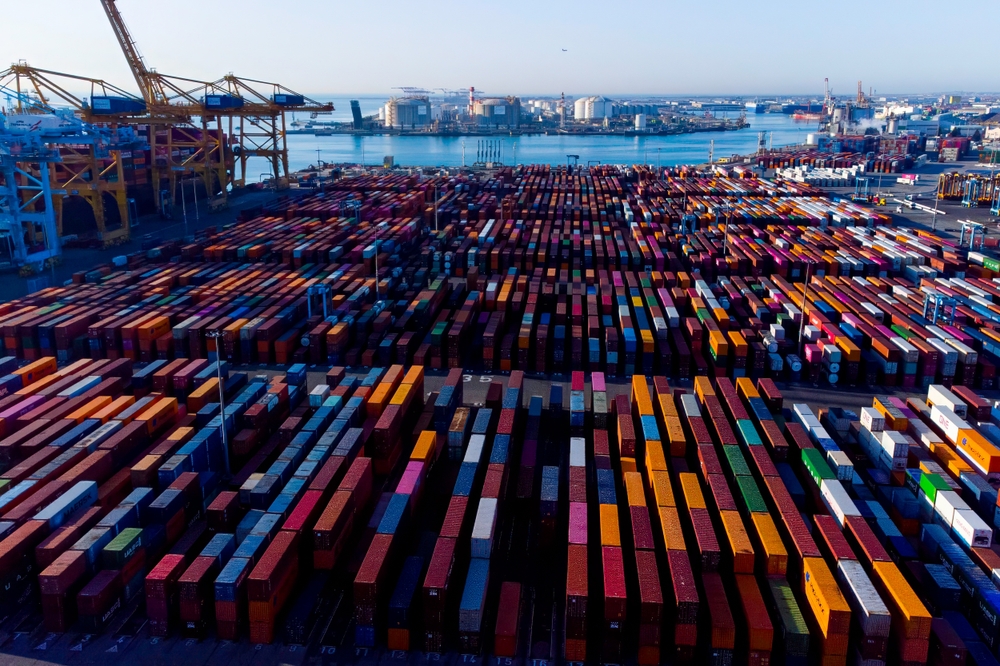
Photo by Davide Bonaldo, 2025
BACKGROUND:
On April 25, Pakistan’s Ministry of Commerce issued the “Transit of Goods through Territory of Pakistan Order 2026.” The order, which allows goods from third countries to pass through Pakistan before entering Iran, provides new routes connecting the three major Pakistani ports at Gwadar, Karachi and Port Qasim with two Iranian border crossings at Gabd and Taftan. The order took immediate effect and trucks have begun carrying cargo from the Pakistani ports, passing through the towns of Turbat, Panjgur, Khuzdar, Quetta and Dalbandin in Balochistan province, before entering Iran. Iran and Pakistan had, in 2008, agreed on this road transport connectivity framework. However, it was not until Iranian Foreign Minister Abbas Araghchi’s visit to Islamabad on April 24-26, when he met with Pakistan Prime Minister Shehbaz Sharif and Pakistan Army chief General Asim Munir, that the decision to implement the order with immediate effect was taken.
Recent developments in the region prompted Pakistan and Iran to operationalize the agreement. On February 28, the U.S. and Israel launched air and missile strikes on Iran, which in turn led to the Strait of Hormuz crisis. The U.S. blockade of the Strait of Hormuz has dealt a severe blow to trade via this vital waterway, prompting the Iran-Pakistan decision on the six land corridors. Ships laden with cargo and headed for Iran and beyond, which would have otherwise docked at the Iranian ports of Chabahar and Bandar Abbas, are now marking time at Pakistan’s ports, which lie outside the Strait of Hormuz. Over 3,000 containers headed for Iran had reportedly piled up at Karachi port in April, adding to the problems of this already congested port. Meanwhile, Gwadar saw an unprecedented surge in activity in recent months. Throughout 2025, Gwadar port processed just around 8,300 standard shipping containers. Over just a few weeks in April this year, the port handled 11,000 containers. With the operationalization of the April 25 order, cargo headed for Iran’s Chabahar and Bandar Abbas ports, which have been lying at Pakistani ports because of the Hormuz blockade, is now being offloaded and packed into trucks heading to the Iranian border crossings at Gabd and Taftan. The fast-moving developments in the region have implications not just for the Iran-Pakistan relationship but, importantly, for how the CARs will access the sea.
IMPLICATIONS:
The six road routes linking Pakistani ports with the Iranian border will provide a shot in the arm to business at these ports, especially at Gwadar, which has been functioning below par. It will also unclog the already congested Karachi port. Importantly, it will boost Iran-Pakistan cooperation. The two neighbors share a volatile border of 909 kilometers, and have on occasion engaged in military hostilities, as in January 2024. However, economic cooperation, especially border trade, is vital not only for border communities and livelihoods but for their larger economies as well. Bilateral economic cooperation can now be expected to deepen and expand via the six new road routes. Iranian trade, which has taken a severe beating since the U.S.-Israel war and the U.S. blockade of Hormuz, will now receive a fresh lease of life. It will increase Iranian dependence on Pakistan, making the latter the dominant partner in the bilateral relationship.
As for Central Asia, the Iran war and consequent developments, while concerning, have opened new trade opportunities. Although the CARs are not dependent on West Asian oil and gas, as they are producers themselves, their trade routes to seaports have been hit hard.
Being landlocked, the CARs have for decades focused their foreign policy on finding and developing routes to access seaports. They have developed several options, including the eastern route through China, the western route through Russia, the route to the Caspian Sea, and the southern route to Iranian and Pakistani ports. Given their wariness of dependence on both China and Russia, the CARs have generally preferred the southern route. Between Pakistani and Iranian ports, they have usually favored the latter as the Iranian ports provide Central Asian cargo with relatively predictable transit regimes, better rail and road connectivity, and clear commercial terms for exporters. In contrast, the CARs’ trade via Pakistani ports had to pass not only through unstable Afghanistan and militancy-vulnerable stretches in Pakistan, but also face poor connectivity infrastructure, unstable trade regimes and poorly managed ports in Pakistan. Pakistan’s deteriorating relations with Taliban-ruled Afghanistan over the past two years and especially since February 2026, when Pakistan launched military strikes on the country, dealt a further blow to the utility of trade routes through Afghanistan and Pakistan. Realizing these challenges, the rest of Central Asia has been looking to bypass Afghanistan. Kyrgyzstan, for example, is exploring the Karakoram route via China to avoid Afghanistan and reach Pakistani ports. Other Central Asian states are said to be keen to use this route as well.
The opening of six trade routes between Pakistani ports and the Iran border crossings has thrown new factors into the CARs’ calculations on sea trade, opening new options and lifelines. Instead of traversing the insecure and uncertain terrain of Pakistan and Afghanistan, their cargo, offloaded in Pakistani ports, can head to the Iranian border crossings, where they can then use the better road and rail connectivity in Iran to enter Central Asia.
Of course, the opportunity that the new road routes have opened up for the CARs depends on whether Pakistan can quickly improve operations at its three major ports and ensure security along the roads for trucks carrying cargo to the Iranian border. The success of the six new road routes in drawing CARs trade and cargo will also depend on the condition of Iran’s roads and rail network. How badly damaged the Iranian overland infrastructure is by U.S. and Israeli strikes, and whether the CARs will be convinced of the security of the Iran route in the coming months will determine the success of the new connectivity option.
CONCLUSIONS:
The opening of six new road routes linking Pakistani ports of Gwadar, Karachi and Port Qasim with two Iranian border crossings is indeed a good plan. It could be a game changer not only for Gwadar port, which has been languishing for long without business, but also provide a lifeline to the damaged Iranian economy and Pakistan-Iran cooperation. Importantly, it will enable truckers from the rest of Central Asia to avoid Afghanistan while reaching Pakistani ports. However, the new route will attract Central Asian cargo only if Pakistan improves port management and security for trucks ferrying cargo along the new road routes.
AUTHOR’S BIO:
Dr Sudha Ramachandran is an independent South Asian political and security analyst. She is also South Asia editor at The Diplomat. Her articles have appeared in publications like The Diplomat, Asia Times, China Brief and Terrorism Monitor.
Visit also