New Pakistan-Iran Road Routes and Central Asian Trade
By Sudha Ramachandran
Since the U.S. and Israel launched their war on Iran on February 28 and especially after the U.S. blockade of the Strait of Hormuz, the Central Asian Republics’ (CARs) trade via Iranian ports has been thrown into jeopardy. However, Pakistan and Iran have operationalized six roads linking the three major Pakistani ports of Gwadar, Karachi and Port Qasim with two Iranian border crossings at Gabd and Taftan. Will the new roads provide the CARs’ trade via the southern route with a lifeline?
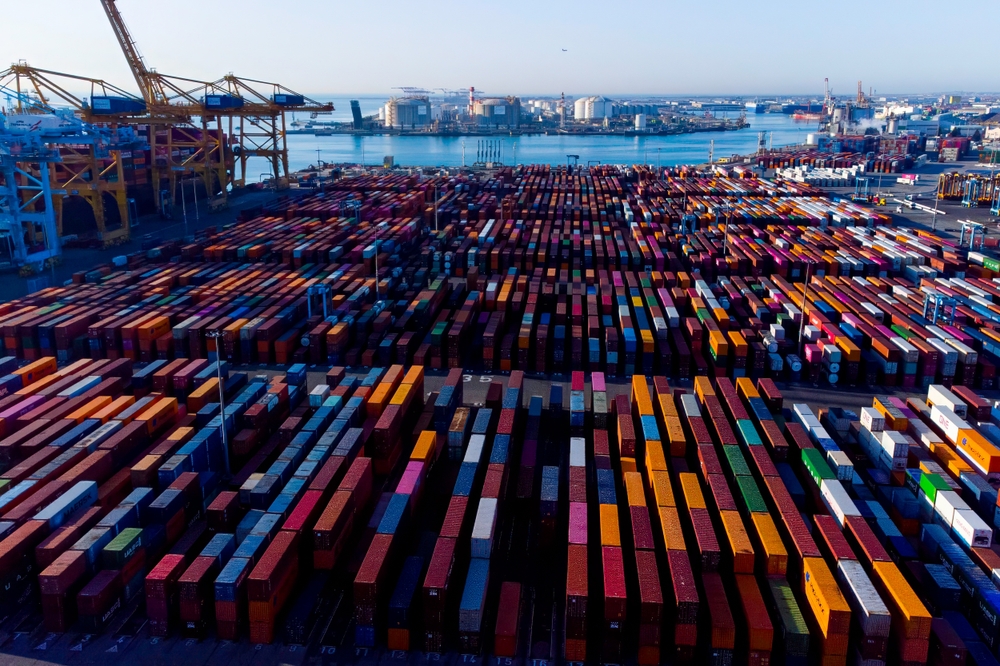
Photo by Davide Bonaldo, 2025
BACKGROUND:
On April 25, Pakistan’s Ministry of Commerce issued the “Transit of Goods through Territory of Pakistan Order 2026.” The order, which allows goods from third countries to pass through Pakistan before entering Iran, provides new routes connecting the three major Pakistani ports at Gwadar, Karachi and Port Qasim with two Iranian border crossings at Gabd and Taftan. The order took immediate effect and trucks have begun carrying cargo from the Pakistani ports, passing through the towns of Turbat, Panjgur, Khuzdar, Quetta and Dalbandin in Balochistan province, before entering Iran. Iran and Pakistan had, in 2008, agreed on this road transport connectivity framework. However, it was not until Iranian Foreign Minister Abbas Araghchi’s visit to Islamabad on April 24-26, when he met with Pakistan Prime Minister Shehbaz Sharif and Pakistan Army chief General Asim Munir, that the decision to implement the order with immediate effect was taken.
Recent developments in the region prompted Pakistan and Iran to operationalize the agreement. On February 28, the U.S. and Israel launched air and missile strikes on Iran, which in turn led to the Strait of Hormuz crisis. The U.S. blockade of the Strait of Hormuz has dealt a severe blow to trade via this vital waterway, prompting the Iran-Pakistan decision on the six land corridors. Ships laden with cargo and headed for Iran and beyond, which would have otherwise docked at the Iranian ports of Chabahar and Bandar Abbas, are now marking time at Pakistan’s ports, which lie outside the Strait of Hormuz. Over 3,000 containers headed for Iran had reportedly piled up at Karachi port in April, adding to the problems of this already congested port. Meanwhile, Gwadar saw an unprecedented surge in activity in recent months. Throughout 2025, Gwadar port processed just around 8,300 standard shipping containers. Over just a few weeks in April this year, the port handled 11,000 containers. With the operationalization of the April 25 order, cargo headed for Iran’s Chabahar and Bandar Abbas ports, which have been lying at Pakistani ports because of the Hormuz blockade, is now being offloaded and packed into trucks heading to the Iranian border crossings at Gabd and Taftan. The fast-moving developments in the region have implications not just for the Iran-Pakistan relationship but, importantly, for how the CARs will access the sea.
IMPLICATIONS:
The six road routes linking Pakistani ports with the Iranian border will provide a shot in the arm to business at these ports, especially at Gwadar, which has been functioning below par. It will also unclog the already congested Karachi port. Importantly, it will boost Iran-Pakistan cooperation. The two neighbors share a volatile border of 909 kilometers, and have on occasion engaged in military hostilities, as in January 2024. However, economic cooperation, especially border trade, is vital not only for border communities and livelihoods but for their larger economies as well. Bilateral economic cooperation can now be expected to deepen and expand via the six new road routes. Iranian trade, which has taken a severe beating since the U.S.-Israel war and the U.S. blockade of Hormuz, will now receive a fresh lease of life. It will increase Iranian dependence on Pakistan, making the latter the dominant partner in the bilateral relationship.
As for Central Asia, the Iran war and consequent developments, while concerning, have opened new trade opportunities. Although the CARs are not dependent on West Asian oil and gas, as they are producers themselves, their trade routes to seaports have been hit hard.
Being landlocked, the CARs have for decades focused their foreign policy on finding and developing routes to access seaports. They have developed several options, including the eastern route through China, the western route through Russia, the route to the Caspian Sea, and the southern route to Iranian and Pakistani ports. Given their wariness of dependence on both China and Russia, the CARs have generally preferred the southern route. Between Pakistani and Iranian ports, they have usually favored the latter as the Iranian ports provide Central Asian cargo with relatively predictable transit regimes, better rail and road connectivity, and clear commercial terms for exporters. In contrast, the CARs’ trade via Pakistani ports had to pass not only through unstable Afghanistan and militancy-vulnerable stretches in Pakistan, but also face poor connectivity infrastructure, unstable trade regimes and poorly managed ports in Pakistan. Pakistan’s deteriorating relations with Taliban-ruled Afghanistan over the past two years and especially since February 2026, when Pakistan launched military strikes on the country, dealt a further blow to the utility of trade routes through Afghanistan and Pakistan. Realizing these challenges, the rest of Central Asia has been looking to bypass Afghanistan. Kyrgyzstan, for example, is exploring the Karakoram route via China to avoid Afghanistan and reach Pakistani ports. Other Central Asian states are said to be keen to use this route as well.
The opening of six trade routes between Pakistani ports and the Iran border crossings has thrown new factors into the CARs’ calculations on sea trade, opening new options and lifelines. Instead of traversing the insecure and uncertain terrain of Pakistan and Afghanistan, their cargo, offloaded in Pakistani ports, can head to the Iranian border crossings, where they can then use the better road and rail connectivity in Iran to enter Central Asia.
Of course, the opportunity that the new road routes have opened up for the CARs depends on whether Pakistan can quickly improve operations at its three major ports and ensure security along the roads for trucks carrying cargo to the Iranian border. The success of the six new road routes in drawing CARs trade and cargo will also depend on the condition of Iran’s roads and rail network. How badly damaged the Iranian overland infrastructure is by U.S. and Israeli strikes, and whether the CARs will be convinced of the security of the Iran route in the coming months will determine the success of the new connectivity option.
CONCLUSIONS:
The opening of six new road routes linking Pakistani ports of Gwadar, Karachi and Port Qasim with two Iranian border crossings is indeed a good plan. It could be a game changer not only for Gwadar port, which has been languishing for long without business, but also provide a lifeline to the damaged Iranian economy and Pakistan-Iran cooperation. Importantly, it will enable truckers from the rest of Central Asia to avoid Afghanistan while reaching Pakistani ports. However, the new route will attract Central Asian cargo only if Pakistan improves port management and security for trucks ferrying cargo along the new road routes.
AUTHOR’S BIO:
Dr Sudha Ramachandran is an independent South Asian political and security analyst. She is also South Asia editor at The Diplomat. Her articles have appeared in publications like The Diplomat, Asia Times, China Brief and Terrorism Monitor.
Visit also