By Umair Jamal
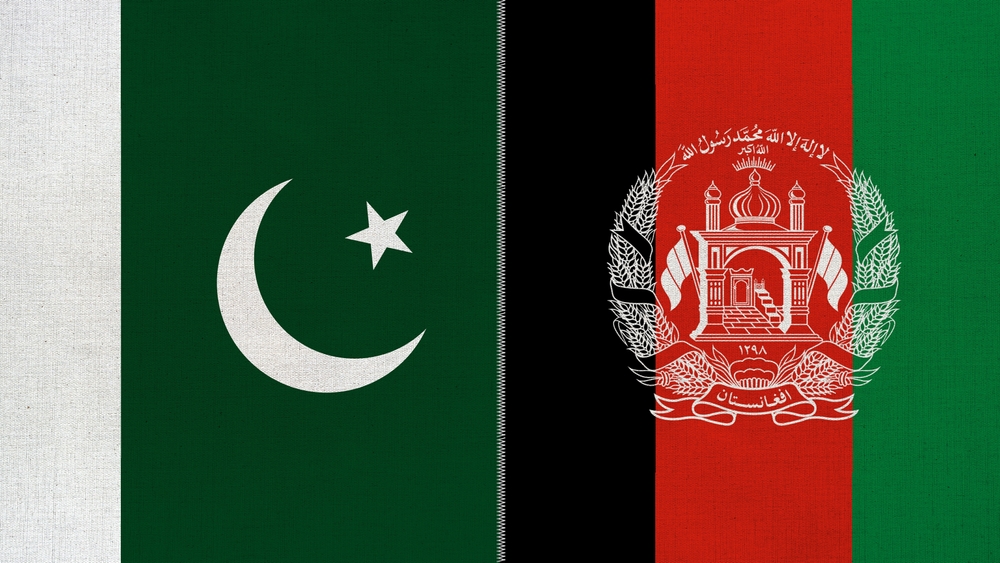
Pakistan’s ongoing military campaign against Afghanistan, initiated by airstrikes in late February 2026 targeting hideouts of the Tehrik-e-Taliban Pakistan (TTP) and Islamic State–Khorasan Province (ISKP) in Nangarhar, Paktika, and Khost, has escalated into a declared “open war” following retaliatory Taliban attacks and subsequent Pakistani strikes on Kabul, Kandahar, and other locations.
Pakistan’s Defense Minister, Khawaja Asif, announced Islamabad’s decision to wage war on Afghanistan on February 27, 2026, amid intense cross-border clashes. Pakistan claims hundreds of Taliban fighters have been killed and dozens of border positions seized. The conflict highlights the Afghan Taliban’s continued refusal to dismantle anti-Pakistan militant sanctuaries within Afghanistan, a factor fueling regional instability.
Islamabad’s operations, reportedly enjoying international backing including from the U.S., appear aimed at compelling Kabul to alter its policies. Such changes could curb the regional spread of militancy and enhance security across South and Central Asia by weakening a regime that has continued to enable extremist groups since returning to power in 2021.
BACKGROUND:
Tensions along the Pakistan–Afghanistan border have persisted for decades but intensified significantly following the Taliban’s takeover of Afghanistan in 2021. Since returning to power, the Taliban have been accused by Pakistan of providing safe havens to the Tehrik-e-Taliban Pakistan (TTP), a militant alliance formed in 2007 with deep ethnic Pashtun and ideological ties to Kabul’s rulers.
The TTP has intensified attacks inside Pakistan since the U.S. withdrawal from Afghanistan. Terrorist violence has risen sharply in recent months, with Afghanistan-based groups claiming responsibility for deadly incidents including the February 2026 bombing of a Shia mosque in Islamabad that killed 31 people, attacks in Bajaur district that killed 11 security personnel, and additional strikes in Bannu and other areas. Exploiting Afghan territory for training, recruitment, and cross-border operations, these groups have claimed hundreds of Pakistani lives in recent years.
The relationship between Pakistan and Afghanistan has long been shaped by mutual grievances. Pakistan supported the Taliban during the 1990s and throughout the post-2001 insurgency in Afghanistan. However, relations have deteriorated in recent years as the Taliban-led government in Kabul has refused Pakistan’s repeated demands to crack down on the TTP despite sustained diplomatic pressure.
Pakistan’s efforts to fence the border have also generated clashes with Afghan forces, as Kabul refuses to recognize the Durand Line as a legitimate international border. In 2025 Pakistan conducted airstrikes inside Afghanistan for the first time, targeting TTP strongholds in Khost and Paktika in response to cross-border militant attacks.
Economic relations have deteriorated alongside security tensions. Trade between the two countries, once worth billions annually, has faced repeated disruptions. Pakistan’s exports to Afghanistan have nearly halted, while Kabul has been unable to access Pakistani ports for over a year.
The February 2026 escalation began with Pakistani airstrikes on February 21 targeting militant camps in Afghanistan in retaliation for terrorist attacks in Pakistan. The Taliban condemned the strikes as violations of Afghan sovereignty and claimed civilian casualties, including at a religious school. Taliban forces retaliated on February 26 by attacking Pakistani border positions.
Pakistan then declared “open war,” stating that military operations would continue until militant threats were eliminated. “Our patience has run out,” Defense Minister Khawaja Asif stated.
Pakistan’s campaign, codenamed Operation Ghazab Lil Haq, has targeted Taliban military facilities in Kabul, including ammunition depots, as well as sites in Kandahar, Paktia, and other provinces. Notably, these strikes included direct attacks on urban centers for the first time. Pakistan has also struck Bagram airbase, which houses Taliban military infrastructure. Islamabad further claims to have captured 32 square kilometers of territory along the Afghan border to establish a buffer zone. Pakistani military officials state that operations will continue until all objectives are achieved.
IMPLICATIONS:
Pakistan’s war on Afghanistan carries significant implications and could reshape regional security by confronting the Taliban’s refusal to act against militant groups. More than a dozen organizations, including TTP, ISKP, and affiliated networks, reportedly use Afghan territory to conduct cross-border attacks. In recent months the TTP has intensified operations inside Pakistan, while ISKP activities near Central Asian borders pose security risks to Tajikistan and Uzbekistan.
Pakistan’s strategic objectives appear broad and evolving. Islamabad is targeting infrastructure facilitating cross-border militancy, including TTP camps and hideouts in Nangarhar and Paktika. These strikes also seek to destroy logistical networks the Taliban uses—or tolerates—to enable cross-border operations, including suicide bomber facilitation networks and weapons depots.
According to Pakistani military sources, forces have captured several strategic positions across the border to create a buffer zone. Numerous Afghan Taliban posts along the Durand Line have reportedly been destroyed or seized in efforts to limit cross-border infiltration.
Pakistan also appears to be attempting to weaken the Taliban regime sufficiently to expose internal fissures. This could enable rival factions or opposition groups, including elements linked to resistance in Panjshir, to challenge Taliban authority. Such actions are intended to signal to Taliban leadership that providing sanctuary to anti-Pakistan militants will impose severe costs. From Islamabad’s perspective, sustained pressure could force Kabul to reconsider its ties with militant organizations.
The Taliban’s refusal to sever ties with the TTP, rooted partly in shared Deobandi ideology and Pashtun affiliations, has further isolated the regime diplomatically and economically. Pakistan’s strikes on weapons depots, bases, logistics networks, and Taliban military offices in Kabul and Kandahar aim to degrade the regime’s operational capacity and cohesion.
Economic pressure is also mounting. Pakistan’s full suspension of trade has significantly reduced Afghan exports. The ongoing conflict in Iran may further close alternative import routes for Afghanistan, intensifying economic constraints on the Taliban government.
In northern Afghanistan, resistance in the Panjshir Valley led by the National Resistance Front (NRF) has complicated Taliban control. Pakistan has reportedly targeted Taliban-linked bases in the valley in recent days, potentially weakening Taliban authority and creating space for resistance groups to expand operations. This could also disrupt Taliban access to Central Asian trade routes if resistance groups challenge Taliban control of northern corridors.
Pakistan appears likely to sustain pressure until the Taliban ceases harboring the TTP, remnants of the Islamic Movement of Uzbekistan, and other militant factions. Islamabad also appears to have secured a degree of international support. The U.S. State Department has affirmed Pakistan’s right to self-defense against cross-border terrorism. The EU has called for de-escalation but has not condemned the operations. Central Asian states and Russia have likewise refrained from criticizing Pakistan’s actions, suggesting tacit acceptance.
This international stance reinforces Pakistan’s position while increasing pressure on the Taliban. Although prolonged conflict risks refugee flows and humanitarian challenges, it could also compel the Taliban to reconsider policies that allow militant groups to operate from Afghan territory.
The Taliban leadership faces a difficult choice. Sustaining governance while harboring militant groups targeting neighboring states is increasingly untenable. According to officials, Pakistani actions are not intended to pursue regime change but rather to compel behavioral change in Kabul.
Such an outcome could align broader regional interests. An isolated Afghanistan where militancy thrives benefits no state in the region. Central Asian governments facing threats from ISKP may view Pakistan’s campaign as helping contain the northward spread of extremism. Tajikistan and Uzbekistan could benefit from reduced militant sanctuaries. Meanwhile China, the U.S., and other regional actors have consistently pressured Kabul to cooperate in countering extremist networks.
Taken together, these developments suggest Pakistan may continue military operations without facing significant international opposition. The Taliban, meanwhile, face mounting economic and military pressure, with limited capacity to respond to sustained aerial strikes.
CONCLUSIONS:
Pakistan’s war on Afghanistan, though carrying risks of escalation, civilian suffering, and humanitarian crises, may ultimately serve broader regional interests by forcing the Taliban to confront its militant entanglements. By targeting TTP and ISKP sanctuaries and pursuing objectives such as buffer zones and the degradation of militant infrastructure, Pakistan seeks to address security threats destabilizing South and Central Asia.
International support for Pakistan’s actions, particularly U.S. recognition of its right to self-defense, reflects a growing consensus that unchecked extremism in Afghanistan poses regional dangers. Sustained pressure could compel Kabul to reconsider its policies, reduce the operational space of militant groups, and potentially open pathways toward more inclusive governance.
Ultimately, weakening an ideologically rigid regime sustained by militant alliances could contribute to greater stability across South and Central Asia and benefit neighboring states long threatened by cross-border violence.
AUTHOR’S BIO:
Umair Jamal is a Ph.D. candidate at the University of Otago, New Zealand, and an analyst at Diplomat Risk Intelligence (DRI). His research focuses on counterterrorism and security issues in Pakistan, Afghanistan, and the broader Asia region. He offers analytical consulting to various think tanks and institutional clients in Pakistan and around the world. He has published for several media outlets, including Al-Jazeera, Foreign Policy, SCMP, The Diplomat, and the Huffington Post.