Pakistan's Ghazab Lil-Haq Operation And The Prospect Of Regime Change In Afghanistan
By Syed Fazl-e-Haider
On February 26, Pakistan launched Operation Ghazab lil-Haq (Righteous Fury) against the Taliban regime in Kabul. The operation is widely interpreted as an attempt by Islamabad to pursue regime change in Afghanistan. Under Taliban rule, Afghanistan has effectively become a base for terrorist activities targeting not only Pakistan but also other Central Asian states, including Tajikistan. Russia has warned that Afghanistan-based ISIS seeks to expand its so-called caliphate in Central Asia, while China has expressed concern over the presence of Uyghur militants and other anti-China groups in the country. In this context, regime change in Kabul has emerged as a strategic priority for Islamabad and Beijing. Meanwhile, the persistence of terrorist safe havens in Afghanistan and the ongoing war has stalled major trans-Afghan connectivity projects intended to link Central Asia with Pakistani seaports. 
BACKGROUND:
Since 2021, following the Taliban’s takeover of Afghanistan after the U.S. withdrawal under the Doha Agreement, Pakistan has experienced a significant increase in terrorist attacks. Islamabad has accused Afghanistan-based militant groups of conducting cross-border operations within its territory. Prominent among these are Tehreek-e-Taliban Pakistan (TTP) and Balochistan Liberation Army (BLA), which have been responsible for numerous high-profile attacks. Pakistan has repeatedly urged the Taliban government to take action against these groups, which continue to operate from Afghan territory with relative impunity; however, these requests have largely gone unheeded.
China, which shares a 47-mile border with Afghanistan, has long been concerned that the country could become as a sanctuary for Uyghur separatists in proximity of its Xinjiang region. The Taliban government has assured Beijing that Afghan territory would not be used for activities against China. In return, China has offered economic assistance and investment to support Afghanistan’s reconstruction and development, and has since emerged as the largest foreign investor in the country.
Other anti-China groups operating from safe havens in Afghanistan include the TTP and the BLA. Both organizations have been implicated in several high-profile attacks targeting Chinese nationals in Pakistan.
In March 2024, a suicide attack on a van killed five Chinese engineers working on the Dasu dam project in Khyber Pakhtunkhwa. A similar attack at the same site in 2021 resulted in the deaths of nine Chinese engineers. The TTP was implicated in both incidents. The BLA, in turn, has conducted more attacks on Chinese nationals and assets than any other separatist organization. Notably, in 2022, the BLA deployed its first female suicide bomber, who carried out an attack outside the Confucius Institute at the University of Karachi, killing three Chinese instructors.
Although China has pursued a pragmatic engagement policy toward the Taliban since the U.S. withdrawal in 2021, investing in mining, energy, and infrastructure, the Taliban have shown limited willingness or capacity to dismantle militant networks such as the TTP and BLA operating from Afghan territory.
Tajikistan, which shares a 1,400-kilometre border with Afghanistan, has also been affected by cross-border militancy. In December 2025, five individuals, including two Tajik security officers, were killed in an armed confrontation on the Tajik–Afghan border when militants attempted to infiltrate Tajik territory.
Russia, the only country that has formally recognized the Taliban regime in Afghanistan, has expressed concern that the regime undermines regional stability by allowing jihadist groups to operate from Afghan territory. These concerns intensified following a suicide attack on February 24 outside Moscow’s Savyolovsky Railway Station, which killed a police officer. Foreign Minister Sergey Lavrov linked the incident to Afghanistan-based groups. The Russian Ministry of Foreign Affairs has estimated that Afghanistan hosts between 20,000 and 23,000 militants, including approximately 5,000 to 7,000 affiliated with the TTP. Notably, Russia released this assessment of terrorist networks in Afghanistan two days before Pakistan initiated its military campaign against the Taliban, a move that may be interpreted as implicit political support.
The Taliban have also moved closer to Pakistan’s regional rival, India. Islamabad has alleged that groups such as the TTP and BLA operate as Indian proxies, a claim that New Delhi denies. The Taliban’s growing engagement with India has further raised concerns in Beijing. Amid mounting frustration over the Taliban’s inaction against militant groups operating from Afghan territory, Pakistan launched a large-scale military operation against the Taliban government on February 26, involving airstrikes across major Afghan cities, including Kabul.
IMPLICATIONS:
Operation Ghazab lil-Haq can be interpreted as an attempt to impose regime change in Kabul, though Pakistan is unlikely to achieve such an objective independently, without securing China’s support and involving Tajikistan. It must also obtain backing from anti-Taliban groups such as the National Resistance Front (NRF), led by Tajik leader Ahmad Massoud, son of the late Ahmad Shah Massoud. Tajikistan presently hosts the NRF leadership. Pakistan’s airstrikes against the Taliban regime may create opportunities for the NRF and other opposition forces to weaken the Taliban’s internal control over Afghanistan.
Officially, Beijing has called on both Islamabad and Kabul to exercise restraint and has advocated a ceasefire. However, Pakistan’s ongoing military campaign against the Taliban likely carries tacit Chinese approval and support for a potential regime change effort. For such an operation, Islamabad would first need to secure control over the Wakhan Corridor in northeastern Afghanistan. This narrow strip of territory, often referred to as Afghanistan’s “Chicken Neck,” extends approximately 350 kilometers to China’s Xinjiang region, separating Tajikistan from Pakistan. Control of the corridor would provide Pakistan with direct access to Tajikistan and Central Asia beyond Afghanistan. For China, the Wakhan Corridor represents a critical node for safeguarding its strategic connectivity with South and Central Asia under the Belt and Road Initiative (BRI). While China appears to be adopting a cautious, “wait and watch” approach, Pakistan is actively seeking to reshape Afghanistan’s political landscape.
The Pakistan–Afghanistan conflict is likely to adversely affect trans-Afghan connectivity projects aimed at linking Central and South Asia, whether in the planning, negotiation, or implementation stages. For example, regional connectivity featured prominently in Pakistan–Kazakhstan discussions during President Kassym-Jomart Tokayev’s visit to Islamabad in February 2026. A proposed US$ 7 billion railway project envisaged connecting Kazakhstan to the Pakistani ports of Karachi and Gwadar via Afghanistan and Turkmenistan.
Similarly, the Uzbekistan–Afghanistan–Pakistan (UAP) railway project is a trilateral initiative designed to connect Central Asia with the ports of Gwadar and Karachi through Afghanistan. Envisioned in 2021, the 850-kilometer corridor is expected to provide the first direct railway link between Central and South Asia. The US$ 4.8 billion project, scheduled for completion by 2027, will connect Tashkent to the Pakistani city of Peshawar via Kabul.
The US$ 10 billion Turkmenistan–Afghanistan–Pakistan–India (TAPI) gas pipeline is a major strategic energy project intended to transport gas from Turkmenistan’s Galkynysh field, the world’s second largest, to energy-deficient markets in South Asia, particularly India and Pakistan. However, the project has already been delayed for over three decades due to persistent instability and conflict in Afghanistan.
Regime change in Kabul that ensures peace and stability in Afghanistan would facilitate a conducive environment for the implementation and completion of strategic connectivity projects between Central and South Asia. Conversely, if such efforts intensify conflict in the already war-torn country, these projects are likely to face indefinite delays.
CONCLUSIONS:
Officially, Islamabad frames its military campaign as an effort to compel the Taliban regime to withdraw support for Afghanistan-based militant groups targeting Pakistan. However, the operation also appears intended to convey that regime change is a clear option, should the Taliban fail to take verifiable action against such groups operating from Afghan territory. For a comprehensive regime change effort, Pakistan, China, and Tajikistan would have to align their positions on the jihadist threats emanating from Afghanistan, which, after more than four years of Taliban rule, has effectively become a safe haven for militant groups. The outcomes of the current operation will in turn have a significant impact on the future of trans-Afghan connectivity projects.
AUTHOR’S BIO:
Syed Fazl-e-Haider is a Karachi-based analyst at the Wikistrat. He is a freelance columnist and the author of several books. He has contributed articles and analysis to a range of publications. He is a regular contributor to Eurasia Daily Monitor of Jamestown Foundation.
Email: This email address is being protected from spambots. You need JavaScript enabled to view it. .
War As Integration: How The Pakistan-Afghanistan Conflict Is Pulling Kabul Into Central-Asia
By Eldaniz Gusseinov and Rassul Kospanov
Pakistan's declaration of “open war” on Afghanistan in late February 2026, following sustained airstrikes on Kabul, Kandahar, and Bagram airbase under Operation Ghazab Lil Haq, has effectively closed the principal corridor through which Afghan trade reached the sea. While attention has been concentrated to the immediate military dimension, a structurally more consequential process is unfolding in parallel: a reorientation of Afghanistan’s external economic links away from Pakistan and toward Central Asia. This shift was already underway, driven by periodic border disruptions, trade friction, and the steady maturation of northern infrastructure, but the war has compressed its timeline considerably. Three concurrent developments: the collapse of Pakistan-Afghanistan commerce, the ratification of a preferential trade agreement between Uzbekistan and Kabul, and the near-completion of the CASA-1000 power transmission project, suggest that Afghanistan's economic geography is quickly being redrawn.
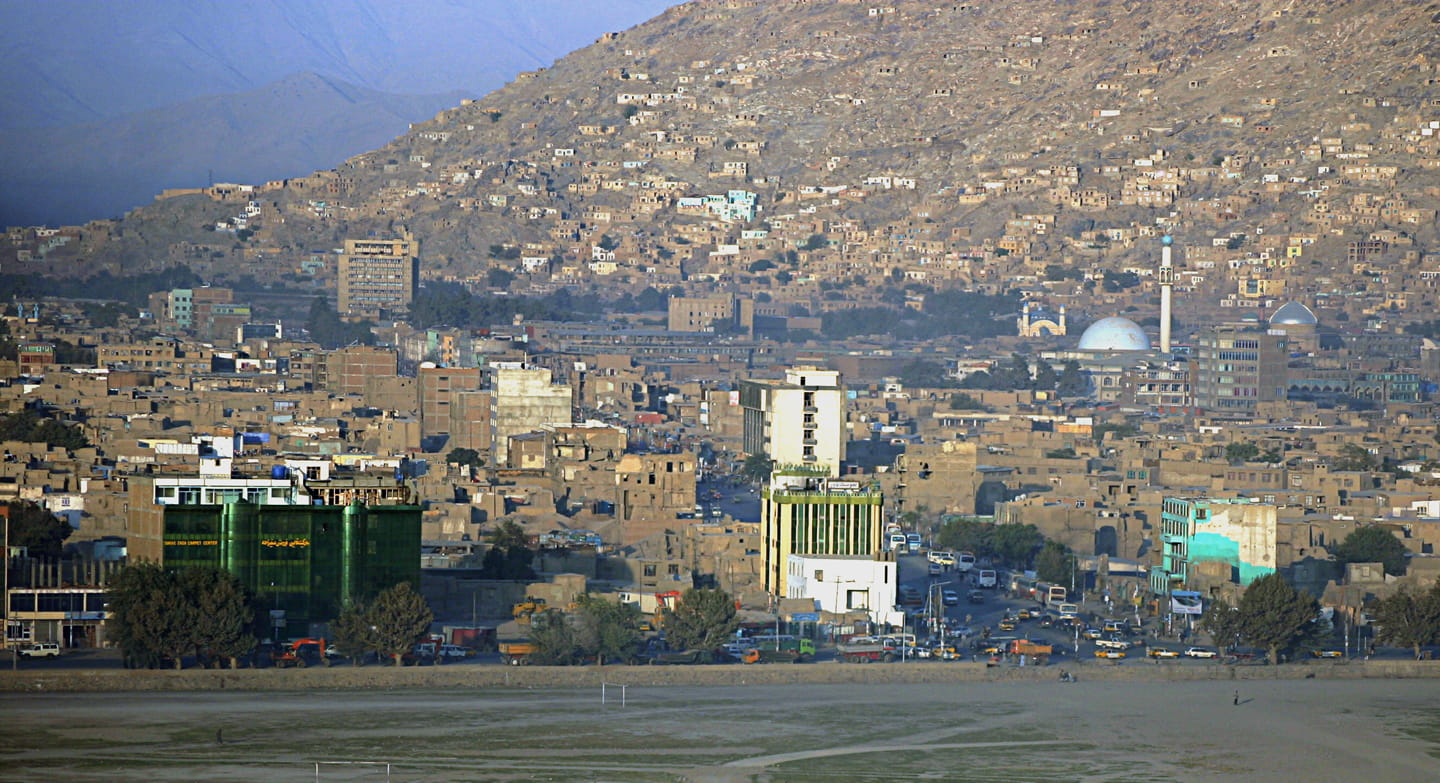
Image Credit: View of the old city of Kabul, Afghanistan, first uploaded on Wikipedia Commons [http://en.wikipedia.org/wiki/User: Casimiri]
BACKGROUND:
Afghanistan’s economic dependence on Pakistan long predated the current escalation. The Torkham and Chaman crossings served as the country’s principal gateways to Karachi and Gwadar, providing access to maritime trade routes that Central Asian landlocked corridors could not replicate. Yet the relationship was structurally vulnerable. Kabul’s refusal to formally recognize the Durand Line as an international border underpinned recurring post‑2001 border closures and trade disruptions, and the Taliban’s return to power in August 2021 added a new layer of friction as Islamabad’s demands that Kabul curb TTP sanctuaries went largely unmet. By 2024, divergence was increasingly visible: Pakistan substituted Afghan coal for sea‑borne coal imports and other suppliers while Afghan exporters faced tightening customs and transit restrictions. Bilateral commerce between Pakistan and Afghanistan contracted from approximately USD 2.46 billion in 2024 to USD 1.77 billion in 2025. At the same time, Afghanistan’s trade with Central Asian countries increased significantly, rising by 77 percent. The main driver of this growth was trade between Uzbekistan and Afghanistan, which expanded by 53 percent, reaching approximately US$ 1.6 billion.
The February 2026 escalation removed whatever residual reliability the southern corridor retained. Pakistani airstrikes under Operation Ghazab Lil Haq targeted Taliban military infrastructure across multiple provinces, a full trade suspension was imposed, and buffer-zone operations along the Durand Line added a physical barrier to the political and commercial obstacles already in place. For Afghan business networks and logistics operators, the southern route shifted from periodically unreliable to operationally closed.
Uzbekistan’s Hairatan border crossing on the Amu Darya handled approximately 76 percent of Afghanistan’s northern freight transit before the current escalation, channeling goods toward Russia, China, and the Caspian. Afghanistan’s dependence on Central Asian electricity suppliers, principally Uzbekistan, Tajikistan, and Turkmenistan, which together provide 80-85 percent of the country's power imports, had established dense operational relationships at the border long before formal trade policy followed. Total transit volumes through Afghanistan reached 5 million tons in 2024, demonstrating that the trans-Afghan corridor had become integral to Central Asian commerce with South Asia. The Central Asian factor in Afghanistan’s economy was already structural; yet the war changed its relative weight.
IMPLICATIONS:
The most immediate institutional development is the Uzbekistan-Afghanistan Preferential Trade Agreement, signed at the Tashkent International Investment Forum on June 10, 2025, and ratified by President Mirziyoyev in March 2026. The agreement eliminates customs tariffs on 14 categories of goods, prioritizing Afghan agricultural exports, streamlines phytosanitary certification for Afghan farm produce, and formalizes 24-hour operations at the Hairatan-Termez border crossing to accommodate increased volumes. Tashkent’s stated ambition is to raise bilateral trade from roughly US$ 1.6 billion toward US$ 5 billion within five years. It is significant not merely as a commercial target but as a political signal. By institutionalizing preferences and creating a structured long-term framework, Uzbekistan has moved well beyond the ad hoc transactional engagement that characterized the immediate post-2021 period.
The CASA-1000 project, which will add approximately 300 megawatts to Afghanistan’s power supply via a transmission line from Kyrgyzstan and Tajikistan, has reached an advanced stage of completion on the Afghan segment, with commissioning targeted for 2027. Uzbekistan has separately committed US$ 1.15 billion in deals for gas-fired generation and transmission infrastructure within Afghanistan, while a 25-year contract for development of the Toti-Maidan gas field deepens the bilateral energy relationship further. In parallel, following the Kazakhstan–Afghanistan business forum held in Shymkent, Astana announced plans to begin geological exploration in Afghanistan’s Laghman province. As part of this initiative, the Kazakh companies Kazatomprom and Kazakhmys conducted two geological missions to assess the potential development of beryllium and lead deposits.
These linkages carry strategic weight beyond their technical specifications: a country that depends on Central Asia for the electricity powering its cities and industries has strong incentives to sustain institutional connectivity with the region, irrespective of the diplomatic nuances in its relations with individual Central Asian capitals.
The Trans-Afghan Railway, whose feasibility framework was signed in July 2025, constitutes the third pillar of this emerging architecture. The corridor, linking Uzbekistan through Mazar-i-Sharif toward South Asian ports, had historically been conceived as a north-south bridge serving Central Asian exporters seeking sea access through Afghanistan.
Kazakhstan does not oppose Uzbekistan’s project but is promoting an alternative corridor through western Afghanistan. The route Turgundi–Herat–Kandahar–Spin Boldak is considered technically simpler due to its largely flat terrain, compared to the Uzbek route that passes through the high-altitude Salang Pass. Kazakhstan plans to invest around US$ 500 million, including the construction of railway segments and the creation of a logistics hub in Herat, which is expected to become a key “dry port” for Kazakh cargo.
If realized, this project would represent the first attempt since the nineteenth century to build a railway corridor in this direction. In 1879, British authorities considered constructing a railway to Kandahar. It was never implemented due to resistance from local tribal elites and the ongoing Anglo-Afghan War. After the Russian Empire captured the Panjdeh area north of Herat in 1885, Russian officials explored but never realized the possibility of extending the Trans-Caspian Railway from Krasnovodsk (now Turkmenbashi) through Merv to Herat. Kazakhstan is now demonstrating political boldness by advancing an ambitious initiative seeking to accomplish what the great empires of the past ultimately failed to achieve.
While the Pakistani military campaign has not eliminated the long-term logic of that corridor, it has introduced a medium-term disruption that reinforces Afghanistan’s own interest in northern connectivity, not merely as a transit function enabling others.
The structural dynamic underlying all three of these processes is that Central Asian states, particularly Uzbekistan, have pursued a consistently pragmatic engagement with the Taliban since 2021. Tashkent, Astana, and Ashgabat have avoided formal recognition while building dense working relationships on trade, border management, energy supply, and security coordination. For the Taliban, whose options have narrowed sharply as a result of the Pakistan conflict, this transactional model is comparatively attractive. Central Asian partners do not demand regime change or condition economic engagement on governance reforms and are geographically indispensable for the country’s energy supply. Tashkent and Kabul are not natural allies but increasingly unavoidable partners.
The risks in this trajectory lie in its structural fragility. Afghanistan’s trade deficit reached approximately US$ 9.4 billion in 2024, its export base remains concentrated in agricultural goods and coal, and its settlement infrastructure relies heavily on informal hawala transfers rather than banking channels. Northern trade growth has been accompanied by a persistent imbalance: Central Asian exports to Afghanistan are growing in volume while narrowing in variety, concentrated in flour, fuel, and electricity, with volatility coefficients suggesting that these supply chains remain sensitive to disruption. A durable transformation will require not merely preferential tariff access but energy and industrial investment capable of shifting Afghanistan from a consumer of basic goods to a contributor of productive capacity. For Central Asian states, this is not merely an altruistic objective: without a functional industrial base in Afghanistan, Central Asian exporters will face continued concentration risk in a market that is simultaneously growing and fragile.
CONCLUSIONS:
The Pakistan-Afghanistan war has accelerated Afghanistan’s northward economic pivot. By severing the southern corridor at precisely the moment that Central Asian infrastructure like CASA-1000, the Hairatan-Termez corridor, and the Trans-Afghan Railway framework are reaching operational maturity, the conflict has compressed a decade-long structural transition into a period of months. Uzbekistan has moved most aggressively to institutionalize this realignment through the Preferential Trade Agreement and its energy investment commitments, but the broader dynamic reflects a regional logic that extends to Kazakhstan, Tajikistan, and Turkmenistan: Central Asian states require a stable Afghanistan as a transit corridor and buffer against militant spillover, while Afghanistan requires Central Asian energy, markets, and institutional connectivity as substitutes for a now-hostile southern partner. Whether this convergence of interests consolidates into durable integration will depend on whether both sides can address structural fragilities such as payment infrastructure, export diversification, and logistics gaps, which continue to constrain the corridor’s full potential. The war has resolved an ambiguity in Afghanistan’s foreign economic orientation; the harder task of building a resilient northern integration architecture now begins.
AUTHOR’S BIO:
Eldaniz Gusseinov is Head of Research and сo-founder at the political foresight agency Nightingale Int. and a non-resident research fellow at Haydar Aliyev Center for Eurasian Studies of the Ibn Haldun University, Istanbul. Rassul Kospanov is a Senior Researcher at the National Analytical Center under Nazarbayev University, where he coordinates socio-political research projects and prepares analytical reports and policy recommendations for central and local government bodies. His work focuses on political processes in Kazakhstan and across Central Asia, as well as issues of regional cooperation.
Pakistan Declares “Open War” On Afghanistan: Implications For The Region
By Umair Jamal
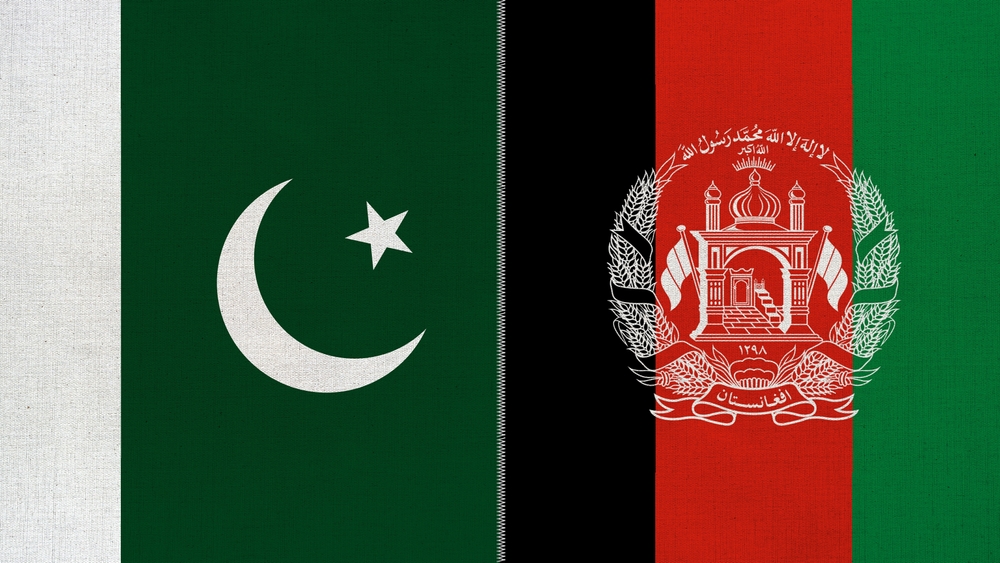
Pakistan’s ongoing military campaign against Afghanistan, initiated by airstrikes in late February 2026 targeting hideouts of the Tehrik-e-Taliban Pakistan (TTP) and Islamic State–Khorasan Province (ISKP) in Nangarhar, Paktika, and Khost, has escalated into a declared “open war” following retaliatory Taliban attacks and subsequent Pakistani strikes on Kabul, Kandahar, and other locations.
Pakistan’s Defense Minister, Khawaja Asif, announced Islamabad’s decision to wage war on Afghanistan on February 27, 2026, amid intense cross-border clashes. Pakistan claims hundreds of Taliban fighters have been killed and dozens of border positions seized. The conflict highlights the Afghan Taliban’s continued refusal to dismantle anti-Pakistan militant sanctuaries within Afghanistan, a factor fueling regional instability.
Islamabad’s operations, reportedly enjoying international backing including from the U.S., appear aimed at compelling Kabul to alter its policies. Such changes could curb the regional spread of militancy and enhance security across South and Central Asia by weakening a regime that has continued to enable extremist groups since returning to power in 2021.
BACKGROUND:
Tensions along the Pakistan–Afghanistan border have persisted for decades but intensified significantly following the Taliban’s takeover of Afghanistan in 2021. Since returning to power, the Taliban have been accused by Pakistan of providing safe havens to the Tehrik-e-Taliban Pakistan (TTP), a militant alliance formed in 2007 with deep ethnic Pashtun and ideological ties to Kabul’s rulers.
The TTP has intensified attacks inside Pakistan since the U.S. withdrawal from Afghanistan. Terrorist violence has risen sharply in recent months, with Afghanistan-based groups claiming responsibility for deadly incidents including the February 2026 bombing of a Shia mosque in Islamabad that killed 31 people, attacks in Bajaur district that killed 11 security personnel, and additional strikes in Bannu and other areas. Exploiting Afghan territory for training, recruitment, and cross-border operations, these groups have claimed hundreds of Pakistani lives in recent years.
The relationship between Pakistan and Afghanistan has long been shaped by mutual grievances. Pakistan supported the Taliban during the 1990s and throughout the post-2001 insurgency in Afghanistan. However, relations have deteriorated in recent years as the Taliban-led government in Kabul has refused Pakistan’s repeated demands to crack down on the TTP despite sustained diplomatic pressure.
Pakistan’s efforts to fence the border have also generated clashes with Afghan forces, as Kabul refuses to recognize the Durand Line as a legitimate international border. In 2025 Pakistan conducted airstrikes inside Afghanistan for the first time, targeting TTP strongholds in Khost and Paktika in response to cross-border militant attacks.
Economic relations have deteriorated alongside security tensions. Trade between the two countries, once worth billions annually, has faced repeated disruptions. Pakistan’s exports to Afghanistan have nearly halted, while Kabul has been unable to access Pakistani ports for over a year.
The February 2026 escalation began with Pakistani airstrikes on February 21 targeting militant camps in Afghanistan in retaliation for terrorist attacks in Pakistan. The Taliban condemned the strikes as violations of Afghan sovereignty and claimed civilian casualties, including at a religious school. Taliban forces retaliated on February 26 by attacking Pakistani border positions.
Pakistan then declared “open war,” stating that military operations would continue until militant threats were eliminated. “Our patience has run out,” Defense Minister Khawaja Asif stated.
Pakistan’s campaign, codenamed Operation Ghazab Lil Haq, has targeted Taliban military facilities in Kabul, including ammunition depots, as well as sites in Kandahar, Paktia, and other provinces. Notably, these strikes included direct attacks on urban centers for the first time. Pakistan has also struck Bagram airbase, which houses Taliban military infrastructure. Islamabad further claims to have captured 32 square kilometers of territory along the Afghan border to establish a buffer zone. Pakistani military officials state that operations will continue until all objectives are achieved.
IMPLICATIONS:
Pakistan’s war on Afghanistan carries significant implications and could reshape regional security by confronting the Taliban’s refusal to act against militant groups. More than a dozen organizations, including TTP, ISKP, and affiliated networks, reportedly use Afghan territory to conduct cross-border attacks. In recent months the TTP has intensified operations inside Pakistan, while ISKP activities near Central Asian borders pose security risks to Tajikistan and Uzbekistan.
Pakistan’s strategic objectives appear broad and evolving. Islamabad is targeting infrastructure facilitating cross-border militancy, including TTP camps and hideouts in Nangarhar and Paktika. These strikes also seek to destroy logistical networks the Taliban uses—or tolerates—to enable cross-border operations, including suicide bomber facilitation networks and weapons depots.
According to Pakistani military sources, forces have captured several strategic positions across the border to create a buffer zone. Numerous Afghan Taliban posts along the Durand Line have reportedly been destroyed or seized in efforts to limit cross-border infiltration.
Pakistan also appears to be attempting to weaken the Taliban regime sufficiently to expose internal fissures. This could enable rival factions or opposition groups, including elements linked to resistance in Panjshir, to challenge Taliban authority. Such actions are intended to signal to Taliban leadership that providing sanctuary to anti-Pakistan militants will impose severe costs. From Islamabad’s perspective, sustained pressure could force Kabul to reconsider its ties with militant organizations.
The Taliban’s refusal to sever ties with the TTP, rooted partly in shared Deobandi ideology and Pashtun affiliations, has further isolated the regime diplomatically and economically. Pakistan’s strikes on weapons depots, bases, logistics networks, and Taliban military offices in Kabul and Kandahar aim to degrade the regime’s operational capacity and cohesion.
Economic pressure is also mounting. Pakistan’s full suspension of trade has significantly reduced Afghan exports. The ongoing conflict in Iran may further close alternative import routes for Afghanistan, intensifying economic constraints on the Taliban government.
In northern Afghanistan, resistance in the Panjshir Valley led by the National Resistance Front (NRF) has complicated Taliban control. Pakistan has reportedly targeted Taliban-linked bases in the valley in recent days, potentially weakening Taliban authority and creating space for resistance groups to expand operations. This could also disrupt Taliban access to Central Asian trade routes if resistance groups challenge Taliban control of northern corridors.
Pakistan appears likely to sustain pressure until the Taliban ceases harboring the TTP, remnants of the Islamic Movement of Uzbekistan, and other militant factions. Islamabad also appears to have secured a degree of international support. The U.S. State Department has affirmed Pakistan’s right to self-defense against cross-border terrorism. The EU has called for de-escalation but has not condemned the operations. Central Asian states and Russia have likewise refrained from criticizing Pakistan’s actions, suggesting tacit acceptance.
This international stance reinforces Pakistan’s position while increasing pressure on the Taliban. Although prolonged conflict risks refugee flows and humanitarian challenges, it could also compel the Taliban to reconsider policies that allow militant groups to operate from Afghan territory.
The Taliban leadership faces a difficult choice. Sustaining governance while harboring militant groups targeting neighboring states is increasingly untenable. According to officials, Pakistani actions are not intended to pursue regime change but rather to compel behavioral change in Kabul.
Such an outcome could align broader regional interests. An isolated Afghanistan where militancy thrives benefits no state in the region. Central Asian governments facing threats from ISKP may view Pakistan’s campaign as helping contain the northward spread of extremism. Tajikistan and Uzbekistan could benefit from reduced militant sanctuaries. Meanwhile China, the U.S., and other regional actors have consistently pressured Kabul to cooperate in countering extremist networks.
Taken together, these developments suggest Pakistan may continue military operations without facing significant international opposition. The Taliban, meanwhile, face mounting economic and military pressure, with limited capacity to respond to sustained aerial strikes.
CONCLUSIONS:
Pakistan’s war on Afghanistan, though carrying risks of escalation, civilian suffering, and humanitarian crises, may ultimately serve broader regional interests by forcing the Taliban to confront its militant entanglements. By targeting TTP and ISKP sanctuaries and pursuing objectives such as buffer zones and the degradation of militant infrastructure, Pakistan seeks to address security threats destabilizing South and Central Asia.
International support for Pakistan’s actions, particularly U.S. recognition of its right to self-defense, reflects a growing consensus that unchecked extremism in Afghanistan poses regional dangers. Sustained pressure could compel Kabul to reconsider its policies, reduce the operational space of militant groups, and potentially open pathways toward more inclusive governance.
Ultimately, weakening an ideologically rigid regime sustained by militant alliances could contribute to greater stability across South and Central Asia and benefit neighboring states long threatened by cross-border violence.
AUTHOR’S BIO:
Umair Jamal is a Ph.D. candidate at the University of Otago, New Zealand, and an analyst at Diplomat Risk Intelligence (DRI). His research focuses on counterterrorism and security issues in Pakistan, Afghanistan, and the broader Asia region. He offers analytical consulting to various think tanks and institutional clients in Pakistan and around the world. He has published for several media outlets, including Al-Jazeera, Foreign Policy, SCMP, The Diplomat, and the Huffington Post.
Pakistan’s Eviction of Afghan Migrants Risks Backfiring
By Sudha Ramachandran
December 5, 2023
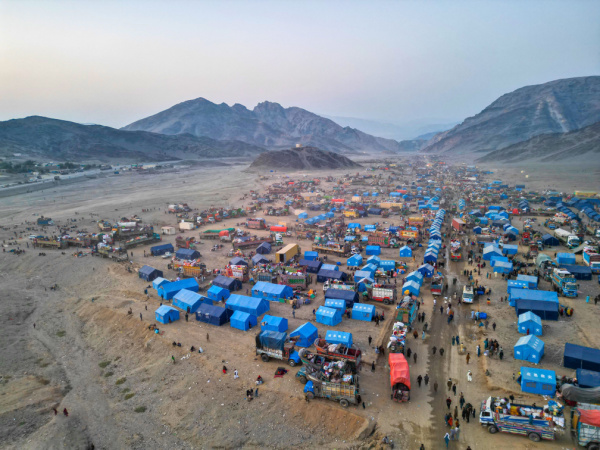
Pakistan has issued an ultimatum to illegal migrants to leave the country or face detention and deportation. It says that national security concerns underlie its decision; it alleged that Afghan migrants carried out most of the suicide attacks in Pakistan over the past year. However, its forcible deportation of migrants is unlikely to secure it from terror attacks as deportees could turn their anger against Pakistan. A rise in militant recruitment and attacks can be expected. Pakistan’s attempt to secure itself by driving out migrants will deepen its insecurity.
TAPI pipeline – is the Iran nuclear deal a threat or an opportunity?

By Rohullah Osmani
September 18th, 2015, The CACI Analyst
After several years of uncertainty, a hope for a breakthrough has emerged for a critical energy project in South-Central Asia. On August 6, 2015, the 22nd TAPI Steering Committee approved Turkmenistan’s Turkmengaz as the consortium leader to oversee efforts in constructing, financing and operating the 1,600 kilometer natural gas pipeline. Achieving this milestone suggests a very important development for TAPI. Turkmenistan is taking a firmer lead in the project after talks with a French investor stalled, and also after the recent agreement over Iran’s nuclear program. This suggests Ashgabat is speeding up the project over fears that Iranian gas might flood back on to the market.
Visit also