TRIPP's Future in the Context of the U.S.-Iran War
By Suren Sargsyan
The U.S.–Iran conflict, along with repeated failed negotiations, shows no clear path to resolution, and its future trajectory, consequences, and broader implications remain uncertain. Although a substantial body of research and commentary seeks to forecast developments in the Middle East, there is limited analysis of how this conflict may affect the South Caucasus, particularly in terms of future U.S. engagement in the region and the prospects of the Trump Route for International Peace and Prosperity (TRIPP) project. From Tehran’s perspective, TRIPP may constitute a legitimate target, as it conflicts directly with Iranian interests. It is therefore essential to assess the risks that the Iran–U.S./Israel conflict poses to the TRIPP project.
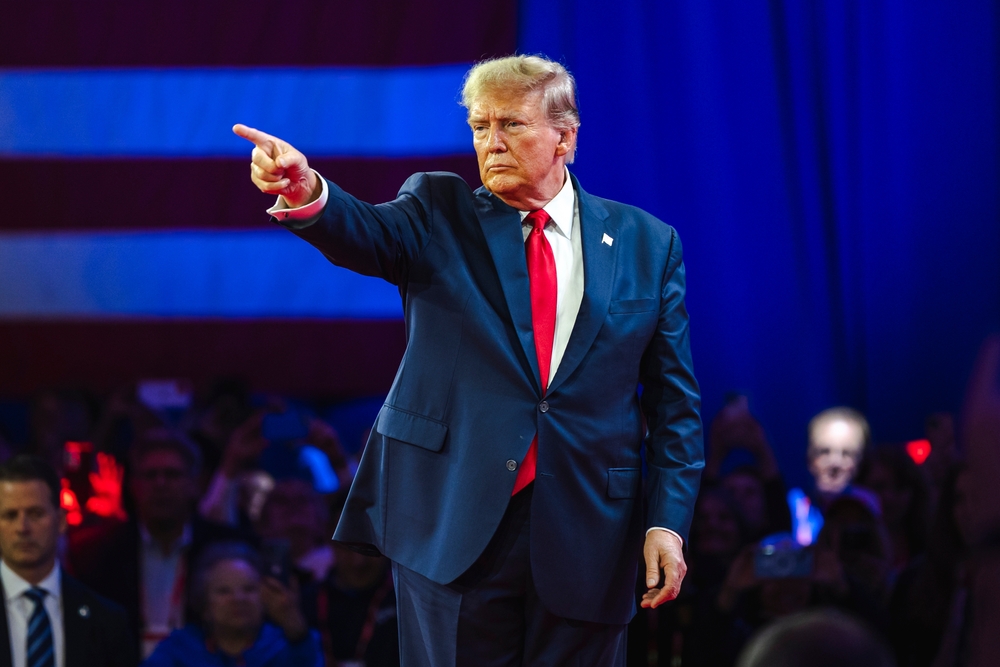
BACKGROUND:
A defining feature of the Trump administration, distinguishing it from its predecessors, is a marked increase in U.S. engagement with the South Caucasus. This was demonstrated by the approval of the TRIPP project and the announcement of peace between Armenia and Azerbaijan under U.S. mediation. However, U.S. involvement in the region clearly extends beyond relations with Armenia and Azerbaijan alone.
The implementation of TRIPP also aligns with broader U.S. regional interests, particularly in terms of isolating Iran. Currently, Azerbaijan’s shortest direct land connection to its exclave, Nakhichevan, runs through Iranian territory. If implemented, TRIPP would enable Azerbaijan to reduce its reliance on Iran by providing an alternative route. Such a development would also diminish Iran’s importance for Armenia, making Yerevan less dependent on the Iran–Armenia border, especially if accompanied by substantive progress in Armenia–Turkey relations, a goal the U.S. has supported since the George H. W. Bush administration.
Therefore, TRIPP should not be understood merely as a mechanism for regulating Armenian–Azerbaijani relations through the establishment of direct connectivity between the two states. Rather, it should be viewed as a broader geopolitical project, which will among other outcomes diminish the strategic significance of Iran for both Armenia and Azerbaijan, particularly by reducing their reliance on shared borders and transit routes through Iranian territory.
IMPLICATIONS:
Since the outbreak of the war, the United States and Israel have targeted not only Iranian military assets but also infrastructure of major strategic importance. Iran has incurred substantial losses, including damage to its naval capabilities, the elimination of senior political and military figures, and significant economic disruption. The closure of the Strait of Hormuz has further imposed considerable costs on the Iranian economy. In response, Iran has launched missile strikes not only against Israel but also against U.S. military bases within its operational range, despite these bases being located on the sovereign territory of states that have not formally joined the anti-Iran coalition.
Moreover, Iran has expanded its targeting beyond U.S. military installations in neighboring states to include economic infrastructure linked, directly or indirectly, to U.S. interests. From Iran’s perspective, there appear to be few meaningful geographical constraints. Rather, its strategy is to impose maximum costs not only through direct confrontation but also by targeting U.S.-associated economic projects and interests across the region and its immediate periphery.
From this perspective, the TRIPP project could also emerge as a potential target. As a major infrastructure initiative involving significant U.S. investment and the presence of U.S. security personnel, it carries clear strategic implications. Therefore, if tensions persist over an extended period and the conflict’s geographical scope expands, it cannot be excluded that this transportation corridor may eventually be targeted by Iran, despite Tehran’s relatively cooperative relations with Armenia.
This risk is underscored by reports of Iranian drones appearing over Azerbaijani territory, developments that have already provoked strong reactions. Although Iran denied these allegations, the incident nevertheless generated significant strain in bilateral relations and may be interpreted as a signal. There is no guarantee that Iran would refrain from deploying drones in the area, conducting limited troop movements, or undertaking other preventive or deterrent measures against the TRIPP project. Such a scenario becomes more plausible if tensions persist, hostilities intensify, and U.S. forces begin targeting Iranian infrastructure that has thus far remained largely intact, including power grids, transportation networks, and other critical facilities.
At the same time, it should be noted that there is currently no official information regarding the status of the project’s construction, at least on Armenian territory, where it is reportedly financed by the U.S. government. Although Armenia’s Foreign Minister has indicated that the intensity of Armenian–U.S. contacts concerning the project has not diminished, he has not addressed the timeline for the implementation of construction activities.
Even a single strike on this corridor would likely make potential investors and commercial actors significantly more cautious about using it for cargo transportation or committing to further infrastructure investments, given the associated security risks. Although detailed data on the expenditures of Armenia and Azerbaijan, along with U.S. contributions, remain unavailable, it is evident that the project entails substantial costs for both countries, even if only part of the planned infrastructure has been completed to date.
Moreover, if the war does not produce a significant systemic transformation in Iran’s regime, an outcome that currently appears unlikely, the project may remain a long-term potential target for Tehran, as it represents a form of U.S. presence in close proximity to the Iranian border. Under such conditions, it would be difficult for Armenia and Azerbaijan to advance the U.S.-mediated peace agenda in the absence of the project’s implementation, as the failure of one of its key components would raise uncertainty about the viability of the broader framework.
CONCLUSIONS:
At present, it is difficult to determine how long the war and/or negotiations with Iran will continue or what their eventual outcome will be. Statements from the Trump administration suggest that a clear strategy or exit plan has yet to be fully articulated. Nevertheless, it is essential to consider Iran’s likely post-war approach toward U.S. economic projects in its immediate vicinity. On the one hand, if the U.S. and Iran reach a peace agreement, the significance of the TRIPP project could be fundamentally transformed, with its purpose and structure potentially redefined, possibly even allowing for Iran’s participation.
On the other hand, if tensions between the United States and Iran remain elevated even after the cessation of active hostilities, Tehran may come to view TRIPP as a legitimate target and act accordingly. In this sense, whereas the project’s future previously depended largely on U.S. policy, it is now also contingent on Iran’s strategic priorities, policy choices, and perceptions of regional dynamics.
Armenian and Azerbaijani authorities have several options to reassure Tehran that the project cannot serve as a basis for a U.S. strategic or military presence in the South Caucasus, nor be used offensively against Iran. Despite relatively stable relations with both Yerevan and Baku, Tehran may still perceive the initiative as a threat to its core strategic interests and border security. In this context, Iran could find a receptive partner in Moscow, which has also expressed skepticism toward the project. At present, however, the implementation timeline has effectively been suspended, with all stakeholders awaiting either stabilization or further escalation.
AUTHOR’S BIO:
Suren Sargsyan is a PhD candidate Political Science. He holds LLM degrees from Yerevan State University, the American University of Armenia, and Tufts University Fletcher School of Law and Diplomacy. He is the director of the Armenian Center for American Studies.
The U.S. in the South Caucasus: Will Business Presence become Strategic Engagement?
By Suren Sargsyan
On November 17, U.S. Deputy Secretary of State for Political Affairs Alison Hooker visited Yerevan and Baku to promote the U.S. president’s vision of regional peace and security. During the visit, she discussed the Trump Route for International Peace and Prosperity (TRIPP) project with the leadership of both countries. On November 18, Jonathan Asconas, Senior Advisor at the U.S. Department of State, visited Georgia to discuss the country’s possible participation in TRIPP. Beyond the economic implications of the route, these steps indicate an evolving regional U.S. approach toward the South Caucasus.

Credit: Diego Delso
BACKGROUND: The announcement regarding the construction of TRIPP and an increased U.S. activity in the South Caucasus has received significant political and analytical attention. However, five months after the announcement, it remains unclear what the timeline for implementation will be and which company will handle its operations.
The announcement of the TRIPP project and the increase in U.S. activity in the South Caucasus have attracted significant political and analytical attention. However, five months after the announcement, it remains unclear what the implementation timeline will be and which company will be responsible for operating the project.
The central question is whether the U.S. is seeking a strategic foothold in the South Caucasus, a goal it has historically avoided, or whether its involvement remains primarily economic and business-oriented. Washington’s previous approaches towards the South Caucasus have fallen short of both a coherent strategy or ambitions to establish a lasting strategic presence in the region. In light of developments over recent months, it is therefore important to assess how U.S. policy toward the South Caucasus is evolving under the revitalized approach of the Trump administration.
TRIPP is primarily a business project, but it also has the potential to develop into a strategic asset by giving Washington a new presence in a region traditionally viewed as Russia’s sphere of influence. While it would first create a commercial foothold, the route could acquire broader strategic importance by connecting Asia and Europe while bypassing both Russia and Iran. The inclusion of pipelines, oil and gas corridors, and railway links would also allow Central Asian energy resources to reach Europe through the Caspian Sea, fully circumventing Russian territory.
On December 17, 2025, the Armenia–U.S. Bilateral Working Group, established to support the outcomes of the August 8, 2025, Peace Summit, held its inaugural meeting.
IMPLICATIONS: To establish lasting influence in the South Caucasus, a global power must exert leverage over at least two of the region’s three states. At present, no external actor meets this condition, unlike Russia, which for years maintained decisive influence by using the Nagorno-Karabakh conflict to exert control over both Armenia and Azerbaijan. This conflict-based dependence shaped their political priorities, foreign policy orientations, and economic choices, while also preventing the development of effective regional cooperation mechanisms.
Russia deliberately relied on the continuation of conflict as a tool of influence, a well-established method of maintaining strategic presence. When conflicts end, however, influence weakens and a vacuum emerges, which is often filled by another power. By contrast, the U.S. is seeking influence through the promotion of peace, economic development, and mediation between Armenia and Azerbaijan, presenting itself as an arbiter seeking to maintain long-term engagement in the region. The possible inclusion of Georgia in discussions on TRIPP further increases the strategic importance of this approach.
While Moscow relied on managed instability, Washington is investing in regional consolidation based on shared economic interests. This approach inevitably conflicts with the interests of states that oppose both TRIPP and the expansion of U.S. influence. Given the deep historical, institutional, and economic links between the South Caucasus and Central Asia, through organizations such as the EAEU, CSTO, CIS, and the Organization of Turkic States, any change in the balance of influence in one region will directly affect the other.
Within this broader framework, the Trump administration has sought to extend the Abraham Accords beyond their original Middle Eastern context. By including economically important, Muslim-majority but secular states such as Azerbaijan and Kazakhstan, both of which already have strong relations with Israel, the aim is not normalization, but the institutionalization of cooperation. This approach represents another U.S.-led multilateral mechanism designed to promote regional prosperity while expanding long-term strategic influence.
Judging from recent practical developments, it becomes clear that current U.S. policy toward the South Caucasus is growing more complex and nuanced. On November 30, 2024, the U.S. suspended its strategic partnership agreement with Georgia, a document it had been the first among South Caucasus states to sign in 2009. Shortly thereafter, in the final days of the Biden administration, the U.S. signed a strategic partnership agreement with Armenia on January 14, 2025. On November 8, 2025, the Trump administration signed a memorandum with Azerbaijan to establish a working group tasked with preparing a strategic partnership agreement. At the same time, President Trump waived Section 907, enabling expanded cooperation between Azerbaijan and the U.S. across a range of areas.
These steps suggest that the Trump administration is prioritizing a regional approach toward the South Caucasus. In addition, the U.S. provided Armenia with US$ 145 million in assistance as part of the first tranche of funding for the TRIPP project and related agreements reached on August 8. This support is intended to finance investments in trade, infrastructure, critical mineral supply chains, and border security.
As for Georgia, despite tensions in bilateral relations, the country continues to play an important role in U.S. regional policy. Georgia has sought to align itself with Washington’s agenda of promoting peace in the South Caucasus, while also discussing possible participation in the TRIPP project and its implementation. This approach appears to correspond with U.S. expectations, as Washington moves toward deeper engagement with Georgia within this framework.
Current U.S. policy extends beyond the bilateral level and has regional ambitions, seeking to strengthen cooperation with South Caucasus states individually while emphasizing shared regional priorities.
CONCLUSIONS: Despite the apparent principled agreement of all parties on the route, its timeline for implementation and the duration of the process remain unclear. If realized, the route would give the U.S. a unique opportunity to establish a presence in the South Caucasus, and this commercial presence could evolve into a strategically significant one, especially if the route’s scale and capacity become significant enough for Azerbaijan, Armenia, and the U.S. companies responsible for its operation and security. Whether the U.S. can counter the long-standing influence of Russia and Iran in the region, both of which may view the project as undermining their interests, will depend on the consistency of the Trump administration’s policy, its sustained commitment, and the broader competition among global actors in the South Caucasus.
According to Armenian authorities, Yerevan and Washington plan to establish a consortium that would act as the main company responsible for constructing and operating the railway. The consortium could also build, manage, and operate pipelines, power transmission lines, and other related infrastructure. In addition to road transport, rail capacity is crucial to sustain the transport of Chinese goods along this route in order to ensure its economic viability and maximize cargo volumes.
From this perspective, overall U.S.–China relations are also critical. As a result, the U.S. faces the compound challenge of promoting peace and stability in the region and limit potential spoilers, while simultaneously improving relations with China and resolving outstanding tariff issues, tasks that pose a particularly difficult test for the Trump administration.
AUTHOR’S BIO: Suren Sargsyan is a PhD candidate Political Science. He holds LLM degrees from Yerevan State University, the American University of Armenia, and Tufts University Fletcher School of Law and Diplomacy. He is the director of the Armenian Center for American Studies.
Crossroads of Uncertainty: Iran’s Regional Vulnerabilities and Armenia’s Security Challenges
By Anna Gevorgyan
The foreign and security architecture of Armenia has been largely shaped by the transformations of the role and capacity of regional actors after the 2020 Second Karabakh War. Russia’s continuing weakness due to its invasion of Ukraine, Turkey’s growing role in the region, and Iran’s increasing vulnerability due to security challenges and economic crisis have been the key drivers shaping regional developments. At the global level, the US's growing interest in involvement in regional affairs has become another important feature in Armenia’s future.
Read Crossroads of Uncertainty
Visit also