Eurasian Economic Union Summit: The Limits Of Geopolitical Integration
By Farkhod Tolipov
On May 29, 2026, the Supreme Eurasian Economic Council convened in Astana, Kazakhstan, bringing together representatives of the five Eurasian Economic Union (EAEU) member states and one observer state. Armenia was represented by its Deputy Prime Minister rather than the Prime Minister, while observer Uzbekistan was represented at the highest level by its President. Although the summit followed a largely routine agenda, discussions were overshadowed by speculation regarding Armenia’s potential withdrawal from the Union. In contrast, Uzbekistan maintained its traditionally supportive stance toward Eurasian integration. These developments suggest that the EAEU may have reached the limits of its current institutional composition and geopolitical configuration.

BACKGROUND:
The EAEU, established in 2015, succeeded the Eurasian Economic Community (EAEC), which existed from 2001 to 2014. Both organizations were founded with the objective of creating an economic foundation for deeper integration among the former Soviet republics. They emerged within the broader framework of the Commonwealth of Independent States (CIS), established in 1991 following the dissolution of the Soviet Union. While the USSR consisted of 15 union republics, the CIS began with 12 member states and has since contracted to eight. The EAEC comprised six member states, whereas the EAEU currently includes five.
When the CIS was established, many experts and politicians described it as a framework for the “peaceful divorce” of the former Soviet republics. In retrospect, this assessment appears largely correct. Rather than promoting deeper integration, the CIS, the EAEC, and the EAEU have experienced gradual contraction and persistent disagreements. In the context of Russia’s war against Ukraine, Moscow has sought to preserve the remaining cohesion of this declining integration project. As part of these efforts, it introduced so-called informal meetings of EAEU heads of state. This is the backdrop for the May 2026 EAEU summit in Astana.
The EAEU summit in Astana coincided with Vladimir Putin’s second state visit to Kazakhstan. Observers focused less on the outcomes of the visit than on President Kassym-Jomart Tokayev’s remarks during the official welcoming ceremony. Tokayev described Russians and Kazakhs as brotherly nations sharing a common history, cultural traditions, and mentality. Such a warm reception for a leader conducting a war against Ukraine and widely criticized by the international community may negatively affect Kazakhstan’s international reputation.
While Armenia was represented by its Vice Prime Minister, the summit was attended by the presidents of the four other EAEU member states as well as Uzbekistan. The agenda was largely routine, focusing on logistics, digitalization, free trade, and artificial intelligence. Beyond these issues, the leaders of the four member states adopted a special statement concerning Armenia, expressing concern over its possible withdrawal from the EAEU and its aspirations for EU membership. The statement was delivered to the Armenian Vice Prime Minister, who reaffirmed his country’s intention to remain in the EAEU while safeguarding its national interests and respecting those of the other member states.
President Putin emphasized the incompatibility of simultaneous membership in the EAEU and the EU and warned Armenia of the economic consequences of leaving the EAEU. His remarks, resembling an ultimatum, amounted to a clear signal that Russia would reconsider existing trade and economic arrangements with Armenia should it withdraw from the Union. This position once again highlighted the predominantly Russia-centered nature of the EAEU, rather than a genuinely multilateral integration framework among equal members. In contrast, Uzbek President Shavkat Mirziyoyev reaffirmed that closer cooperation with the EAEU remains a key foreign policy priority for Uzbekistan.
IMPLICATIONS:
The EAEU summit in Astana took place in a complex geopolitical setting. Earlier, on May 15, Kazakhstan hosted an informal summit of the Organization of Turkic States (OTS) in Turkistan. Among other issues, OTS leaders discussed cooperation in artificial intelligence and digitalization, the same topics featured on the EAEU agenda. This overlap raises questions about the compatibility of integration initiatives pursued by the two organizations. It remains unclear how AI and digitalization strategies developed within the potentially competing frameworks of the OTS and the EAEU can coexist.
The summit was preceded by Donald Trump’s visit to China and Putin’s subsequent visit, both demonstrating renewed geopolitical activism. For Central Asian states, these events underscored the significance of the US–Russia–China geopolitical triangle, whose rivalry they observe with growing concern. Against this backdrop, the EAEU summit of “five minus one” member states appeared overshadowed by broader great-power competition.
The EAEU summit in Astana was also preceded by a series of high-profile diplomatic initiatives by Uzbekistan. In April, Saida Mirziyoyeva, Head of the Presidential Administration, visited Washington, D.C., for the launch of the American–Uzbek Business and Investment Council. On May18, she traveled to London, where she met British officials, international investors, and representatives of the London Stock Exchange following the IPO of the Uzbekistan National Investment Fund (UzNIF). On May 24, she visited New Delhi and held talks with U.S. Secretary of State Marco Rubio on trade and investment cooperation. These developments reflected Uzbekistan’s active engagement with Western partners in the weeks preceding the EAEU summit.
On April 15, President Mirziyoyev received a Russian delegation led by Sergey Kiriyenko, First Deputy Chief of Staff of the Presidential Administration and former head of Rosatom. According to official reports, the talks focused on implementing previously reached agreements and deepening the Uzbek–Russian strategic partnership and alliance. Against the backdrop of Uzbekistan’s intensive diplomatic engagement with Western partners, the EAEU summit in Astana appeared relatively modest and somewhat ad hoc. This reflected Russia’s preference for advancing its interests through bilateral relations rather than through the Union’s multilateral framework.
Rather than presenting itself as a dynamic and cohesive economic bloc, the EAEU revealed its geopolitical dimension. During the summit, Putin suggested that developments in Armenia could follow a trajectory similar to that of Ukraine. While such a scenario appears unlikely, this rhetoric may prove counterproductive. Russian pressure on Armenia is likely to deepen anti-Russian sentiment among Armenians and further strengthen the country’s orientation toward Europe.
For Central Asia, regional integration is challenged by Russia’s continuing geopolitical ambitions. While the EAEU has experienced contraction, regional cooperation in Central Asia is expanding, exemplified by Azerbaijan’s accession to the Community of Central Asia last year. Thus, while Armenia and Georgia seek closer integration with the EU, Azerbaijan strengthens its role within the Central Asian regional framework. In this evolving geopolitical environment, the OTS gains a new opportunity to emerge as a viable alternative to the EAEU.
CONCLUSIONS:
Zbigniew Brzezinski once predicted that the EAEU would struggle to survive beyond 10–20 years, arguing that its ideological foundation, Eurasianism, was both outdated and geopolitically unsustainable. This ideology has found limited resonance in Central Asia and other former Soviet republics. From this perspective, the EAEU masks a tacit divergence between its member states and an increasingly assertive Russia.
The EAEU seems to have reached its peak in composition and geopolitical design. It becomes quite obvious that its makeup can be only five members or even less, and that the EAEU is losing its attractiveness. It looks like another “C5” (to use the Central Asian “C5+1” formula), however, it would become a “C5-1” if Armenia should withdraw, possibly returning to “C5” if Uzbekistan would join. This again underscores the geopolitical nature of the EAEU and the limited attractiveness of Eurasianism. Central Asia should take note of Russia’s ultimatum to Armenia and its increasingly belligerent posture toward former Soviet republics.
In November 2025, the 7th Consultative Meeting of Central Asian Heads of State was held in Tashkent, where participants agreed to transform the Consultative Meetings into the Community of Central Asia (CCA). Azerbaijan became a full member of the new organization. The 8th summit, expected to take place in Turkmenistan this year, will be the first meeting of the newly established Community. However, the membership of Kazakhstan and Kyrgyzstan in the EAEU, and Uzbekistan’s observer status, risk reducing the CCA to a largely symbolic project. As a result, the concept of the CCA remains vague, its institutional model underdeveloped, and its future trajectory uncertain.
AUTHOR’S BIO:
Dr. Farkhod Tolipov holds a PhD in Political Science and is Director of the Research Institution “Knowledge Caravan”, Tashkent, Uzbekistan
Security Concerns Impede China-Pakistan Relations
By Ghulam Ali
Chinese Ambassador to Pakistan Jiang Zaidong recently criticized the repeated attacks on Chinese nationals in Pakistan, calling them “unacceptable” and citing security as the biggest challenge to the China-Pakistan Economic Corridor (CPEC). His comments followed two fatal incidents within six months, which claimed seven Chinese lives. Pakistan’s Foreign Office, instead of addressing the concerns, dismissed the remarks as “perplexing,” revealing underlying tensions in the bilateral relationship. Despite China’s role as Pakistan’s key economic partner, security lapses and strained diplomacy are testing the limits of their traditionally strong ties, highlighting deeper challenges to the CPEC and broader cooperation. These tensions point to a more complex dynamic in bilateral relations, revealing that mutual dependency alone may not be sufficient to sustain smooth cooperation amidst mounting challenges.

BACKGROUND: The diplomatic row between China and Pakistan intensified during a seminar in Islamabad on October 30, when Chinese Ambassador Jiang Zaidong openly rebutted remarks by Pakistan’s Deputy Prime Minister and Foreign Minister Ishaq Dar. Dar claimed that China prioritized security in its overseas investments but made Pakistan an exception due to its friendship. The ambassador firmly countered, stating that President Xi Jinping consistently emphasizes the importance of ensuring the safety of Chinese personnel, institutions, and projects in Pakistan, reiterating that security remains China’s top concern and a major constraint to the CPEC. This marked the first public expression of such sentiments by China and an equally unprecedented response from Pakistan's Foreign Office, which described the remarks as “perplexing” and “surprising.” Pakistan's English-language media reflected the gravity of the situation, with Dawn describing the exchange as rare and The Nation advising restraint from the Foreign Office. Further complicating matters, Pakistan canceled President Asif Ali Zardari’s planned visit to China on November 2, citing a dubious pretext of a foot injury, signaling deeper strains in the relationship amid growing concerns over security and diplomatic discord. This is not the first time China has urged Pakistan to ensure the security of its nationals. In several meetings with Pakistani leaders, China has consistently emphasized the importance of safeguarding Chinese citizens and interests in Pakistan. During his meeting with Pakistani Prime Minister Shahbaz Sharif in June 2024, Chinese President Xi Jinping reiterated the need for Pakistan to create a safe and stable environment, stressing the protection of Chinese nationals, projects, and institutions. In line with this, Beijing also sent Liu Jianchao, Minister of the International Department of the CPC Central Committee, to Islamabad, where he echoed similar concerns regarding security during discussions with Pakistan’s political leaders. China has faced numerous attacks on its citizens in Pakistan, with over 21 Chinese nationals killed since 2017. The Balochistan Liberation Army, a separatist group seeking independence for the underdeveloped Balochistan province, which hosts the strategic Gwadar Port, is behind many of these attacks. The Balochi population has long expressed grievances over marginalization and resource extraction without benefiting from the region’s wealth, fueling insurgent movements. Currently, Balochistan is experiencing its fifth wave of insurgency. Another key source of attacks on Chinese nationals is the Tehrik-i-Taliban Pakistan (TTP), a militant group primarily based in Khyber Pakhtunkhwa and along the Pakistan-Afghanistan border. While the TTP has denied responsibility, Pakistani authorities have attributed the March 2024 suicide bombing that killed five Chinese engineers to the group. Allegations suggest that the TTP may be collaborating with Uyghur separatists, given their shared religious ideology, further complicating the security landscape for Chinese nationals in Pakistan.
IMPLICATIONS: The Chinese ambassador’s public expression of frustration and his direct reprimand of Pakistani officials highlighted China’s increasing impatience with Pakistan’s handling of security for Chinese nationals. By emphasizing the gravity of the situation and warning against future incidents, the ambassador signaled that China would no longer shy away from bluntly addressing its concerns. This shift in tone underscores the growing tension in the bilateral relationship, with the potential for global attention if the situation deteriorates further. The security situation in Pakistan will be pivotal in determining China’s future investment decisions. If the security environment remains unstable, China may choose to complete ongoing projects but refrain from launching new ones. This was evident during Chinese Premier Li Qiang's mid-October visit to Pakistan for the SCO conference, where he did not explicitly endorse the second phase of the CPEC or any new initiatives. This lack of commitment signals that security concerns could heavily influence China’s willingness to deepen its involvement in Pakistan moving forward. China and Pakistan had already planned to review their counterterrorism cooperation, and recent developments are likely to expedite this process through three key trends. First, China may increase its security support by providing bomb-proof vehicles for the safe transport of Chinese engineers, offering specialized security training to Pakistani personnel, and expanding intelligence sharing and consultation between the two countries. Second, the idea of involving Chinese private security companies (PSCs) or establishing joint security arrangements with Pakistani counterparts could gain traction. China has expressed interest in deploying PSCs, especially in conflict zones worldwide, to safeguard its growing investments. However, the deployment of PSCs to Pakistan faces both legal and practical obstacles. Pakistani law prohibits foreign security companies from operating within its borders. Even if this hurdle is overcome, the concept is likely to face challenges due to the country’s security realities. The Pakistani military and intelligence agencies, despite having the necessary resources and capabilities, have struggled to protect Chinese nationals. Given this, private companies, with far fewer resources, may not be effective in improving security. Additionally, bringing in foreign security personnel, whether from China’s armed forces or private firms, could expose them to the same risks from terrorist groups that have targeted Chinese nationals in the past. Third, the worsening security situation in Pakistan could provide the military with a pretext for launching another large-scale military operation, something it has long advocated. In June 2024, the Pakistani government approved the counter-terrorism operation Azm-e-Istehkam (Resolve for Stability), but its implementation was delayed due to opposition from political parties and the Pashtun Tahafuz Movement (PTM), which advocates for the rights of Pashtuns. However, conducting a military operation during a period of economic difficulties, political polarization, and significant opposition would reduce its likelihood of success. Additionally, such an operation would come with substantial economic costs and the risk of collateral damage, particularly in already unstable regions, further complicating its execution and effectiveness.
CONCLUSIONS: Although a seemingly minor incident, Chinese Ambassador Jiang Zaidong's remarks have exposed long-standing issues between China and Pakistan, revealing underlying challenges in their relationship. These comments have sparked debate, both within Pakistan and internationally, regarding the durability of their "all-weather" friendship. If one factor has most damaged the Sino-Pakistani partnership, it is terrorism. Likewise, if there is one issue that will significantly determine the future of this relationship, it is the ongoing challenge of terrorism and its impact on security for both nations.
AUTHOR’S BIO: Dr. Ghulam Ali is the Deputy Director of the Hong Kong Research Center for Asian Studies (www.rcas.top). He received his PhD from Monash University in Australia and completed a postdoc at Peking University in Beijing. He has authored or edited four books and published articles in academic journals and media outlets.
Kazakhstan's First NPP: Economics and Geopolitics
By Sergey Sukhankin

In Kazakhstan’s recent referendum, over 71 percent of voters endorsed building the country’s first nuclear power plant (NPP), marking a significant step toward advancing this major infrastructure project. Strongly supported by President Kassym-Jomart Tokayev and the national political elite, the NPP is expected to address Kazakhstan’s current and projected electricity needs. Additionally, as the world’s leading uranium producer, Kazakhstan stands to benefit from self-sufficiency in uranium enrichment, reducing its reliance on external suppliers. A key issue now centers on which entity will secure the NPP construction contract, with geopolitical considerations expected to weigh heavily alongside technological and economic factors.
BACKGROUND: Discussions about constructing a new, modern NPP in Kazakhstan date back to the early 2000s. From 1973 to 1999, the country operated an NPP in Shevchenko (now Aktau), which was closed as part of Kazakhstan’s de-nuclearization policy. However, tangible steps toward this goal only began in 2021, following a severe electricity shortage linked to a spike in cryptocurrency mining and pressures from the COVID-19 pandemic. At the same time, the European Union’s push for sustainable trade relations led Kazakhstani political leaders to prioritize renewable energy expansion in the national economy. In promoting a public vote for constructing an NPP, the government highlighted four main priorities: averting a potential energy crisis amid rising electricity demand; mitigating environmental risks linked to unsustainable energy sources; reducing Kazakhstan's reliance on electricity imports from Russia; and preserving the competitiveness of Kazakh exports to the EU. Despite compelling arguments supporting the nuclear power plant project, significant concerns have emerged from local experts, civil society, and the public. A primary worry centers on the risk of nuclear accidents, with Chernobyl and Fukushima serving as stark reminders of possible environmental catastrophes. Specific fears include potential harm to the fragile ecosystem of Lake Balkhash, which is already experiencing drying and may face further degradation from plant operations. Moreover, experts emphasize Kazakhstan's current lack of expertise and infrastructure for safely managing nuclear waste, leaving the issue of radioactive waste disposal unresolved. The economic viability of Kazakhstan's nuclear project is also a subject of concern. Critics point to the high construction costs and question the plant’s long-term financial sustainability, especially given the uncertain outlook for future electricity demand. Some experts suggest that the expected surge in demand may not occur as projected. They argue that even if demand does rise, Kazakhstan has alternative options, such as expanding renewable energy sources and improving the efficiency of the current electricity grid, which could address energy needs without relying on nuclear power. Geopolitical concerns further drive opposition to Kazakhstan’s nuclear project. Recent incidents at nuclear facilities, such as Zaporizhzhia and Kursk, illustrate the vulnerability of such infrastructure during conflicts, highlighting risks if similar instability arises in Central Asia. Additionally, Kazakhstan’s limited technical expertise and financial resources mean it would likely depend heavily on foreign partners to build and operate the plant. Critics argue that this reliance could compromise Kazakhstan’s sovereignty, with potential implications for the country’s long-term energy autonomy and geopolitical independence.
IMPLICATIONS: Four main contenders have emerged to construct Kazakhstan’s NPP: Russia’s Rosatom, China’s National Nuclear Corporation (CNNC), Korea Hydro and Nuclear Power (KEPCO), and France's Électricité de France (EDF). While Kazakhstan has pledged to base its choice on factors such as economic feasibility, technological reliability, and environmental safety, Russia and China realistically lead the race. Although France and South Korea bring significant expertise, high construction costs (potentially exceeding US$ 12 billion) and geopolitical dynamics may limit their competitiveness. Thus, Kazakhstan appears to face three pragmatic options moving forward. One option is for China to assume the role of sole contractor for the project, a scenario with several competitive advantages. China offers relatively lower construction costs compared to French and South Korean alternatives and maintains a robust trade and investment relationship with Kazakhstan, enhancing its influence as an economic partner. However, the feasibility of China proceeding alone is uncertain. Moscow might perceive China’s unilateral role as a diplomatic slight, as Russia has become a key strategic partner and potential Arctic access point for China. Moreover, it remains unclear if China is willing or prepared to undertake this project independently, given its geopolitical sensitivities. A second option is to appoint Russia as the sole contractor, a role Moscow has long pursued. Between 2010 and 2019, President Vladimir Putin personally lobbied Kazakhstan to select Rosatom as its nuclear plant builder. Given Russia’s current geopolitical isolation and diminishing network of allies, Moscow might view any exclusion of Rosatom as a serious diplomatic offense. The recent “grain war” between Russia and Kazakhstan—allegedly sparked by Kazakhstan’s refusal to join BRICS—demonstrates how swiftly Moscow might respond with retaliatory measures if it perceives a breach in loyalty or alignment. An analysis of Russian sources indicates several strategies Russia might use to “encourage” Kazakhstan to prioritize Rosatom’s bid. A primary leverage point is Kazakhstan’s reliance on Russian territory for transporting export-bound oil. Approximately 80 percent of Kazakhstan’s oil exports pass through Russia, and oil revenue constitutes about two-thirds of Kazakhstan’s national budget. Any disruption in this transit route could precipitate a fiscal crisis for Kazakhstan, with severe implications for the stability of its national budget. A second leverage point is Russia’s role in alleviating Kazakhstan’s energy deficit through electricity exports. Russian experts warn that any abrupt cessation of this supply could lead to severe energy shortages in Kazakhstan, potentially triggering economic and political instability. These pressure points are further highlighted by recent incidents, such as the explosion at Kazakhstan’s Tengiz oil field, which occurred shortly after President Tokayev discussed with EU officials increasing Kazakh oil exports to compensate for reduced Russian supplies. These events suggest that- Should Kazakhstan consider alternatives to Russia for its NPP construction, it might face similar pressures or retaliatory actions from Moscow. Kazakhstan’s reliance on Russia for both oil export infrastructure and electricity supply exposes the country to significant vulnerabilities. Nearly 80 percent of Kazakhstan’s oil exports pass through Russian territory, and oil revenues account for approximately two-thirds of the national budget. Any disruption to this transport network could result in severe economic consequences, potentially destabilizing Kazakhstan’s fiscal position. Similarly, Kazakhstan’s electricity deficit is largely covered by imports from Russia. Russian experts caution that if Russia were to cut off this supply, Kazakhstan would face a precarious situation, where both political stability and economic restructuring could become unfeasible. These dependencies highlight Kazakhstan’s vulnerability to Russian influence, as demonstrated by the 2022 explosion at the Tengiz oil field, the country’s largest, which occurred shortly after President Tokayev’s discussions with EU officials about increasing Kazakh oil exports to compensate for reduced Russian supply due to the invasion of Ukraine. This incident underscores Russia’s capacity—and potential willingness—to retaliate against Kazakhstan should the country act in ways that conflict with Russian interests. A third option is to form an international consortium to oversee the construction of the NPP. This approach could provide a balanced compromise, allowing Russia to participate without being the sole contractor, thus reducing the risk of secondary economic sanctions. Such an arrangement might appeal to Moscow, as it would obscure Rosatom’s central role while still involving Russian expertise. Notably, President Tokayev has rhetorically supported the idea of an “international consortium,” suggesting that this could be the most feasible solution. However, several uncertainties surround the international consortium option. A significant challenge is that the construction of the nuclear reactor, the core component of the NPP, cannot be easily divided among multiple parties. This raises the critical issue of who would be responsible for sourcing and manufacturing the reactor, as the origin of this essential component remains unclear. Furthermore, the distribution of responsibilities within the consortium could lead to complications. Some members would likely take leadership roles, while others would play secondary, supportive functions. The precise allocation of these roles, and how they align with the interests of the participating companies, remains uncertain, potentially creating tensions within the consortium and complicating cooperation and decision-making.
CONCLUSIONS: The construction of Kazakhstan’s NPP will provide crucial insight into Russia’s influence in Central Asia, a region where assertions of Russia’s diminishing role may underestimate its true significance. The outcome of this project could offer a clearer picture of Russia’s geopolitical and economic standing in the region. If Kazakhstan ultimately selects Rosatom as the sole bidder—an outcome that seems less probable—or if Russia’s state corporation participates within an international consortium, it will symbolize Russia’s continued strategic presence in Central Asia. Such a scenario would highlight Russia’s ability to retain substantial leverage in the region, despite competing global interests. Whether as the lead contractor or a key consortium member, Rosatom’s involvement would likely reinforce its central role in the region’s energy infrastructure and broader geopolitical affairs.
AUTHOR’S BIO: Dr. Sergey Sukhankin is a Senior Fellow at the Jamestown Foundation and the Saratoga Foundation (both Washington DC) and a Fellow at the North American and Arctic Defence and Security Network (Canada). He teaches international business at MacEwan School of Business (Edmonton, Canada). Currently he is a postdoctoral fellow at the Canadian Maritime Security Network (CMSN).
Geopolitics Doomed Georgia's Anaklia Project, But Can Also Resurrect It
By Emil Avdaliani
March 9, 2020, the CACI Analyst
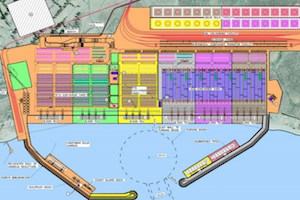
Georgia’s long-awaited Anaklia project officially ended in January 2020. The country’s internal problems as well as geopolitical competition involving the U.S., China, and Russia doomed the deep-sea port. However, this same geopolitical competition could serve to keep U.S. interests in the project afloat, as Chinese and Russian investments in the port would be problematic for Washington. Moreover, after Georgia’s critical parliamentary elections this year, Tbilisi may become better positioned to support a new concept for constructing Anaklia.
Ad-hoc peace or ad-hoc war: micro-geopolitics of Central Asia and the Caucasus

By Farkhod Tolipov
June 2nd, 2016, The CACI Analyst
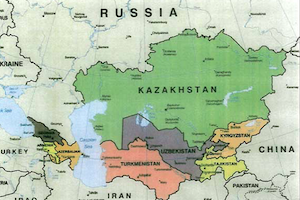
A few weeks before the April 2-5 fighting over Nagorno-Karabakh between Azerbaijan and Armenia, a border crisis occurred between Uzbekistan and Kyrgyzstan on March 18-26. Some observers connected these two events as links in the same chain. Indeed, both cases revolve around so-called frozen conflicts in the post-Soviet space; where one of the conflicting sides is a CSTO member and the other is not; and where speculations proliferate of a hidden Russian hand in both the instigation and mediation of the clashes. The two conflicts can be seen as a by-product of the same process – the continuing divergence of the former single Soviet space.
Visit also