By Laura Linderman and Lydia Sawatsky
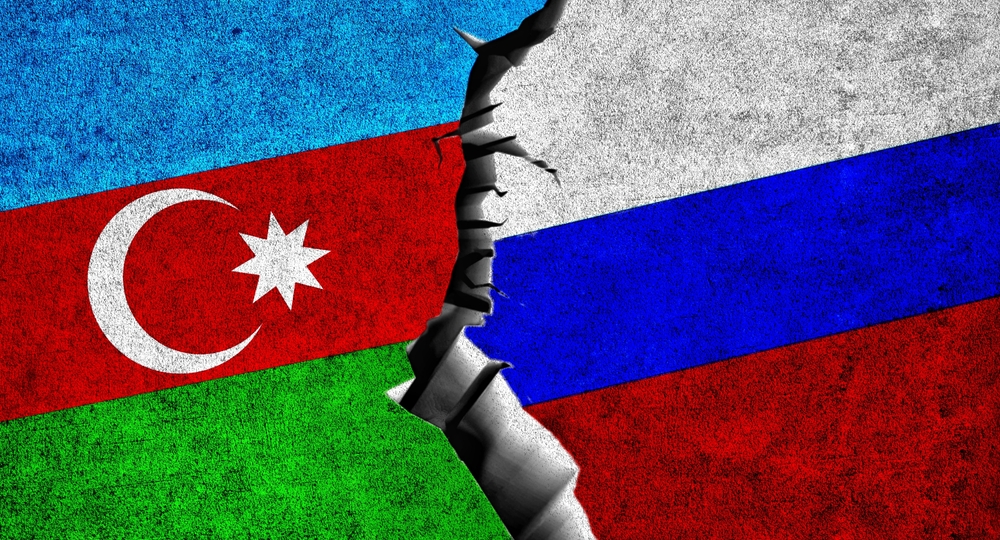
The catastrophic flooding that struck Dagestan and northern Azerbaijan in late March and early April 2026, the worst rainfall event the republic has seen in over a century, has done more than damage homes and infrastructure. It has exposed the limits of Russian state capacity on its southern periphery at a moment when Moscow's grip on the wider Caucasus is already loosening, and it has done so along the precise ethnic and territorial seam where the Kremlin has long kept what the Chechen analyst Inal Sherip has called the "Lezgin card" in reserve. The Kremlin's belated and rhetorically defensive response, set against a more coherent Azerbaijani posture to the same storm, will accelerate Baku's strategic recalibration away from Moscow and rearrange political loyalties along the Lezgin cross-border zone in ways Russia has no current means to repair.
BACKGROUND:
Between March 27 and April 8, an unusually intense Caspian cyclone delivered rainfall to Dagestan and northern Azerbaijan that meteorologists in both countries have described as a record-breaking event of a scale not seen in 107 years. At an April 9 meeting on the disaster, Vladimir Putin himself observed that "since meteorological observations began, in 1882, such figures have never been recorded in the region." By that point, at least seven people had been confirmed dead in Dagestan, more than 6,200 had been evacuated, around 1.5 million had been affected in some way, and over 6,000 residential buildings had been damaged or submerged. The Gedzhukh reservoir dam in Derbentsky district was overtopped on April 5, sweeping cars off the federal motorway. Sections of the Caucasus federal motorway and the North Caucasus Railway were severed, and three substations in Makhachkala (Primorskaya, Vostochnaya, and Makhachkala-110) were flooded and temporarily knocked offline. Yuri Chaika, the Presidential Plenipotentiary in the North Caucasus Federal District, put initial damage at over one billion rubles. On April 7, Putin directed the elevation of the regional emergency to federal status, with the formal designation issued by the government commission on April 9.
The same storm did not stop at the international border. In Azerbaijan, it caused fatal flooding in Baku's Yeni-Ramana settlement on March 27 and 28, the death of a man swept away by floodwaters in Gusar district on April 5, and the collapse of a house in Baku's Sabunchu district on the night of April 7. The worst-affected Azerbaijani districts (Gusar, Khachmaz, and Quba) are precisely those where the country's Lezgin minority is most heavily concentrated.
The official Russian response combined high-profile federal visits with a striking reluctance to take responsibility. Emergency Situations Minister Alexander Kurenkov, Construction Minister Irek Faizullin, and Natural Resources Minister Alexander Kozlov all traveled to Dagestan. Sergei Melikov, the head of Dagestan, nevertheless attributed the loss of life among motorists swept off the federal motorway to local "carelessness," and blamed flooding in Makhachkala on "reckless" real estate development. Residents were not persuaded. Novaya Gazeta Europa quoted a resident of Mamedkala who said that the only reason fatalities had not run into the dozens was that locals were pulling each other from the floodwaters themselves. Moscow's instinct to manage the crisis through televised commission meetings rather than visible mobilization on the ground reflects a federal centre that is overstretched, not one choosing restraint.
IMPLICATIONS:
The political significance of the floods extends beyond the disaster itself, because they have arrived at a moment when several reinforcing trends across the Caucasus are converging.
The first is the visible thinness of Russian state capacity outside the Kremlin's core priorities. In the same week Moscow elevated the Dagestan emergency, it absorbed the loss of its last functioning railway ferry across the Kerch Strait to Ukrainian drone strikes. Federal budget transfers, once routine for the North Caucasus, are now constrained by wartime spending and sanctions. Chronic unemployment, entrenched corruption, underdeveloped infrastructure, and reliance on heavy-handed security policies remain unresolved across the North Caucasus, continuing to fuel local grievances. The entire Kadyrov model of patronage-based stability rests on a federal balance sheet that is no longer flush, and the perception of decline now circulates openly in exile and opposition spaces. In late April, the former Chechen deputy prime minister Ruslan Kutaev, who now leads the Assembly of Peoples of the Caucasus, publicly claimed that "everyone knows Putin has lost" and that the great majority of Kadyrov's forces would switch sides at the right moment. The claim is contested, but its open airing is itself a marker of what exile figures now feel free to assert.
The second is the changing posture of Baku. Azerbaijan, hit by the same storm, has handled its response more conventionally. The country has its own constraints; residents in Baku's Yeni-Ramana settlement blocked a road in late March to protest inadequate drainage after rainfall killed two people near a damaged power cable, and Baku city authorities attributed some of the worst flooding to housing built without compliance with safety codes. But Baku has not attributed specific deaths to the carelessness of the dead. Through its Ministry of Emergency Situations, it has evacuated more than 450 people from flood zones, issued regular briefings, announced an expansion of its agricultural insurance regime to cover flood losses on April 8, and on April 28 President Ilham Aliyev allocated 85.9 million manat (approximately 50 million USD) from his reserve fund for flood relief. The political tone in Azerbaijani state media has been one of administrative competence and immediate action rather than recrimination.
This contrast matters because Azerbaijan has spent the past eighteen months systematically distancing itself from Moscow. Following the December 2024 destruction of Azerbaijan Airlines Flight 8243 by Russian air defenses over Grozny, and the June 2025 Yekaterinburg raids in which two ethnic Azerbaijani brothers died in Russian custody, Baku closed the Russian House, suspended Sputnik Azerbaijan, sued Russia internationally, and at the February 2026 Munich Security Conference President Aliyev publicly accused Moscow of three deliberate strikes on Azerbaijani diplomatic facilities in Kyiv. The trajectory has only accelerated. On April 25, four days after the federal emergency was declared in Dagestan, Aliyev hosted Volodymyr Zelensky in Gabala on the Ukrainian leader's first visit to the South Caucasus since the Russian invasion of Ukraine began, and the two presidents signed six bilateral agreements concentrated on defense-industrial cooperation, joint production, and the deployment of Ukrainian drone specialists in Azerbaijan. Every image of Russian inadequacy on Azerbaijan's northern doorstep validates Baku's strategic choice.
Baku's confidence rests on more than rhetoric. The early-2026 strikes on Iran have reduced the third regional power with traditional interests in the borderlands to silence born of weakness rather than restraint, and the Iran war has paralysed the International North-South Transport Corridor through banking and insurance restrictions, redirecting Eurasian cargo to the Trans-Caspian route through Azerbaijan and Kazakhstan, where demand surged 450 to 500 percent in a single week. Baku has also kept its land borders, including with Russia, closed since the COVID-19 pandemic, retaining the closure for political reasons. There are no longer direct flights from Baku to any Dagestani or Chechen city. That Azerbaijan can simultaneously absorb a war next door, manage the diversion of Eurasian transit through its own ports, and project administrative competence in a domestic flood response is itself a measure of how far the regional balance has shifted.
The third element, and the most underappreciated, is the cross-border ethnic dimension. The areas of Dagestan worst affected, Derbentsky and Magaramkentsky districts and the southern coastal belt, are the historic homeland of the Lezgin people, who number roughly 800,000 in southern Dagestan and between 180,000 and 260,000 in northern Azerbaijan. As Sherip notes, demographics heighten fragility: Dagestan alone hosts an Azerbaijani community of roughly 120,000, more than a third of the population of Derbent, while Azerbaijan hosts approximately 250,000 Lezgins and Avars, meaning any cross-border incident would almost inevitably spill across the frontier. Sergei Melikov, notably, is the first ethnic Lezgin to head Dagestan; with a Lezgin father and a Russian mother, he was born in Orekhovo-Zuyevo near Moscow and made his career in the federal security services, with no ties to Dagestan or its local elites before Putin appointed him acting head in October 2020. The Samur River that forms much of the international border is itself part of the flood story. Moscow has historically managed this frontier by holding the "Lezgin card" in reserve, quietly cultivating the Sadval movement and other Lezgin nationalist organizations in the 1990s as leverage against Baku and then letting them wither when Azerbaijani concessions were required. The flood inverts this calculation. A perception that Moscow neither protects nor compensates Lezgins on its side of the border, while Baku at least musters a coherent administrative response on its side, is the kind of fact that reshapes long-term political loyalties at the margins.
The fourth element is recent political memory. The September 2022 anti-mobilization protests in Makhachkala and Endirei were the largest in the North Caucasus and the first significant public unrest in the republic in a decade. They were touched off by the same dynamic now visible in the flood response: a federal centre that extracts more from Dagestan than it provides. The flood does not, by itself, manufacture a protest movement. But the conditions that produced 2022 (the perception of federal extraction, official contempt for local life, and the absence of meaningful Dagestani representation in Moscow's calculations) are all reinforced by what Dagestanis are seeing this month. Dagestan has been disproportionately mobilized for the war in Ukraine, has been chronically underfunded for infrastructure, and is now being told by its own governor that its dead were simply careless.
CONCLUSIONS:
The Dagestan floods of 2026 will not, in themselves, dislodge Sergei Melikov or destabilize the Russian Federation's hold on its southern periphery. Melikov's regional security apparatus remains coherent, and the federal centre has committed visible resources. What the floods will do is accelerate trends already in motion. Baku will read the contrast between the two responses as further confirmation that its strategic distancing from Moscow carries declining costs, a reading already legible in the Gabala signings of April 25. Yerevan, watching from across the South Caucasus, will draw the same conclusion: that a Russian state which cannot compensate flood victims on its own southern periphery is unlikely to provide the security guarantees it has long been asked to provide. The Lezgin cross-border community will quietly absorb the lesson that the federal centre will mobilize cameras before it mobilizes pumps. Western policymakers, who have spent the past year recalibrating their approach to the South Caucasus in the wake of the TRIPP framework and Vice President Vance's February 2026 visit to the region, will find that Moscow's regional credibility has eroded slightly further in a part of the Russian Federation where that erosion was supposed to be impossible. As AFPC Senior Fellow Mamuka Tsereteli has argued, the war in Ukraine has produced a paradox for American strategy: it has reduced Russia's long-term strategic power even as it has hardened Moscow into a more risk-tolerant adversary. The window for Western policymakers to lock in this regional shift remains open, but it will not stay open forever. The floodwaters in Dagestan will recede in the coming weeks. The political water table in the Caucasus has shifted by a measurable amount, and it is shifting in the same direction in which the rivers are running, south, away from a centre that no longer commands them.
AUTHOR’S BIO:
Laura Linderman is a Senior Fellow and Director of Programs at the Central Asia-Caucasus Institute at the American Foreign Policy Council, and a nonresident fellow at the Atlantic Council's Eurasia Center. Lydia Sawatsky is a researcher at the Central Asia-Caucasus Institute.