By Nargiza Umarova
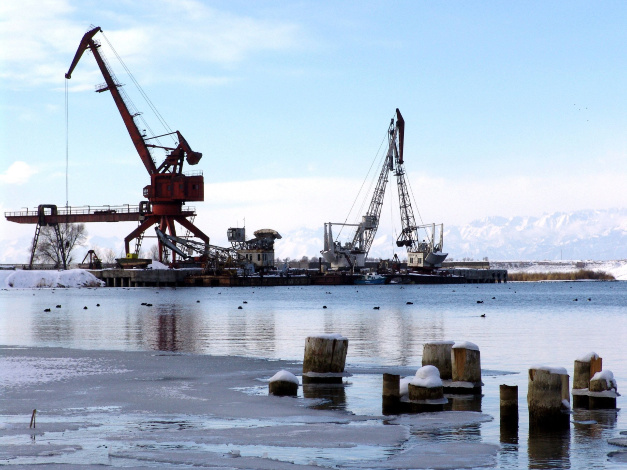
Azerbaijan is strengthening its political and economic ties with the Taliban government by playing an active role in creating and developing promising transport routes to South Asia. At the forefront is the Lapis Lazuli Corridor, launched in 2018 through a joint initiative of Afghanistan, Azerbaijan, Turkey, Georgia and Turkmenistan, similar to the ancient route of the Great Silk Road. The possibility of extending the corridor to South Asia is being considered, which would have geo-economic and geopolitical implications for Uzbekistan.

Credit: Wikimedia Commons
BACKGROUND: The US$2 billion Lapis Lazuli Agreement was signed by Afghanistan, Azerbaijan, Georgia, Turkey and Turkmenistan on 15 November 2017. The route runs from the Afghan cities of Aqina in Faryab Province and Torghundi in Herat Province, through the Caspian Sea ports of Turkmenbashi and Baku, and the Georgian Black Sea ports of Poti or Batumi, to Istanbul or Kars in Turkey, with further access to the European transport system.
The first test shipment along the Lapis Lazuli logistics chain was carried out in 2018. In January 2021, Turkmenistan, Azerbaijan and Afghanistan signed a trilateral roadmap to develop this route. However, implementation of the document was suspended due to the Taliban's seizure of power in Kabul in August 2021.
Against the backdrop of pragmatic interactions between Central Asian states — particularly Uzbekistan — and the current Afghan leadership, Azerbaijan is also seeking to strengthen its position in Afghanistan as a partner in trade, the economy, transport, and logistics.
Baku’s main priority is the Middle Corridor project, a vital logistics link between China and Europe. The Lapis Lazuli Corridor essentially extends the Middle Corridor to Afghanistan. This enables Kabul to take part in trans-Caspian shipping and to redirect some of its export cargo bound for the European market from Pakistan or Iran, to the South Caucasus and Turkey.
In 2024, Afghanistan’s total trade with the EU was approximately US$ 42 million, which is 15.9 percent higher than the previous year’s figure. Experts predict that this growth trend will continue. Meanwhile, Azerbaijan is attempting to accelerate these processes by adopting a proactive approach to its relations with the Taliban.
On July 2, 2025, on the sidelines of the Economic Cooperation Organization summit in Khankendi, Azerbaijan, Abdul Ghani Baradar, Afghanistan’s Deputy Prime Minister for Economic Affairs, met with Azerbaijani Prime Minister Ali Asadov. They emphasized Baku’s readiness to increase export and import volumes with Afghanistan. The Afghan delegation visited the Baku International Seaport, where they discussed expanding the geography of freight transport along the South Asia-Caucasus-Europe route and integrating Afghanistan into the Middle Corridor.
Azerbaijan and Turkmenistan have made significant efforts to develop the infrastructure of the Lapis Lazuli Corridor. Azerbaijan has invested approximately US$ 1 billion in two vital elements of the project: the Alat Port in Baku and the Baku-Tbilisi-Kars railway. Meanwhile, Turkmenistan constructed the Atamurat (Kerki)-Ymamnazar-Aqina railway in 2016, and connected the Afghan cities of Aqina and Andkhoy by rail in 2021. The Caspian port of Turkmenbashi is also being modernized to increase its capacity. In order to generate economic returns on their investments and reap the long-term benefits of transport service exports, it is crucial for Baku, Ashgabat and other stakeholders along the route to maximize its utilization. This justifies the idea of extending the Lapis Lazuli Corridor to Pakistan and India, which would run contrary to Uzbekistan’s interests.
IMPLICATIONS: It is assumed that the transport corridor from Europe to India via the South Caucasus, Turkmenistan and Afghanistan will become an alternative to Tashkent’s strategic plan for connecting Eastern Europe with the Indian subcontinent. This plan involves linking the Trans-Afghan Railway (Kabul Corridor) with the Northern Railway Corridor through Russia. To this end, Uzbekistan has initiated the formation of the Belarus-Russia-Kazakhstan-Uzbekistan-Afghanistan-Pakistan-Indian Ocean ports transit route, which is set to launch in multimodal format soon.
The main benchmark for calculating the Kabul Corridor’s economic efficiency and feasibility is India’s growing potential for trade with Central Asian countries, the EU, China and Russia.
In the 2024 fiscal year, India’s trade turnover with the EU exceeded US$ 137 billion, with China US$ 118 billion, with Russia US$ 70 billion, and with Central Asian countries US$ 1.7 billion. The majority of Indian goods are delivered to promising markets by sea, which incurs high financial and time costs. The integration of India and Pakistan's transport space into the Eurasian road network is expected to stimulate land transportation along the South Asia-Europe axis. This shift holds great potential for the Kabul Corridor, with a projected annual cargo volume of up to 22 million tons, most of which will be in transit.
However, the extension of the Middle Corridor to Afghanistan and the development of further access to Pakistan and India will redistribute the flow of cargo from South Asian countries to Europe in favor of Turkmenistan and Azerbaijan, who are connected by the Caspian Sea. In turn, this risks diminishing Uzbekistan’s exclusive role as a trans-Eurasian transport link.
In theory, the Lapis Lazuli Corridor could be extended to Pakistan by constructing a railway line from Torghundi station on the Afghan-Turkmen border to Naibabad station, which marks the beginning of the Afghan section of the Kabul Corridor. Although this would exclude Uzbekistan from the India-EU supply chain, it would enable the Kabul Corridor to attract additional cargo from the South Caucasus and Turkmenistan. However, this advantage would not offset Uzbekistan’s loss of transit flows from the larger economic centers of Eurasia.
Connecting the Lapis Lazuli and Kabul corridors would motivate constructing the Herat-Mazar-i-Sharif railway, which would breathe new life into the long-standing Five Nations Railway Corridor project, running through China, Kyrgyzstan, Tajikistan, Afghanistan and Iran. The Five Nations Route bypasses Uzbekistan, significantly reducing the distance between East and West. This will probably diminish the importance of the Southern Railway Corridor, which runs through Central Asia, Iran, and Turkey, as well as the China-Kyrgyzstan-Uzbekistan railway, which is intended to be an important component of this route.
At the same time, constructing the Herat-Mazar-i-Sharif railway could undermine the Lapis Lazuli Corridor’s competitive advantage by increasing Iranian transit. Iran already has rail access to northern Afghanistan via the Khaf-Herat route, which is used to deliver Afghan cargo to Europe. Extending the Khaf-Herat railway to Naibabad station near Mazar-i-Sharif and connecting it to the Kabul Corridor would enable Iran to divert potential cargo traffic from India and Pakistan to Turkey and Europe via itself, thereby depriving Central Asian and South Caucasian countries of transit benefits. Consequently, there is a possibility that the Lapis Lazuli Corridor could be extended to South Asia, bypassing Kabul and instead passing through Kandahar. This would stimulate the development of the western Trans-Afghan Railway along the Torghundi-Herat-Kandahar-Spin Buldak route. Turkmenistan and Kazakhstan promote the project as an alternative to the Kabul Corridor.
Russia should be considered a potential stakeholder in the extension of the Lapis Lazuli Corridor along any of the trans-Afghan routes. Moscow has already announced plans to connect with Afghanistan via the Caspian Sea, utilising Turkmenistan’s port and rail infrastructure, which would integrate Russia into the Lapis Lazuli Corridor. This would establish a connection between India and Russia, and potentially Europe, through Turkmenistan and the Caspian port of Turkmenbashi, rather than through Uzbekistan.
CONCLUSIONS: Uzbekistan’s best option for maintaining and enhancing its competitive advantages in trans-Eurasian and trans-Afghan transport is to accelerate construction of the Kabul Corridor, involving all Central Asian states financially to the maximum extent possible. Kazakhstan’s practical support for developing the Kabul Corridor is important, as connecting it to the Northern Railway Route to Europe will enable Astana to receive an additional transit flow of up to 20 million tons per year. This will preempt any potential competition from Astana and Ashgabat in developing trans-Afghan transport connections.
It would be worth proposing to Baku the joint promotion of a new multimodal corridor from India, Pakistan, Afghanistan, Uzbekistan and Kazakhstan to Azerbaijan, Georgia, and the EU. This would stimulate the development of the Middle Corridor by increasing transport from South Asia and Afghanistan to Europe via the Caspian Sea.
Moreover, an alternative should be developed to the Five Nations Route, instead envisaging a connection between China, Afghanistan and Iran through Uzbekistan and neighboring countries. This would ensure the profitability of the Mazar-i-Sharif-Herat railway project for Tashkent.
AUTHOR'S BIO: Nargiza Umarova is a Senior Research Fellow at the Institute for Advanced International Studies (IAIS), University of World Economy and Diplomacy (UWED) and an analyst at the Non-governmental Research Institution ‘Knowledge Caravan’, Tashkent, Uzbekistan. Her research activities focus on developments in Central Asia, trends in regional integration and the influence of great powers on this process. She also explores Uzbekistan’s current policy on the creation and development of international transport corridors. She can be contacted at This email address is being protected from spambots. You need JavaScript enabled to view it. .
By Svante E. Cornell
In early August, Central Asian presidents met in Awaza in Turkmenistan along the sidelines of a UN conference, in preparation for their seventh formal consultative meeting, which will take place later this fall. The process of institutionalizing regional cooperation is progressing apace, as Central Asian cooperation has expanded from informal summits of presidents to a more formalized structure that is also branching out into meetings at the ministerial level and between representatives of parliaments. For the process to bear fruit, however, the Central Asian presidents will need to take more concrete steps to set up formal regional structures of cooperation.

Credit: Wikimedia Commons
BACKGROUND: When Central Asian Presidents met in Awaza, Turkmenistan, on August 5 for a forum to prepare their more formal upcoming consultative meeting, it was difficult not to take a step back to note how different the situation is from only a decade ago. To begin with, until 2017, Central Asian leaders had met frequently in mechanisms involving other powers but rarely on their own. For years, they had built dialogue mechanisms with outside powers, Japan being the first to inaugurate a regional dialogue in 2004. The EU, the United States, and many others followed suit. But for close to a decade, Central Asian leaders did not have a regular format in which they met only as Central Asians, without foreign powers involved. Of course, this did not mean they had not met jointly for specific purposes, most notably the Treaty creating a Nuclear Free Zone for Central Asia, signed in Semey, Kazakhstan, in 2006.
Furthermore, the location of the meeting in Turkmenistan speaks volumes. During previous iterations of Central Asian efforts to build regional cooperation, Turkmenistan typically remained aloof, citing its permanent neutrality. The fact that Turkmenistan is now an avid participant in these efforts is truly a major development.
The rebirth of Central Asian regional cooperation got kick-started in 2017, when Kazakhstan’s then-President Nursultan Nazarbayev, responding to a suggestion by Uzbekistan’s new President Shavkat Mirziyoyev, convened a meeting of Central Asian Presidents. When this consultative meeting took place in 2018, it was the first time in almost a decade that Central Asian presidents had met without outsiders present. Since then, meetings between the presidents have taken place on a yearly basis.
The emphasis on presidential meetings is a reflection of the political realities of Central Asia. With political systems that are largely organized top-down, it is only natural that regional cooperation will be structured in a top-down manner, in the form of consultative meetings of the presidents. But for regional cooperation to be successful, it cannot only or even primarily be focused on presidential meetings. Quite to the contrary, regional cooperation will be successful when government agencies, trade councils, and civil society groups across the region cooperate in a structured manner with each other, through formal mechanisms or institutions.
Such a vision was launched at the fourth meeting of Presidents in Cholpon-Ata in 2022, where presidents approved a broad range of initiatives covering mutual relations in more than two dozen spheres, ranging from law, trade, sports, investment, visas, and education to security. Similarly, the 2024 sixth consultative meeting led to the adoption of a roadmap for the development of regional cooperation for 2025-2027 and an action plan for industrial cooperation among Central Asian states for the same time period.
IMPLICATIONS: More steps have been taken toward the building of institutions. Most importantly, the Presidents resolved at the 2023 Dushanbe Summit to establish a Council of National Coordinators of the presidential consultative meetings. Designed to “enhance the day-to-day effectiveness of interstate engagement and provide coherence to ongoing initiatives,” this body might in fact form the embryo of institutionalized Central Asian regional cooperation.
Further moves came at the 2024 summit in Astana, where the five presidents approved a strategic vision proposed by Kazakh President Kassym-Jomart Tokayev entitled “Central Asia 2040”, subtitled a "Concept for the Development of Regional Cooperation." This strategic vision builds on President Tokayev’s concept of “Central Asian Renaissance,” outlined in a policy article published ahead of the 2024 summit. In this article, the Kazakh leader outlined a vision of a more integrated region that also serves as an interlocutor on the world stage with great powers and international organizations. As he points out, this is already beginning to take place as a result of deeper Central Asian coordination in multilateral bodies like the United Nations, as well as in organizations like the SCO in which Central Asian states are represented.
The “Central Asia 2040” document spelled out a vision to deepen integration in concrete areas like trade, energy, transport, environment, digital connectivity, but also specifically included the task of strengthening a joint Central Asian cultural identity. Beyond that, it mentions for the first time the institutionalization of meetings of heads of state into a formal regional structure. Accepting that the consultative meetings of Heads of State constitute “the cornerstone of political coordination,” it declares that this format is being institutionalized as a “permanent regional structure” and declares that it is being broadened beyond the Heads of State. It explicitly expands the formats of cooperation to include “parliaments, ministries, civil society, businesses, and think tanks.” It should be noted that minister-level dialogues are already underway: ahead of the 2024 consultative summit, there was a meeting of Central Asian transport ministers, as well as a meeting of energy ministers.
The five states have already initiated a movement to develop parliamentary cooperation. A first Central Asia Inter-Parliamentary Forum was held in Turkestan, Kazakhstan, in February 2023, and was followed by a second convocation in Khiva, Uzbekistan, in September 2024. Key matters discussed included cooperation on oversight over high-level agreements and the harmonization of legislation across Central Asia, as well as the development of a legal framework for a common economic space and for fostering cooperation in industry and transport.
In addition to these formal steps, informal contacts among government officials across Central Asia have increased exponentially over the past decade. Far from being isolated from each other as in the past or interacting only through formal means, representatives of Central Asian government agencies are now comparing notes and learning from each other in ways that were not imaginable a decade ago.
The development of Central Asia-wide regional institutions is thus a work in process, but that process will likely take time. To some degree, major decisions taken at the yearly consultative meetings continue to be determined by the lowest common denominator. It is well known that there are diverging levels of enthusiasm for how deep regional cooperation should be, a question that has been marring Central Asian regionalism from the start.
Turkmenistan and Tajikistan were long perceived as more skeptical to institutionalizing regional cooperation. But Turkmenistan’s hosting of the forum in Awaza shows its full participation in the process. And the recent progress in Kyrgyz-Tajik relations has also changed Dushanbe’s approach. When Kazakhstan’s suggestion for a friendship treaty among Central Asian states was raised at the 2022 Cholpon-Ata summit, Turkmenistan and Tajikistan refrained from signing. Tajikistan’s reticence could be attributed to its border conflict with Kyrgyzstan, which has since been resolved. Following the landmark Khujand Treaty of April 2025 that marked the resolution of the remaining border issues between the two countries, as well as Uzbekistan, Tajikistan’s President in late August signed the friendship treaty during a visit by Kazakhstan’s foreign minister Murat Nurtleu. It remains to be seen whether Turkmenistan will now also follow suit.
CONCLUSIONS: For Central Asian regional cooperation to be successful, it cannot long avoid speeding up the process of institutionalization. There is a limit to the momentum that can be achieved by pronouncements at the presidential level, even if those are followed up by ad hoc meetings at the ministerial level or between parliamentary representatives. Already, the implementation of the agreements reached at Consultative Summits is unclear. As the “low-hanging” fruit of easily achieved steps is picked off, achieving tangible results without regional structures will be increasingly difficult. For regional cooperation to be felt at the societal level and to become irreversible, structures of cooperation will be needed. That can ensure that presidential pronouncements are actually implemented at the national level. Furthermore, such regional structures can themselves identify and prioritize the main issues facing deeper regional cooperation in Central Asia.
AUTHOR’S BIO: Svante E. Cornell is Research Director of the Central Asia-Caucasus Institute & Silk Road Studies Program Joint Center.
By Syed Fazl-e-Haider
During Azerbaijani President Ilham Aliyev’s visit to China in April 2025, he and Chinese President Xi Jinping announced the establishment of a comprehensive strategic partnership between China and Azerbaijan. For China, Azerbaijan represents a partner of considerable geostrategic importance, capable of functioning as a viable transit hub linking China, Central Asia, and Europe. Azerbaijan offers China access to the sole overland route to Europe that circumvents Russia. Furthermore, China’s pathway to the South Caucasus necessarily passes through Azerbaijan, positioning Baku as a pivotal actor in China’s Eurasian economic strategy. Conversely, Chinese investments have the potential to place Azerbaijan’s non-oil economy on a trajectory of diversification. A strategic partnership with Baku is thus poised to expand Beijing’s influence in the South Caucasus.

Credit: NAM
BACKGROUND: Historically, relations between China and Azerbaijan trace back to the ancient Silk Road, along which trade and cultural exchanges took place over 2,500 years ago. In December 1991, China recognized Azerbaijan’s independence, and diplomatic relations were formally established with the Caucasian state in April 1992. China inaugurated its embassy in Baku in 1992, while Azerbaijan opened its embassy in Beijing in 1993. Azerbaijan was among the first states to accede to China’s multi-trillion-dollar Belt and Road Initiative (BRI), launched in 2013. Designed to enhance global connectivity through investments in infrastructure, energy, and transportation, the BRI extends across more than 160 countries. In 2015, China and Azerbaijan concluded a memorandum of understanding on the joint development of the Silk Road Economic Belt.
In 2019, President Ilham Aliyev traveled to Beijing to attend the “Belt and Road” International Forum, during which the two states signed ten agreements to strengthen cooperation in industry, investment, trade, and other economic sectors. The BRI has functioned as a catalyst for the rapid expansion of China–Azerbaijan relations, which have evolved over the years from commercial, economic, transit, and logistics collaboration to cooperation in science, technology, and cultural exchange.
In 2024, the two nations, during a Shanghai Cooperation Organization (SCO) summit in Astana, reached another milestone in bilateral relations by adopting the “Joint Declaration of the Republic of Azerbaijan and the People’s Republic of China on the Establishment of a Strategic Partnership.”
In April 2025, China–Azerbaijan relations were elevated to a comprehensive strategic partnership, inaugurating a new chapter in bilateral ties. During talks with the visiting President Aliyev on April 23 in Beijing, President Xi emphasized that the two states should “continuously enhance political mutual trust, deepen practical cooperation, and strengthen international collaboration to open a new chapter of all-round cooperation.”
The timing and context of Azerbaijan’s decision to sign a comprehensive strategic partnership with China were of considerable significance. In April, scarcely two weeks prior to the agreement with Beijing, President Aliyev warned that Azerbaijan might redirect its gas exports elsewhere should the EU fail to advance the expansion of the Southern Gas Corridor, a transit route currently functioning at near-capacity. Azerbaijan supplies gas to the EU via this corridor, and Baku wants the EU to support its enlargement, as exports fell to 2.84 bcm in the first quarter of 2025, compared with 3.2 bcm during the same period the previous year. While EU investment could enhance pipeline capacity to achieve the 20 bcm target by 2027, skepticism persists within the EU regarding Azerbaijan’s ability to sustain sufficient gas supplies.
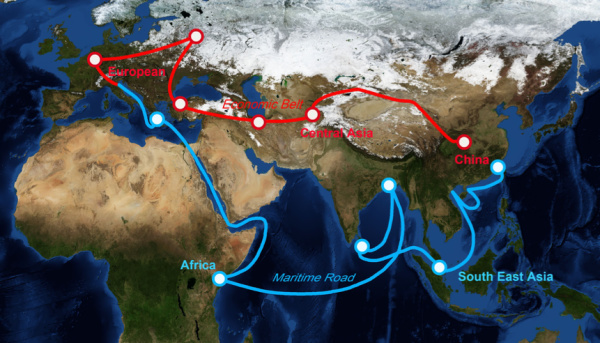
IMPLICATIONS: Geographically, the South Caucasus is of interest to China as it offers a potential land route linking China with Europe. For this reason, Beijing last year formally joined the Middle Corridor, a trade route connecting Europe and China that bypasses Russia and serves as an alternative to the Northern Corridor through Russia and to traditional maritime routes. Participation in the Middle Corridor is part of China’s broader strategy to diversify its trade routes.
For China, the present moment is opportune for expanding its presence in Central Asia and the South Caucasus, where Russia has been rapidly losing influence due to its war in Ukraine since February 2022. The ongoing transformation of the Eurasian geopolitical landscape has brought renewed attention to Azerbaijan’s role as a transit state between Europe and Asia. Within the rapidly evolving regional dynamics shaped by Russia’s war against Ukraine, Azerbaijan has gained centrality in China’s Eurasian economic strategy.
Situated at the intersection of China’s East–West and North–South transportation routes, Azerbaijan has figured prominently on Beijing’s agenda for advancing its economic and strategic objectives in the region. China regards Azerbaijan as a pivotal partner for extending its influence across Central Asia and the South Caucasus. As a key actor in the South Caucasus for the EU, Russia, and China alike, Azerbaijan plays an important role in the BRI by facilitating strategic connectivity projects. The Baku–Tbilisi–Kars railway (BTKR), for instance, links the Trans-European and Trans-Asian railway systems. This project not only grants the five Central Asian republics and Afghanistan access to the EU but also expedites the movement of Chinese goods into European markets. Likewise, Azerbaijan provides China access to the Baku International Sea Trade Port within the BRI framework. Located on the historic Silk Road, the Port of Baku functions as a major transport and logistics hub connecting Europe and Asia, and constitutes a vital component of the Trans-Caspian International Transport Route, or Middle Corridor.
Azerbaijan’s strategic connectivity initiatives possess the capacity to transform the Caucasian state into a major transport and logistics hub of the region. For this reason, China envisions a pivotal role for Azerbaijan in advancing the prospects of the BRI and ensuring the success of its Eurasian economic strategy.
At present, transport and logistics constitute the principal domains of China–Azerbaijan cooperation, though this partnership may expand to include military collaboration. Azerbaijan has already procured Pakistan’s JF-17 Thunder Block-III fighter aircraft, a joint venture between the Pakistan Aeronautical Complex Kamra and China’s Chengdu Aircraft Industry Corporation. Beijing could further augment Azerbaijan’s military capabilities as it consolidates its strategic presence in the South Caucasus in the capacity of Baku’s strategic partner.
The EU constitutes Azerbaijan’s principal export market and thus its leading trading partner. Baku’s intensifying relations with Beijing illustrate its efforts to lessen dependence on traditional routes and markets while diversifying foreign policy options. As this partnership deepens, Azerbaijan may permit Chinese state-owned enterprises to assume greater control over ports, railways, and other strategic infrastructure in the region, a development likely to raise concern in European capitals. Moreover, the competing interests of various geopolitical actors in the region could erode the degree of autonomy that Baku presently enjoys in shaping regional policies. Regional powers such as Russia, Turkey, and Iran may perceive a challenge to their strategic interests in the region arising from a deepening China–Azerbaijan strategic partnership.
CONCLUSIONS: By virtue of its position at the crossroads of Europe and Asia, Azerbaijan possesses significant potential to serve as a viable transit hub linking China, Central Asia, and Europe, particularly at a time when Beijing, engaged in a trade war with Washington, is actively seeking alternative routes for its exports.
Azerbaijan’s strategic partnership with China is, however, likely to generate new foreign policy challenges for the Caucasian state. A further deepening of this partnership may constrain Azerbaijan’s capacity to sustain strategic balance in its foreign policy. The country’s integration with European energy markets and its relations with Western states could, at some point, come into conflict with China’s interests in the region.
At present, China is not in a position to shape the geopolitics of the South Caucasus given the presence of other key actors such as the EU, Russia, Turkey, Iran, and the U.S. Beijing has, however, placed its bet on Azerbaijan, which it regards as a pivotal node in strategic connectivity initiatives such as the Middle Corridor. China further views a strengthened strategic partnership with Azerbaijan as essential to consolidating its position in the South Caucasus.
AUTHOR’S BIO: Syed Fazl-e-Haider is a Karachi-based analyst at the Wikistrat. He is a freelance columnist and the author of several books. He has contributed articles and analysis to a range of publications. He is a regular contributor to Eurasia Daily Monitor of Jamestown Foundation Email, This email address is being protected from spambots. You need JavaScript enabled to view it. .
By Emil Avdaliani
Although the Middle Corridor, connecting the EU and China via the Black Sea and Central Asia, has witnessed notable development in recent years, its swift expansion is constrained by both geographical barriers and the political complexities prevalent along the route. The Northern Corridor through Russia would be further consolidated should Russia achieve a favorable resolution to its war in Ukraine. While the Middle Corridor serves as a dependable link between Central Asia and the EU, it is likely to remain a complementary route to the northern Eurasian commercial highway.
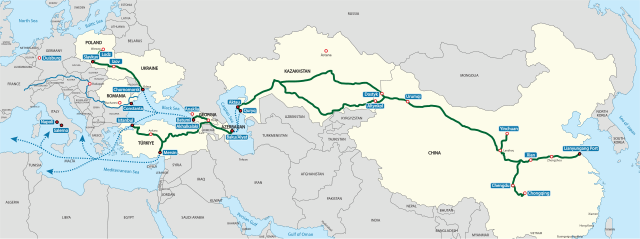
Photo source: Tanvir Anjum Adib
BACKGROUND: The Middle Corridor, also known as the Trans-Caspian Transport Corridor, extending from the Black Sea to Central Asia and western China, has gained prominence since 2022 following the onset of the war in Ukraine. Although the route had existed in practice since the 1990s and was formally inaugurated in the early 2000s, its scope remained limited due to inadequate infrastructure, geopolitical instability in the South Caucasus, and, more significantly, the appeal of the Russian route, which had facilitated trade between China and the EU. Compounding these challenges is the corridor’s multimodal nature—comprising both land and sea segments—which, despite making it the shortest geographical path between China and the EU, has ultimately rendered its operation economically unviable.
Indeed, data from the period prior to 2022 highlights this unfavorable reality: merely 2–3 percent of overland containerized freight traversed the Middle Corridor. This dynamic shifted following Russia’s invasion of Ukraine, as the route became increasingly associated with geopolitical volatility, the unpredictability of Moscow, and the risk of financial loss for both the EU and China. In addition, the European Union’s imposition of extensive sanctions on Russia has further incentivized the pursuit of alternative transport corridors.
Overall, cargo traffic along the Middle Corridor increased in 2024 for railway operators in Georgia, Turkey, Kazakhstan, and Azerbaijan. For example, Azerbaijani authorities reported transporting over 18.5 million tons of goods in 2024, representing a 5.7 percent increase compared to 2023. In the case of Kazakhstan’s railways, the volume of freight carried via the corridor grew by 63 percent, reaching 4.1 million tons in 2024. Turkish and Georgian railway companies likewise experienced a rise in cargo throughput during the same year.
In late 2024, Kazakhstan unveiled plans to finance the construction of a new terminal at Azerbaijan’s Alat port. Concurrently, Astana is undertaking development efforts at the Aktau port, with authorities aiming to triple container throughput by the end of the decade. Additional recent developments similarly suggest a significant reorientation of strategic focus toward the corridor. Notably, in March, Azerbaijan hosted 24 companies for the General Assembly of the Trans-Caspian International Transport Route International Association (TITR IA) Legal Entities Union. The objective of the assembly was to raise cargo volumes along the Middle Corridor to 96,000 twenty-foot equivalent units (TEUs).
IMPLICATIONS: Thus far, the outlook for the Middle Corridor has appeared favorable. Major powers are increasingly expressing interest in the corridor’s development. In early April, the inaugural Central Asia–EU Summit was convened in Samarkand, Uzbekistan. The event was viewed as an effort to enhance the European Union’s presence in the region amid intensifying great power rivalry over Eurasian connectivity. The EU pledged a €12 billion assistance package, of which €3 billion will be allocated to the transport sector. Central Asia holds strategic significance for the EU, particularly considering the Middle Corridor’s advancement within the scope of Brussels’ Global Gateway initiative—a rival to China’s expansive Belt and Road Initiative (BRI). With improved transport infrastructure, cargo delivery times between Europe and Central Asia are projected to be halved, reaching approximately 15 days.
China is another major stakeholder, whose growing interest in the Middle Corridor is evident through both political engagement and investment initiatives. A Chinese firm is currently constructing a deep-sea port in Anaklia on Georgia’s Black Sea coast, a development that may prove instrumental in achieving the goal of capturing a 20 percent share of EU–China maritime trade by 2035. Previous efforts to build the port were hindered by domestic political disputes, but the present geopolitical environment differs, with China now actively supporting the project. Beijing has also sought to strengthen its political relationship with Georgia, culminating in the signing of a strategic partnership agreement in 2023. A similar agreement was concluded with Azerbaijan in 2024, with an upgraded version on April 23, 2025, in which China committed to enhancing the country’s Caspian Sea ports and advancing the long-delayed China–Kyrgyzstan–Uzbekistan railway. These developments collectively signal the emergence of a near-continuous corridor stretching from China’s western frontier to the Black Sea.
However, given the evolving geopolitical dynamics surrounding Ukraine—particularly the ongoing negotiations between Russia and the U.S.—the Middle Corridor may face adverse consequences. Should Russia secure substantial gains in Ukraine, its strategic influence in the South Caucasus is likely to be enhanced. This could result in the consolidation of Georgia, Armenia, and Azerbaijan within Moscow’s sphere of influence, thereby empowering Russia to obstruct the functioning of a transit route that circumvents its territory from the south and facilitates access for rival powers into Central Asia. Potential measures at Russia’s disposal span from overt military actions to more subtle strategies, including embedding itself economically through infrastructure investments in the South Caucasus and Central Asia.
Moreover, despite the war in Ukraine entering its fourth consecutive year, this has not signaled the complete demise of the Russian route. Indeed, between 2022 and 2024, the northern corridor has continued to function as a major conduit between China and the EU. While the volume of freight transported along this route has fluctuated, it has nonetheless persisted as a vital commercial artery. Consequently, the Middle Corridor has continued to serve in a primarily complementary capacity.
This underscores the enduring viability of the northern route and should Russia–U.S. relations experience a substantial improvement; major enterprises may increasingly favor the well-established northern corridor. In contrast, the Middle Corridor continues to face constraints arising from both geographic challenges and the involvement of multiple stakeholders along its path. Infrastructure remains underdeveloped, and while intergovernmental cooperation is progressing, it still falls short of what is necessary. The true potential of the Middle Corridor is projected to reach up to 20 percent of overland containerized trade between China and the EU. However, this estimate is conditional upon several factors, including the successful completion of the Anaklia port and the expansion of the railway network across the South Caucasus.
CONCLUSION: Although the Middle Corridor has experienced considerable growth in recent years, its overall potential remains constrained. Geographic limitations, combined with persistent political complexities along the route, continue to impede rapid development. However, broader shifts in Eurasian geopolitics pose even greater challenges—should Russia succeed in concluding the war in Ukraine favorably and reconciling with the U.S., the corridor traversing Russian territory would be further solidified. This scenario does not imply that the Middle Corridor will cease to evolve. Rather, it is expected to continue expanding while remaining complementary to the northern Eurasian trade axis and functioning as a reliable conduit between Central Asia and the EU.
AUTHOR BIO: Emil Avdaliani is a professor of international relations at the European University in Tbilisi, Georgia, and a scholar of Silk Roads. He can be reached on Twitter/X at @emilavdaliani.
By Selçuk Çolakoğlu
January 31, 2023
After Russia’s invasion of Ukraine, the West‑led sanctions regime against Russia, coupled with Russian counter-sanctions, has affected everything from energy resources and logistics to banking transactions and customs procedures. Western countries have realized that Moscow can weaponize its geopolitical position and logistic networks. Strategic over‑dependence on Russia’s energy, markets, and logistics has created significant challenges to neighboring countries due to increasing political tensions between the West and Russia. This development is undermining the Northern (Russian) Corridor’s position as the main overland East-West corridor. In turn, the alternative Middle Corridor is currently facing its best opportunity ever to take a leading position in connecting Europe and Asia.
The Central Asia-Caucasus Analyst is a biweekly publication of the Central Asia-Caucasus Institute & Silk Road Studies Program, a Joint Transatlantic Research and Policy Center affiliated with the American Foreign Policy Council, Washington DC., and the Institute for Security and Development Policy, Stockholm. For 15 years, the Analyst has brought cutting edge analysis of the region geared toward a practitioner audience.
Sign up for upcoming events, latest news, and articles from the CACI Analyst.