Central Asia's Afghan Reality: What the U.S. Might be Missing
By Zabikhulla Saipov
The August 31–September 1 Shanghai Cooperation Organization (SCO) summit in Bishkek offered a revealing snapshot of Afghanistan’s changing role in the region. The massive SCO gathering brought together the leaders of China, Russia, India, Iran, Pakistan, Kazakhstan, Kyrgyzstan, Tajikistan, Uzbekistan and Belarus. Its expanded SCO Plus meeting added Azerbaijan, Armenia, Egypt, Laos, Mongolia, Türkiye, Togo and Vietnam, alongside the UN and other organizations. U.S. Special Envoy for South and Central Asia Sergio Gor was in Bishkek meeting Central Asian leaders, while former U.S. Special Envoy for Afghanistan Zalmay Khalilzad was engaging Afghanistan’s Foreign Minister Amir Khan Muttaqi in Kabul. The juxtaposition is revealing: Afghanistan may have receded from Washington’s formal strategic agenda, but it has not receded from the calculations of the states surrounding it, or from every channel of U.S.–Afghan interaction.
BACKGROUND:
The precipitous U.S. departure from Afghanistan in 2021 altered the form of U.S. involvement, but it did not change the geography that had made Afghanistan central to Washington’s engagement with Central Asia. Afghanistan shares approximately 2,329 kilometers of common land and water borders with Tajikistan, Uzbekistan, and Turkmenistan, while all five Central Asian states remain exposed to security, economic, and connectivity issues pertaining to Afghanistan. After 2001, Afghanistan became a central organizing factor in Washington’s engagement with Central Asia, shaping security cooperation, military access, border assistance, counterterrorism policies and regional diplomacy. The withdrawal changed that equation, but not the underlying geography.
Since 2021, Uzbekistan has been particularly active in treating Afghanistan not only as a security concern but as a potential connecting link between Central and South Asia. The Termez Dialogue, launched in May 2025 as a permanent platform is perhaps the clearest example of this approach. Its second meeting in June 2026 moved toward practical mechanisms for political dialogue, connectivity, transport and logistics, climate adaptation, and cultural-humanitarian cooperation. Rather than treating Afghanistan solely as a security perimeter, Tashkent is attempting to embed the Afghan question within a broader architecture of regional connectivity. This institutionalization also began to acquire a specifically Central Asian format in August 2025, when Uzbekistan convened the first meeting of Central Asian special representatives on Afghanistan, which agreed to establish a regular Contact Group for coordinated regional dialogue on the Afghan issue.
Institutionalization, however, is moving in both directions. In April 2026, Afghanistan itself initiated the first Afghanistan–Central Asia Consultative Dialogue in Kabul, bringing together all five Central Asian states and proposing regular consultations, expert cooperation and a roadmap for cooperation in trade, transit, security and connectivity. The subsequent Afghanistan–Central Asia Think Tank Forum in June 2026 extended this process into the intellectual and policy sphere, explicitly seeking research-based proposals and locally generated regional narratives. Thus, Uzbekistan is building platforms through which Afghanistan can be incorporated into wider regional cooperation, while Kabul is simultaneously seeking to engage Central Asia on its own terms. Afghanistan remains an unavoidable geographic reality, but the institutional response to that reality is increasingly being shaped within the region itself.
IMPLICATIONS:
Central Asian ownership, however, should not be confused with Central Asian consensus. Uzbekistan emphasizes connectivity, trade and regional integration; Tajikistan remains particularly attentive to border security, inclusive government, and militant threats; Turkmenistan prioritizes energy, transit and neutrality; Kazakhstan approaches Afghanistan through economic and diplomatic engagement; and Kyrgyzstan, although less directly exposed geographically, participates in wider regional security discussions. These differences may explain why flexible regional mechanisms are emerging alongside existing multilateral institutions.
For Kabul, the emerging collaborative architecture may represent both an opportunity and a necessity. The April Consultative Dialogue was initiated by the Afghan side, but its timing is particularly significant given Afghanistan’s increasingly constrained external environment. Tensions and armed confrontation with Pakistan have disrupted one of Afghanistan’s principal trade and transit corridors, while the wider war involving Iran has created additional uncertainty around western routes and regional commerce. Against this backdrop, Kabul’s turn toward Central Asia may amount to more than diplomatic activism. It can be understood as an effort to widen Afghanistan’s room for maneuver by strengthening alternative northern connections to Uzbekistan, Turkmenistan, Tajikistan and the wider Eurasian market. In this sense, the Afghanistan–Central Asia dialogue may function as a form of strategic insurance at a moment when some of Afghanistan’s traditional routes and external options have become more vulnerable. Kabul is therefore increasingly seeking to participate in shaping the regional architecture around it. This does not automatically imply political convergence or recognition by Central Asian governments; rather, it reflects an attempt by Afghanistan’s de facto authorities to turn geography into diplomatic and economic leverage.
The Bishkek SCO summit illustrates the wider environment in which this process is unfolding. The sheer composition of the gathering demonstrated the breadth of the Eurasian strategic conversation in which Afghanistan is situated. Afghanistan remained outside the summit, yet its political future and security implications remained part of the agenda. The SCO’s call for an inclusive Afghan government showed that regional powers continue to attach political conditions to their vision of Afghan stability.
Uzbekistan used the same broader setting to advance institutional mechanisms of its own. President Shavkat Mirziyoyev highlighted Uzbekistan’s initiative to establish a Universal Center for Countering Security Challenges and Threats in Tashkent under the SCO’s Regional Anti-Terrorist Structure, indicating Tashkent’s interest in strengthening the region’s permanent capacity to address emerging security challenges. Together with the Termez Dialogue, the initiative illustrates a broader Uzbek strategy: institutionalizing regional cooperation rather than relying exclusively on ad hoc responses to individual crises.
Gor’s presence in Bishkek demonstrated that the U.S. remains engaged with Central Asia, but increasingly from outside the Afghan theater. His meetings with Central Asian leaders focused on strategic partnerships, economic and investment cooperation, transport, energy, critical minerals and the C5+1 framework. On September 5, Khalilzad met Afghanistan’s Foreign Minister Amir Khan Muttaqi in Kabul to discuss Afghanistan–U.S. relations and opportunities for constructive engagement. Afghanistan’s Foreign Ministry presented the meeting as part of discussions on bilateral relations, economic growth and self-reliance, while the U.S. State Department clarified that Khalilzad is no longer a government employee and was acting in a personal capacity. These engagements therefore should not be interpreted as evidence of a new official U.S. policy toward Kabul. Their significance lies elsewhere: the U.S.–Afghan relationship has not simply disappeared; rather, it now exists through channels considerably different from the military-centered relationship of the pre-2021 period.
The geometry of U.S. involvement is changing as Washington cultivates Central Asian partnerships without a military presence in Afghanistan, while Central Asian governments are simultaneously deepening practical engagement with Kabul through regional mechanisms. The U.S. does not necessarily need to sit at every table where Afghanistan is discussed. But understanding what those tables are producing may become increasingly important for a U.S. strategy that seeks to remain relevant in Central Asia.
The emerging regional architecture is not necessarily anti-American, nor does Central Asian engagement with Kabul imply recognition of the Taliban or alignment with China or Russia. Much of it is the practical consequence of geography, security concerns and economic necessity. The U.S. may therefore face a different Afghan question than it did before 2021. Previously, Afghanistan often shaped Washington’s requirements for Central Asia. Increasingly, Central Asian approaches to Afghanistan, and Afghanistan’s own efforts to engage Central Asia, may shape how the country connects to the wider region.
CONCLUSIONS:
The U.S. left Afghanistan, but Afghanistan did not leave Central Asia. What has emerged since 2021 is neither a simple regional takeover of the Afghan question nor a disappearance of U.S interest. Instead, Afghanistan is becoming embedded in a regional architecture being built from several directions: Uzbekistan and other Central Asian states are developing mechanisms for security and connectivity; Kabul is seeking to participate in that architecture on its own terms; and institutions such as the SCO are incorporating the Afghan question into a much broader Eurasian strategic conversation. Washington is still engaged with Central Asia, but increasingly without the Afghan theater as the organizing center of that engagement. At the same time, the U.S.–Afghan relationship has not simply disappeared. For U.S. policy, the challenge is therefore to recognize how the Afghan factor itself is changing. Afghanistan has not become less relevant to Central Asia; rather, Central Asia is increasingly determining what that relevance means.
AUTHOR’S BIO:
Zabikhulla Saipov is an independent researcher on contemporary history and diplomacy of U.S. and wider Central Asia relations. He holds BSc honors degree from Uzbekistan State World Languages University, Tashkent; MIA degree from SIPA, Columbia University, New York, and PhD in political science from the University of World Economy and Diplomacy, Tashkent.
Pakistan, Central Asia, and The Transchina Trade Corridor
By Syed Fazl-e-Haider
Tashkent and Islamabad have agreed to expand bilateral trade through routes traversing China, as Pakistan-Afghanistan tensions and the war in Iran have disrupted existing trade links. Pakistan’s conflict with Afghanistan has made the prospects for trans-Afghan corridors connecting Central Asia with Pakistan increasingly uncertain. Meanwhile, renewed U.S.-Iran fighting has made trans-Iranian routes an unreliable option for Pakistan’s trade with Central Asia. Pakistan and Central Asian states such as Kyrgyzstan are therefore promoting an overland route through China that bypasses Afghanistan. Besides providing Pakistan and Central Asia with a corridor avoiding both Afghanistan and Iran, this route creates opportunities to extend the China-Pakistan Economic Corridor (CPEC), a key component of China’s Belt and Road Initiative (BRI), into Central Asia.
BACKGROUND:
Afghanistan has long represented the most viable transit route for trade between Pakistan and the Central Asian Republics (CARs). However, decades of conflict have prevented plans for a Trans-Afghan trade corridor connecting Central Asia with Pakistan from materialising. More recently, escalating Pakistan-Afghanistan tensions over cross-border terrorism have further undermined prospects for developing these routes. Relations deteriorated sharply in October 2025 following border clashes, prompting Islamabad to suspend truck-borne trade through the main Torkham and Chaman crossings. In February 2026, Islamabad declared an open war against Afghanistan and launched airstrikes targeting alleged terrorist sanctuaries inside the country.
In April, Islamabad opened six overland transit routes for goods destined for Iran amid the U.S. blockade of Iranian ports. These routes allowed goods from third countries to transit Pakistan and enter Iran by road. The designated corridors connect Pakistani seaports with two Iranian border crossings, providing a viable route towards Turkmenistan and Uzbekistan. In April, Islamabad dispatched its first shipment of frozen meat to Tashkent via Iran.
Pakistan activated new routes through Iran for trade with the CARs, but renewed U.S.-Iran hostilities over the Strait of Hormuz have undermined their viability. The trans-China route has consequently emerged as the most viable and secure remaining option for trade between Pakistan and Central Asia. Both sides are therefore increasingly prioritizing the development of the trans-China trade corridor.
The trans-China option has long featured in discussions between Pakistani and Central Asian leaders due to security concerns in Afghanistan. In November 2025, Uzbekistan and Pakistan agreed to develop trade along two major land routes bypassing Afghanistan: the Pakistan-China-Tajikistan-Uzbekistan and Pakistan-China-Kyrgyzstan-Uzbekistan corridors.
In April, Kyrgyzstan successfully tested an overland route to Pakistan via China, bypassing Afghanistan. A truck carrying Kyrgyz goods reached the Pakistani port of Karachi via China along the Karakoram Highway. Islamabad considers routes connecting Pakistan with Bishkek and Almaty more secure than the Trans-Afghan alternatives.
Several Central Asian leaders have visited Pakistan over the past ten months. Kyrgyz President Sadyr Japarov visited Islamabad in December 2025, followed by Uzbek President Shavkat Mirziyoyev and Kazakh President Kassym-Jomart Tokayev in February 2026. Their discussions with Pakistani leaders focused primarily on connectivity projects providing the CARs with access to Pakistan’s seaports at Karachi, Gwadar, and Bin Qasim.
Uzbekistan and Pakistan have agreed to amend their transit trade agreement to formally incorporate the China corridor. This would allow goods to transit through the Sost dry port and western China before reaching Central Asia. In July, Uzbekistan’s Deputy Prime Minister was scheduled to visit Pakistan, but the visit was postponed at Tashkent’s request. During the visit, the two countries were expected to sign a protocol formally incorporating the China corridor into their transit trade agreement.
Currently, routes through China have become Pakistan’s preferred option for regional connectivity and the extension of CPEC.
IMPLICATIONS:
Deteriorating relations with the Taliban regime, recurring border clashes, and terrorist sanctuaries in Afghanistan have prompted a major shift in Islamabad’s Afghanistan policy, accelerating its turn towards routes through China. While the activation of the China corridor could undermine planned connectivity projects between Pakistan and the CARs, it may strengthen alternative regional initiatives. The future of the Uzbekistan-Afghanistan-Pakistan (UAP) railway, for instance, appears increasingly uncertain. Launched in 2021, the UAP railway aims to connect Central Asia with Pakistani seaports through Afghanistan.
Conversely, completion of the China-Kyrgyzstan-Uzbekistan (CKU) railway could make Pakistan’s Gwadar port one of the shortest trade routes for Central Asia. The CKU railway is a strategic connectivity project linking Kashgar in China with Kyrgyzstan and Uzbekistan. From Kashgar, existing and planned transport links could connect the railway southwards with Gwadar through CPEC, providing Central Asia with access to the Arabian Sea.
Infrastructure development could further increase trade along the China corridor. Key projects include upgrading the Karachi–Peshawar ML-1 railway, expanding the Karakoram Highway, developing Gwadar Port as a warm-water outlet for the CARs, and expanding dry ports and logistics networks. Together, these projects could improve the efficiency and capacity of the China route.
Although Beijing, Islamabad, and Kabul have already agreed to extend CPEC to Afghanistan and Central Asia, the China corridor could accelerate its direct extension into Central Asia. CPEC connects China’s Xinjiang region with Pakistan’s Gwadar port in Balochistan through a network of highways, railways, and energy infrastructure.
The rerouting will provide Pakistan with an alternative route to Central Asia while maintaining Uzbekistan’s access to the Pakistani ports of Gwadar and Karachi. Uzbekistan has emerged as Pakistan’s key economic partner in Central Asia. Although the China corridor bypasses instability in both Afghanistan and Iran, it is longer and more expensive than the Trans-Afghan route due to greater distances, higher handling costs, additional border procedures, and longer transit times. The China corridor could therefore serve as a strategic alternative in the short term, but is unlikely to fully replace the Afghan route commercially in the longer term. Improved infrastructure along the China route could enable Pakistan to connect with Kyrgyzstan, Kazakhstan, and Tajikistan via the Khunjerab Pass.
CONCLUSIONS:
Geopolitics and security will ultimately determine the development of trade corridors between Pakistan and the CARs. The Pakistan-Afghanistan conflict has undermined prospects for the Trans-Afghan corridor, while the war in Iran has reduced the viability of the Trans-Iranian route. Under these conditions, the Trans-China corridor offers a comparatively secure and viable alternative for both Pakistan and the CARs. It could therefore serve as a strategic safeguard against regional instability stemming from conflicts in Afghanistan and Iran.
Pakistan’s importance as a trade outlet is widely recognized in Central Asia. The landlocked CARs seek access to Pakistani seaports through Afghanistan, Iran, or China to facilitate global trade. However, growing security concerns surrounding the Afghan and Iranian routes are likely to increase Central Asian interest in accessing Pakistani ports through the comparatively secure China corridor.
Pakistan, China, and the CARs could enhance the corridor by improving infrastructure, extending CPEC into Central Asia, and streamlining cargo clearance procedures at their borders. Such measures could address existing constraints and make the China route more cost-effective and commercially attractive.
AUTHORS BIO:
Syed Fazl-e-Haider is a Karachi-based analyst at the Wikistrat. He is a freelance columnist and the author of several books. He has contributed articles and analysis to a range of publications. He is a regular contributor to Eurasia Daily Monitor of Jamestown Foundation Email: This email address is being protected from spambots. You need JavaScript enabled to view it. .
Regional Connectivity and Central Asia’s Need for a Unified Strategy
By Nargiza Umarova
In early June, Istanbul hosted a number of significant events reflecting Central Asia’s growing role in the east-west land transit system. Representatives of the railway administrations of Uzbekistan, Turkmenistan, Türkiye, Georgia, Azerbaijan and Kyrgyzstan signed an agreement to further develop the CASCA+ corridor (Central Asia–South Caucasus–Anatolia+). The aim is to increase the flow of goods, including transit traffic to the EU. This development aligns with the Middle Corridor extension strategy, the prospects of which was discussed at the 8th meeting of the United Nations Economic Commission for Europe – Economic Cooperation Organization (UNECE-ECO) Coordination Committee. Participants at the Istanbul meeting also reviewed the formation dynamics of the Southern Railway Corridor through Central Asia, Iran and Türkiye. Although the five Central Asian republics are actively involved in international transport initiatives, they have not yet succeeded in consolidating projects of regional interest and mutual benefit, creating the potential for unhealthy competition.

BACKGROUND:
The war in Ukraine, which has become the main geopolitical upheaval in Eurasia, and subsequent regional crises have impacted the security of global maritime shipping, are making land logistics increasingly important in intercontinental transport. This presents an opportunity for Central Asian states to establish a new trade route architecture, turning their geographical position into a strategic asset. However, to achieve this, it is first necessary to address issues of intra-regional connectivity, as this could strengthen Central Asia’s position in its relations with major powers.
Following the launch of a mechanism for regular consultative meetings in 2018, Central Asian countries prioritized the convergence of their national transport systems. This would strengthen the region’s connectivity, facilitate its integration into global supply chains, and accelerate economic growth.
This approach is based on data from authoritative international organizations, including the World Bank, which publishes the Logistics Performance Index (LPI) every two years, reflecting the current state of transport and communications at national and regional levels.
The geographical remoteness of Central Asia from the open seas puts the region at a disadvantage in terms of achieving logistical efficiency. Landlocked countries must transit through coastal nations and cross multiple borders, which significantly increases the time required to transport goods. An additional day of transit leads to a seven percent reduction in exports. This illustrates the substantial effect that delivery times have on the volume and value of foreign trade. Due to high transport costs combined with the lack of direct access to the sea, the Central Asian region loses up to 2 percent of its GDP annually.
In the context of Central Asian connectivity, geography undoubtedly constrains foreign trade growth. However, this factor is generally manageable. Global experience shows that direct access to maritime trade does not guarantee a country a competitive advantage in logistics connectivity. Even within the same region, coastal economies have access to different numbers of markets with which they can trade without relying on intermediary countries. Morocco, for example, has the highest connectivity of all the North African countries, whereas Malaysia and Sri Lanka have achieved similar positions in Southeast and South Asia. All three of these developing economies are recognized regional transport and logistics hubs in their respective regions, and this has helped them raise their logistics efficiency to the required level. Since 2017, the Central Asian republics have been striving for a similar outcome, working to consolidate extended transport links between countries, with a particular focus on increasing the region’s transit potential. Proximity to open seas is in this case less important than an intraregional strategy enabling Central Asian countries to manage their geographic location and improve transport logistics.
IMPLICATIONS:
From the outset, the five Central Asian states agreed to integrate into the global transport network as a single entity, rather than individually. This would pave the way for the region’s strategic autonomy, which, through implementing a coordinated policy to develop and promote promising transit corridors crossing Central Asia, could align relations with major powers, prioritizing pan-regional interests and thereby enhancing the region’s geopolitical significance. The primary task of this approach is to strengthen intra-regional connectivity, which requires collective action to remove administrative, legal and technical barriers. To this end, the establishment of a Regional Center for Transport and Communications Connectivity under the auspices of the UN has been proposed.
Although this initiative has yet to be implemented, certain positive developments in Central Asia’s transport connectivity have already been achieved. These include the restoration and modernization of key transport routes between countries in the region, the opening of new trade routes and an increase in transit freight traffic. However, urgent solutions are needed to address issues such as unifying tariff policies, harmonizing transport legislation, introducing standardized permit forms and electronic document management practices, reducing customs duties, increasing the throughput capacity of border crossings and simplifying customs procedures. Attracting investment in transport infrastructure and digitalizing the transportation process is also crucial. While there is a general understanding of the urgency of these issues, there is no consolidated effort to address them.
There is a growing trend towards developing new interregional transit corridors rather than local transport routes. A focus on self-interest and a lack of proper coordination in the implementation of such projects risks fueling rivalry between regional states. This could potentially deprive them of the opportunity to influence the geopolitics of transport corridors in Central Asia.
Globally rising geopolitical tensions are creating growing uncertainty in the maritime shipping industry, which is making Central Asian trade routes increasingly important. This, in turn, is stimulating investment interest in the regional transport services market. The main investors are China and the EU, who are implementing their own global initiatives: the Belt and Road Initiative (BRI) and the Global Gateway. Japan, South Korea and the Gulf states are also contributing to the development of Central Asia’s transport sector to varying degrees.
CONCLUSIONS:
With limited mutual coordination, the involvement of Central Asian states in infrastructure projects funded by external actors creates an incentive for unhealthy competition. Paradoxically, despite having overlapping interests in transport logistics and the potential to establish mutually beneficial cooperation based on shared priorities, the countries in the region act in isolation, often resorting to foreign aid or support. This is evident in the development of westward transport, for example.
Kazakhstan participates in the Trans-Caspian International Transport Route (TITR), connecting China and Europe and institutionalized by Kazakhstan, Azerbaijan and Georgia in 2014. In 2019, meanwhile, Uzbekistan launched the alternative CASCA+ corridor to Europe via the Caspian Sea in partnership with Kyrgyzstan, Turkmenistan, Azerbaijan, Georgia and Türkiye.
A similar situation is unfolding along the southern transit route. Uzbekistan is speeding up construction of the Trans-Afghan Railway (the Kabul Corridor), which runs from Termez to Naibabad, Maidanshahr, Logar and Kharlachi. The railway will provide access to Pakistani ports on the Indian Ocean. Meanwhile, Turkmenistan and Kazakhstan are working to create another railway corridor through Afghanistan's western provinces. These initiatives have attracted the attention of influential countries such as Russia, China, Iran and Türkiye, who view them in the context of their own geopolitical interests. This could influence the implementation of each route and fuel regional competition.
In order to avoid the duplication of infrastructure projects, the Central Asian republics should adopt a regional strategy for developing transport corridors and establish a single coordinating body with legal entity status. This would be an important step towards strengthening regional connectivity.
AUTHOR’S BIO:
Nargiza Umarova is a Head of the Center for Strategic Connectivity at the Institute for Advanced International Studies (IAIS), University of World Economy and Diplomacy (UWED), and an analyst at the Non-governmental Research Institution ‘Knowledge Caravan’, Tashkent, Uzbekistan. Her research activities focus on developments in Central Asia, trends in regional integration, and the influence of great powers on this process. She also explores Uzbekistan’s current policy on the creation and development of international transport corridors. She can be contacted at This email address is being protected from spambots. You need JavaScript enabled to view it. .
Russia’s Double Game in Afghanistan and Central Asia
By Stephen Blank
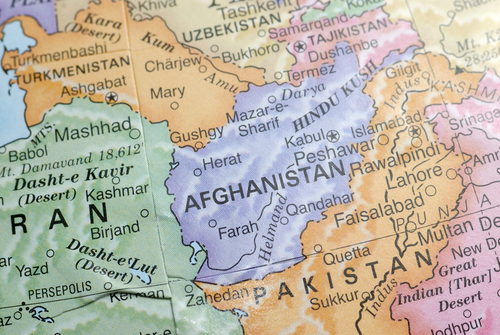
The Pakistan-Afghanistan war, on top of the war against Iran, is forcing Moscow to attempt to balance its security and economic interests in and beyond Central Asia with both Pakistan and Afghanistan. Pakistan is critical to Russia because it provides an alternative to Iran, allowing Moscow’s transcontinental trade project INSTC to move forward and offering a gateway to Asia. Concurrently, Moscow has upgraded its ties with the Taliban in Afghanistan both to deter ISIS-K terrorists and to secure broader geostrategic aims. Yet it also increasingly appears that Moscow is willing to offer Afghanistan arms, ostensibly to deter terrorists. However, in the broader regional context, this move underscores Moscow’s propensity for playing a double game with and against its partners.
BACKGROUND:
The Iran war and Pakistan’s war with Afghanistan threaten the further erosion of Russian influence in Central Asia. Consequently, Russia has embarked on what can only be called a double game vis-à-vis Pakistan and Afghanistan. Pakistan has attacked Afghanistan because it claims Afghanistan harbors the Tehrik-e-Taliban Pakistan (TTP) terrorist group, which performs attacks against Pakistan. This complaint is more than a little ironic given Pakistan’s own long-standing and well-known record of sponsoring terrorism against India. More significant, however, is the fact that this charge, if true, signifies that Kabul has escaped Islamabad’s tutelage. However, the war also disrupts Russia’s ambition to sell Russian gas to South and Southeast Asia through pipelines traversing Afghanistan and Pakistan.
At the same time, Russia has steadily built a “full-fledged” and “pragmatic” partnership with Afghanistan to prevent it from sponsoring terrorist groups like ISIS-K and their targeting of Russia and Central Asia, where Russia still claims to be the ultimate security manager. According to Sergei Shoigu, Secretary of Russia’s Security Council, full-fledged partnership includes bilateral defense and security cooperation. Indeed, Shoigu openly proclaimed Russia’s opposition to any third-party military presence in Afghanistan or neighboring countries, a shot across both Pakistan’s and the U.S.’s bow and a sign of its ambition to establish a protectorate over Afghanistan.
However, Russia’s interests transcend defense. The war against Iran has ruptured the feasibility of Russia’s, Iran’s and India’s major transit, trade and connectivity route through Central Asia and then through Russia to Europe, the INSTC (multi-modal International North-South Transportation Corridor). The other existing corridor, the increasingly lucrative Middle Corridor or TITR (Trans-Caspian International Transport Route) from China to Central Asia and then to the Caucasus and Europe bypasses Russia. Thus, since failure to find an alternative to Iran for INSTC will have dire geoeconomic and geopolitical consequences for Russia, it has turned to Pakistan for help. Pakistan cannot afford exclusion from transcontinental trade routes and has agreed to explore connecting its port at Gwadar either by land or by sea to INSTC.
IMPLICATIONS:
Moscow typically has sought to have a foot in both camps in every conflict scenario throughout the Global South and the Pakistan-Afghan war is no exception. But this case is far more central to Moscow’s interests than its power projection in for example Africa or the Middle East. In order to maintain its self-appointed “leading position” in Central Asia, it is crucial for Russia to exercise leverage over Afghanistan to deter an outbreak of Islamic terrorism targeting either Central Asia or Russia.
Likewise, it is critical to Russia’s economic health and continuing ability to finance its war against Ukraine and its heavily strained state budget that it continues to find Asian markets for its oil and gas. Doing so also entails developing trade routes like INSTC to Pakistan, India and Southeast Asia, especially given its desire to be acknowledged as an independent Asian power. Therefore, balancing between Pakistan and Afghanistan while developing alternatives to Iran’s connectivity have become requirements of Russian policies to realize vital Russian interests, especially as its economy is reeling and its position in Central Asia erodes.
Further erosion is inevitable if Islamic terrorism “migrates” to Central Asia without Moscow being able to deter or stop it. By the same token, exclusion from transcontinental trade routes will undermine Moscow’s ideological and rhetorical pretense of hegemony, and demonstrate that Russia lacks the means in terms of tangible material capability to back up its arguments or sustain a position that answers to Central Asia’s most pressing questions, i.e. economic development.
Concurrently, if Russia cannot develop let alone sustain viable, economically justifiable outreach to South and Southeast Asia, its hard-won influence and standing in those countries will diminish by an order of magnitude, negating its claims of being an Asian power and making it still more dependent on China.
Despite its vital need to keep the balance between Pakistan and Afghanistan, many recent reports suggest that Moscow is secretly negotiating an arms deal with the Taliban. Ostensibly, the aim would be to use the weapons to suppress ISIS-K and prevent further terrorist strikes in Central Asia and or Russia. While this makes sense if leveraging Russia’s Central Asian position and ambitions vis-à-vis Afghanistan are the priority; in reality, it highlights the priority of security over economic development in Russian policy. It also illustrates the abiding temptation to make secret deals involving the security services or force structures as primary instruments of foreign policy.
Given the Taliban’s track record, it is unlikely that it can or will hold up its end of the bargain. Moreover, should these reports be true this news will enrage Pakistan and likely torpedo efforts to have it join INSTC. That trade project, unlike the Middle Corridor, never got off the ground and is therefore already being eclipsed. This has gravely serious and negative implications for Russia and is likely to aggravate all the trends making for the decline of Russian power in the Caucasus and Central Asia as well as South and Southeast Asia.
An arms deal with the Taliban will further entrench the belief among governments who monitor Russian behavior that Moscow is cannot be relied on as a partner. It will also confirm the notion held by many Western governments that Russia, like the Soviet Union, remains a sponsor of state terrorism and must, at best, be kept at arm’s length.
CONCLUSIONS:
Thus Russia continues to play a double game towards its partners, attempting to have both an empire and prosperous foreign trade relations, even though their logics are quite incompatible. Moscow also has yet to grasp that it cannot denounce and support terrorism at the same time without paying an incommensurate price for its quest after short-term gains. In Central Asia, Russia still seeks to pursue wildly contradictory aims without paying the price for doing so. If Moscow does, in fact, arm the Afghan government, it will once again be playing with dynamite.
AUTHOR’S BIO:
Stephen Blank is a Senior Fellow with the Foreign Policy Research Institute, www.fpri.org.
How Pakistan Is Reshaping Eurasian Trade Corridors
By Umair Jamal
Pakistan has approved and operationalized new land routes to connect Central Asian markets to Pakistani ports and beyond, utilizing strategic corridors through Iran and China to bypass Afghanistan entirely. This shift was solidified in April 2026 when Pakistan Customs launched the first export consignment from the Karachi Export Processing Zone to Kyrgyzstan via the Sost Dry Port in China under the TIR (Transports Internationaux Routiers) regime. Pakistan’s decision to diversify transit away from Afghanistan follows the indefinite closure of the Torkham and Chaman border crossings in October 2025 due to unmanageable security risks and cross-border militancy. By activating the Pakistan-Iran Transit Corridor and the Sost-Kyrgyzstan-China Corridor, Islamabad is dismantling Afghanistan’s traditional transit monopoly. Amidst the ongoing Strait of Hormuz crisis, these land routes, coupled with the rising prominence of Gwadar Port, position Pakistan as a critical, multi-modal bridge between the landlocked Eurasian heartland and global warm-water ports. These new land routes circumvent both maritime chokepoints and regional instability and provide Central Asian nations with secure and diversified avenues for trade and logistics.
BACKGROUND:
For decades, Pakistan’s overland access to the Central Asian countries was almost exclusively dependent on the Chaman and Torkham gateways through Afghanistan. From Pakistan’s perspective, this geographical bottleneck granted Kabul significant leverage, which was frequently used as a political tool during bilateral friction. However, since the Taliban’s return to power in 2021, this lifeline for both Central Asian states and Pakistan has transformed into a strategic liability.
Central Asian leadership has grown increasingly frustrated with the instability of the Afghan route. For instance, recurrent border closures, unpredictable transit fees, and the persistent threat posed by militant groups have undermined the region’s trade ambitions. This collective annoyance reached a decisive moment in October 2025, when in response to persistent cross-border militant attacks from Afghanistan, Pakistan decided to completely shut down the Afghan-Pakistani trade routes connecting Central Asia.
Seeking to bypass traditional transit hurdles, Pakistan recently proposed new trade corridors for Central Asian countries. In April 2026, senior representatives from Uzbekistan, Kyrgyzstan, and Tajikistan gathered in Karachi for a coordination ceremony, where Pakistan offered a permanent alternative to the Afghan route for global connectivity.
The ceremony marked the official activation of the Iran-based land route, with the first convoy of refrigerated trucks carrying frozen meat and assorted exports destined for Tashkent and Bishkek. The development signaled a regional consensus whereby Central Asia is no longer willing to wait for Afghan stability and seem poised to work with Pakistan to operate these new routes. Early data reflects this momentum, with over 14,000 metric tons of cargo successfully processed across both corridors.
Simultaneously, Pakistan’s private sector has already demonstrated that it can work via the northern bypass that sits on China’s Sost border, with the Hemani Group successfully delivering a 23.9-tonne consignment to Kyrgyzstan, cleared electronically via the Pakistan Single Window (PSW) system. This 3,300-kilometer Bishkek-Karachi route under the Quadrilateral Traffic in Transit Agreement (QTTA) has now seen its first reciprocal commercial runs, with Kyrgyz transport fleets bringing minerals and textiles south. Crucially, the cargo proved the viability of two-way transit over high-altitude passes, shifting the framework from a unilateral export pipeline into a functional bilateral trade loop.
These strategic developments are taking place at a crucial time in the region’s geopolitics and are set to have far reaching implications.
IMPLICATIONS:
These new corridors have immense strategic significance for Central Asia, as they offer a permanent exit from the long-standing Afghan dilemma. For instance, by utilizing the Gabd-Rimdan from Iran and Sost that relies on China, landlocked nations such as Uzbekistan and Kyrgyzstan have secured a reliable Southern route to the Arabian Sea. Uzbekistan has been particularly active along the western axis, using the Gabd-Rimdan border terminal, which was recently upgraded by the National Logistics Corporation (NLC) with modern scanning facilities, to consistently move agricultural equipment and industrial raw materials.
The diversification provides these countries with a professionalized trade environment characterized by reduced transit costs, effectively bypassing the unpredictable informal taxes and security delays inherent in the Afghan route.
Furthermore, the distance from the Iranian border to Gwadar port offers a significantly shorter alternative to the traditional northern routes through Russia or the volatile western corridors, while maintaining stability through direct institutional oversight via the TIR regime and electronic tracking under the Pakistan Single Window (PSW) system. This structural predictability has provided Central Asian exporters with a reliable maritime gateway that avoids the costly and multi-border transit loops through eastern Europe.
In the wake of these developments, Pakistan’s Gwadar Port is set to transition from a conceptual hub into the functional heart of Central Asian trade. Within the framework of the China Pakistan Economic Corridor’s Phase 2, the integration of trade from Central Asian countries via Iran and China validates the massive infrastructure investments previously made in Baluchistan.
This development is particularly critical given the ongoing Strait of Hormuz crisis. Gwadar is situated 400 km east of the strait and serves as a virtual bypass of the conflict zone, allowing Central Asian exports to reach international waters without entering the high-risk zones of the Persian Gulf.
For Pakistan, this creates a substantial economic windfall as well. By positioning itself as the primary transit state for a massive market, the country is positioning itself to secure consistent revenue through port handling, logistics, and transit fees. In the wake of the Strait of Hormuz crisis, tariff at the Gwadar port has multiplied.
Ultimately, these shifts represent a permanent structural setback and the long-term erosion of Afghan leverage. For decades, Kabul relied on its geographic status as a bridge between South and Central Asia to extract economic concessions and maintain political relevance. However, by demonstrating that trade can flow efficiently through Iran and China, Pakistan and the Central Asian countries have rendered the Afghan routes entirely optional.
If the Taliban regime remains unable or unwilling to secure its borders and dismantle militant sanctuaries, it faces the grim prospect of total economic isolation as regional trade patterns permanently realign around a more stable and predictable maritime-linked architecture.
Moreover, the strategic expansion of these corridors comes at a pivotal moment in the shifting Eurasian geopolitical landscape.
As the Iran-U.S. war reshapes regional alignments and trade security, these new routes grant Pakistan and Central Asia much-needed strategic maneuverability. They serve as a vital hedge, insulating regional economies from the instability of maritime corridors and the growing risk of chokepoint weaponization.
Furthermore, this realignment signals the emergence of a Middle-Power bloc where regional players like Pakistan, Iran, and the Central Asian Republics are prioritizing economic connectivity over historical ideological or security frictions.
For Pakistan, this transition from a security state to a geo-economic hub is not just about transit fees; it also constitutes an attempt to embed its stability with the economic wellbeing of its neighbors.
By providing a new route for Eurasian goods, Pakistan is trying to ensure that regional powers now have a vested interest in the security of Pakistan and the success of Gwadar port where Central Asian states will now have significant stakes.
CONCLUSIONS:
The approval of these alternative corridors demonstrates an important elevation of Islamabad’s regional standing. By linking Gwadar to Iranian and Chinese land routes to better serve Central Asia, Pakistan is effectively seeking to decouple its economic future from the instability of traditional Afghan transit. This development offers a stable gateway for regional states and signals a shift away from reliance on uncooperative neighbors. As the idea of Eurasian trade flowing through this multi-dimensional network gains relevance, Pakistan is going to position its southern coast as the indispensable hub of a new and more resilient economic order.
AUTHOR’S BIO:
Umair Jamal is a Ph.D. candidate at the University of Otago, New Zealand, and an analyst at Diplomat Risk Intelligence (DRI). His research focuses on counterterrorism and security issues in Pakistan, Afghanistan, and the broader Asia region. He offers analytical consulting to various think tanks and institutional clients in Pakistan and around the world. He has published for several media outlets, including Al-Jazeera, Foreign Policy, SCMP, The Diplomat, and the Huffington Post.
Visit also