Political Battle For Armenia's Future Intensifies Ahead Of June Elections
By Laura Thornton
Armenians head to the polls on June 7 to elect all 101 members of parliament at a time of critical regional and geopolitical consequences. Following the 2018 Velvet Revolution and Nagorno-Karabakh war, the country has embarked on a new path of democratic reform and foreign policy alignments. Previously dependent on Russia for security guarantees and economic stability, the government of Prime Minister Nikol Pashinyan is now forging new ties with the European Union (EU) and United States, while redefining the country’s relationship with both Azerbaijan and Turkey. The election presents a choice beyond minor policy options but a vision for the country’s governance and geopolitical alignment. Given the stakes, both domestic and foreign actors have intensified their tactics, manipulating existing vulnerabilities, and present serious threats to the election process.
BACKGROUND:
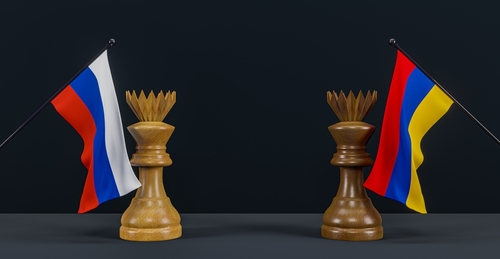
The election is taking place at a historic pivot point for Armenia’s positioning in the region and beyond. Since the fall of the Soviet Union, Armenia has tied to Russia militarily, economically, and ideologically. Armenia has been part of the Eurasian Economic Union, a Russian initiative to ensure economic integration, and the Collective Security Treaty Organization (CSTO), a Russian-led security alliance. Russia has been Armenia’s largest supplier of military aid and key trading partner. Russia also owns key infrastructure in Armenia, including railways and telecommunications. However, Russia’s failure to defend Armenia during the 2020 and 2023 Nagorno-Karabakh conflicts damaged ties between the two states, with Yerevan suspending its participation in the CSTO and demanding the removal of Russian border troops.
While turning away from Russia, the government has pursued European Union (EU) accession and signed a framework to implement the Trump Route for International Peace and Prosperity (TRIPP), which aims to establish a transit route in the south Caucasus. Further, regional calculations have dramatically changed, paving the way for a redefined relationship with both Azerbaijan and Turkey, with a peace agreement being formed with the former and new border and trade discussions with the latter.
Two main opposition blocs, which are closely tied to Russia, are challenging the ruling Civil Contract party of Pashinyan. The ruling party is running on “peace,” which it defines as continuing the negotiations with Azerbaijan and building closer ties with the EU and U.S. The opposition blocs oppose the government’s peace agreement, accuse the government of being under Azerbaijani and Turkish control, and say EU goals are unrealistic.
While the political contest does not fall along neat “pro-West vs. pro-Russian” divides as in some frontline democracies, and none of the viable parties embraces a full break from Russia (mindful that the plurality of Armenians believe Russia is the country’s most important political partner), the parties do differ significantly on the nature of the relationship. The Kremlin has taken note and activated its hybrid warfare playbook, employed in Georgia, Moldova, and other democracies, to defeat the ruling party.
The political landscape is also shaped by a fierce conflict between the government and Church leaders. Church leaders – headed by Karekin II, the Supreme Patriarch and Catholicos of All Armenians – accuse the Pashinyan government of “losing” the war in Nagorno-Karabakh and have called for the Prime Minister’s resignation. In turn, the government has prosecuted several bishops on charges ranging from “calling for a coup” to drug charges, prosecutions which many independent groups believe lack strong evidence. Opposition parties have seized on this issue, criticizing the government and defending the Church.
IMPLICATIONS:
Given the partisan divergence on the country’s foreign policy orientation, the geopolitical stakes in the election are high, activating malign actors. The Kremlin sees clearly the threat of the ruling Civil Contract, which has pledged more decoupling from Russia and greater alignment with Europe and the U.S. While recently on a pre-election assessment mission to Yerevan, government officials, civil society representatives, diplomats, and observers described Russia’s hybrid warfare in the country as “unprecedented.” There was also widespread agreement that the country was not adequately prepared for the threat, made worse by the elimination of USAID and its support in bolstering the country’s defenses.
Information is central to the Kremlin’s strategy. Russia dominates the airwaves, with Russian channels freely broadcast on national television, and social media, where there are few regulations. Narratives focus on Armenia’s need for Russian security, and how the Pashinyan government has ceded sovereignty to Azerbaijan, and for the Russian market. Emphasis is on Armenia as part of Russia’s sphere of influence. Disinformation about elections, institutions, and democracy is prevalent, particularly sowing distrust in the integrity of the upcoming election. Russian information campaigns bolster opposition talking points, such as those accusing the government of suppressing speech and political prosecutions.
The Kremlin has infiltrated charities, movements, and foundations, such as the “Foundation to Battle Injustice,” established by the late Wagner Head Yevgeniy Prigozhin. Russia and Armenian Church leaders are also in lockstep, each amplifying the other’s attacks on the government, messaging on traditional values, and criticism of Western institutions. Russia has also mobilized the Armenian diaspora to vote in previous elections, paying for transport and vote buying. Russian banks and businesses operate throughout the country making financing of influence operations and proxies easy.
It is widely acknowledged in Yerevan that the country is not adequately prepared to defend against this threat. Government bodies are poorly resourced and often lack the mandate, technology, and tools to investigate or conduct counter efforts. There are also legal loopholes, such as the lack of regulation on third parties, which frequently engage in political activity. Civil society groups, research institutes, and independent media – central to building resilience to hybrid threats – are also poorly resourced, particularly since the elimination of USAID.
Electoral victory for the main opposition blocs, the beneficiaries of Russian influence, would signify a reversal on the country’s current trajectory. Russian citizen Samvel Karapetyan, owner of the Russian Tashir Group, founded the opposition Strong Armenia. The other main opposition bloc, Armenia Alliance, is led by former President Robert Kocharyan who serves on the board of directors for Sistema PJSFC, one of Russia’s largest investment companies. In addition to their obvious Russian ties, the parties reject Pashinyan’s peace agreement (and do not offer a clear alternative), do not approve of TRIPP, and believe Armenia is “not ready” for the EU.
According to recent polling, Civil Contract is polling at 24 percent, Strong Armenia at nine percent, and everyone else below the threshold. This polling also shows the majority of support for the ruling party comes from older (56+) and more urban citizens. Importantly, those who select Civil Contract are far more likely to identify as “pro-Western” (73 percent) while those who support Strong Armenia believe the country’s policy should be “pro-Russian” (71 percent).
CONCLUSIONS:
Armenia’s election could lead to the continuation of the country’s new foreign alignment course, forging new economic and security relationships and exerting greater freedom from Russian control. Alternatively, the country could abandon this direction, taking a closer path to that of neighboring Georgia, which has alienated the West and forged closer ties with Russia, China, and Iran. At a time of upheaval and uncertainty in the region, a strong alliance of pro-Russian governments along the vertical axis from Moscow to Tehran would have significant consequences. It could block Western interests in and access to the region and beyond, lead to new destabilization between Armenia and Azerbaijan, and embolden Russia to act elsewhere.
Enhanced U.S. and European support would help fortify the elections from malign actors through increased technical assistance, intelligence, financing, and training to Armenian partners.
AUTHOR’S BIO:
Laura Thornton has spent more than 30 years in the democracy, governance, and security space both as a practitioner and policy and advocacy expert. She lived more than two decades in Asia and the former Soviet Union and has held positions at the McCain Institute, the German Marshall Fund, International IDEA, and the National Democratic Institute.
Georgian Government's Educational Reform Sparks Academic and Societal Protest
By Irakli Laitadze
On February 4, 2026, the Georgian Parliament adopted amendments to the Law of Georgia On Higher Education. The controversial reform triggered mass protests from the academic community and broader society, which are still ongoing. The government argues that the reform will modernize the education system, concentrate limited financial resources, and increase the competitiveness of universities. A central element of the reform is the principle “One City–One Faculty,” under which multidisciplinary universities will be reorganized into specialized institutions aligned with regional and market demands. Critics argue that the reform will reduce institutional autonomy, weaken interdisciplinary research, and hinder integration with the European higher education system.
BACKGROUND: Over the past twenty years, Georgia has implemented EU standards in the field of higher education. The country participates in the Bologna Process and meets the criteria of the European Higher Education Area (EHEA). The aim of this process and the EHEA standards is to improve the quality of education, promote student mobility, and ensure the international recognition of Georgian academic degrees.
Despite significant progress, several persistent problems remain: weak research infrastructure, insufficient links between universities and the labor market, and the excessive concentration of higher education institutions in the capital, Tbilisi. Of the sixty-one higher education institutions in Georgia, forty-six are located in Tbilisi.
In early February, the Government of Georgia initiated a reform of the higher education system; however, it significantly deviates from the actual needs of universities. The reform has provoked protests among professors, students, and the broader public. According to the government, the proposed changes will improve the quality of higher education and make it more responsive to labor market demands.
One of the declared goals of the reform is to support regional universities. The government argues that improving the quality of teaching may reduce the migration of young people to the capital and strengthen social and economic development outside Tbilisi. In addition, such support is expected to enhance the stability of regional universities and enable them to respond more effectively to local challenges.
The government argues that budget centralization and the redistribution of academic resources will enable more efficient use of funding for competitive salaries, equipment, and infrastructure. According to this view, restructuring will create better conditions for academic research.
One of the key elements of the government’s reform is the principle of “One City – One Faculty.” This approach implies the abandonment of classical multidisciplinary universities and the creation of institutions focused on only a few disciplines. Critics argue that such a model will ultimately weaken academia. According to the government, however, this mechanism will eliminate the duplication of academic programs across universities and align education more closely with labor market demands. The reform will also allow the state to control the distribution of quotas and admission rates. The number of students receiving state-funded scholarships, as well as their allocation across higher education institutions, will be determined directly by state priorities.
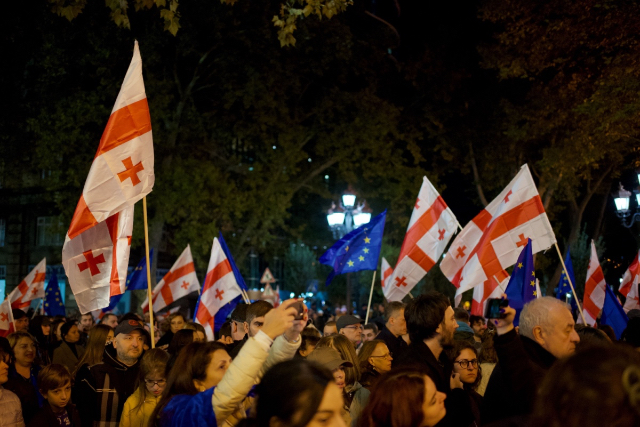
A significant share of Georgia’s academic community fiercely opposes the reform. Particularly active in the protests are professors and students at Ilia State University, an institution known for its strong criticism of the government. The university has become a main target of the authorities, most probably for this reason. Since February 4, protests have been held daily by several thousand campaigners, taking the form of marches and open-air lectures in front of the university.
IMPLICATIONS: The concentration of administrative and financial management reduces the role of universities in academic decision-making. Without control over financial resources, universities lack the capacity to strengthen specific disciplines. Decisions on how to allocate funds should remain the responsibility of the universities themselves. External bureaucratic structures are not well positioned to accurately identify or assess the specific needs of individual institutions.
The dismantling of multidisciplinary higher education institutions will reduce opportunities for interdisciplinary research and may hinder innovation. Excessive specialization risks making education overly dependent on current economic conditions and short-term market demands. Such institutions tend to be less adaptable to changes in the labor market and may limit graduates’ career prospects. If only one specialized institution operates in a region, local students will face limited educational choices, which may further increase migration to Tbilisi. Although specialization may appear beneficial, since concentrated funding could strengthen specific subdisciplines, in practice this effect is likely to be limited.
This is a complex issue that involves the broader context of the entire education system, including secondary education. It cannot be addressed solely through structural changes within universities, as the quality of higher education is directly influenced by the preparedness of school graduates, curriculum standards, teacher training, and assessment models. Without coordinated reform at earlier stages of education, university reforms risk becoming fragmented and ineffective. A systemic approach is therefore essential to ensure coherence, continuity, and long-term sustainability across all levels of education. Consequently, the government’s emphasis on specialized institutions may replace strategic development with short-term objectives. In the long term, such reliance on market signals may undermine the stability of educational institutions.
Nearly 75 percent of Georgia’s population supports further integration with the European Union and there is significant concern that these reforms will jeopardize the country’s participation in the Bologna Process and its ability to meet EHEA criteria. The inadequacy of the reform in addressing existing challenges raises international, as well as domestic, concerns. Moreover, the reform appears to contradict the commitments outlined in Georgia’s Association Agreement with the EU.
From 2026, Georgian state universities will be unable to admit foreign students, or will be allowed to admit only a limited number with prior state approval. Such academic restrictions and increased state control are likely to reduce both the number and the quality of joint research projects, participation in international academic programs, and student exchange programs.
The reform was developed without meaningful involvement of the academic community through open consultations, analytical assessments, or financial evaluations, raising serious concerns about its transparency. The absence of clearly presented criteria, objectives, and implementation mechanisms undermines trust among professors and students and encourages perceptions that the reform serves political rather than strategic goals, including increased control over academic freedom and expression.
Moreover, unclear decision-making procedures heighten the risk of politicization. When the criteria for financing and the reorganization of higher education institutions are not transparent, concerns about political influence and corruption arise. Limited public access to information on decision-making processes, budget allocations, and performance indicators also makes it difficult to evaluate whether the reform’s objectives are being achieved. The lack of clear benchmarks and independent evaluation mechanisms weakens accountability and reduces public trust in the reform process.
CONCLUSIONS: Criticism of the higher education reform by scholars and students highlights significant risks. The reform goes far beyond administrative restructuring and carries important social and political implications. These include the preservation of institutional and academic autonomy, transparent governance, funding for research, admission policies, the social role of universities, continued integration into European education and research frameworks, and the risk of unemployment among the intellectual elite. All of these areas risk becoming adversely affected by the proposed changes.
As of today, the reform applies to all state-owned universities, but there is no guarantee that similar measures will not later be extended to private higher education institutions. The reform contradicts Article 27 of the Constitution of Georgia, which guarantees academic freedom and the autonomy of higher education institutions. A major concern is that the reform may institutionalize political control over universities and significantly reduce their autonomy. Critics argue that an implicit objective of the reform is to marginalize pro-Western academic circles, which have traditionally served as spaces for open debate and free discussion. In the context of the government’s increasingly anti-Western orientation and democratic backsliding, the autonomy and independence of universities remain essential pillars of a free society.
AUTHOR’S BIO: Irakli Laitadze is an Adjunct Professor at Ilia State University (Tbilisi, Georgia) and Senior Fellow of the think-tank EU Awareness Centre (Brussels). He was previously a career diplomat, serving as a senior Counsellor in the Mission of Georgia to the EU and Director of the EU Political Department, Ministry of Foreign Affairs of Georgia. After his diplomatic service, he was the CFO in GMT Hospitality and CEO of Publishing House Artanuji. He holds degrees from Tbilisi State University, the Diplomatic School of Madrid (Diploma), and Cambridge University (MBA), and a Ph.D. (Magna cum laude) from Tbilisi Free University.
Georgia’s Democratic Reversal: The Danger of an Unquestioned Consensus
By Ambassador David Dondua
Georgia’s democratic backslide has shocked observers at home and abroad. Once a “beacon of democracy” and a frontrunner of European integration, the country has lost its standing within the European democratic family in a remarkably short time. While this shift may appear sudden, it reflects deeper vulnerabilities—lessons that matter not only for Georgia but also for other small states navigating similar geopolitical crossroads.
BACKGROUND:
The rapid erosion of Georgia’s democratic and pro-Western trajectory cannot be explained by a single decision, policy, or political figure. Rather, it is the result of a complex combination of factors. At the most general level, it reflects the success of a long-term Russian hybrid and cognitive operation against Georgian society, an operation that ultimately proved much more effective than the 2008 military invasion.
As a result of the August 2008 Russo-Georgian war, Russia occupied only 20 per cent of Georgia’s territory. In the decade that followed, however, Moscow achieved something far more consequential. Through sustained political influence, economic leverage, disinformation, and elite capture, it gradually penetrated Georgia’s state institutions. Government, parliament, the presidential administration, courts, security services, police, armed forces, and the foreign service all became vulnerable to influence. Most importantly, Russia succeeded in distracting the country from its European integration trajectory and sowing mistrust toward democratic reforms and Western aspirations. Strategically, this amounted to the cognitive occupation of the entire state.
Blaming this reversal solely on Russian hybrid attacks, the pro-Russian stance of the ruling Georgian Dream government, or the role of the de facto ruler, billionaire Bidzina Ivanishvili, would be too simple. The reality is more complex. Among the many political, social, and institutional factors that shaped Georgia’s vulnerability, one has remained largely unrecognized, rarely discussed, and almost entirely absent from public debate.
In the late 1980s, as the collapse of the Soviet Union became inevitable, Georgian society engaged in intense debates about the future of the independent state. Constitutional arrangements, models of governance, economic systems, currency, and even sporting affiliations were openly discussed. One issue, however, was never truly debated: the foreign policy orientation of independent Georgia.
On this question, there appeared to be complete consensus. Becoming part of the West was treated as self-evident—almost sacred. It was widely perceived as the fulfilment of centuries-long aspirations to align Georgia with Europe. No alternatives were discussed, not because they were examined and rejected, but because few dared to articulate them. In a diverse, multi-ethnic society that had lived under Russian rule for more than two centuries, it is unlikely that such alternatives were entirely absent. Yet for the next three decades, this unchallenged consensus shaped both Georgia’s foreign and domestic policy.
IMPLICATIONS:
From today’s perspective, this unquestioned consensus appears to have been a missed opportunity for deeper and informed societal consolidation. This observation should not be misunderstood as questioning Georgia’s European choice. The author firmly believes that the European path was and remains the right choice for Georgia. Yet accepting this choice without deep public reasoning, open discussion, or even heated debate left society ill-prepared to fully understand and defend it.
Georgian society is often characterized by emotional radicalism, reinforced by a lack of democratic traditions. This leaves limited space for critical reflection. As a result, key aspects of EU and NATO integration were rarely discussed in a fact-based and accessible way. Public support, therefore, remained largely emotional rather than knowledge-based.
This gap became visible whenever misinformation spread. Claims that EU regulations would ban or severely restrict traditional agricultural products, force the uprooting of vineyards—widely perceived as an attack on Georgia’s cultural heritage—or exclude most of local goods from European markets due to strict quality standards repeatedly triggered public outrage. Such narratives exposed how shallow public understanding often was, despite consistently high levels of declared support for European integration.
Insufficient effort was made to explain to citizens that compromise is inherent in joining any international organisation. Government officials and even NGOs promoting the EU and NATO integration often avoided discussing trade-offs and long-term costs. Citizens were rarely told that today’s difficulties are frequently the price of tomorrow’s benefits—choices that can only be made consciously by an informed society.
Following the adoption of the Deep and Comprehensive Free Trade Area (DCFTA), the state should have launched a large-scale educational effort to demonstrate how this instrument could be applied in practice, particularly for small entrepreneurs and rural communities. While some initiatives were undertaken, largely with donor support, they were insufficient. For many citizens, European integration remained an abstract promise rather than a lived experience.
A fundamental contradiction of Georgia’s post-independence politics is that all Georgian governments over the past three and a half decades have claimed to be pro-Western and have promised the population a European democratic future, including NATO membership. Even the current ruling party, Georgian Dream, publicly declared the same until recently. Yet in practice, the actions of all those governments, without exception, have often fallen short of democratic standards, at times even sharply contradicting them.
Against this backdrop, today, the ruling party has deliberately cast Europe as a convenient scapegoat for almost all of the country’s past and current difficulties, whether stemming from poor governance, institutional weaknesses, corruption, reform costs, or external developments beyond Georgia’s control. Georgian Dream has transformed ordinary challenges into a political weapon to erode public trust in democratic reforms and derail the country’s European path.
As noted above, in every election, including the watershed 2012 vote, virtually all political actors pledged a European future to voters; even marginal candidates openly backed or courted by the Kremlin used pro-Western rhetoric. Unlike in Ukraine, Moldova, or Armenia, where societies were exposed to competing geopolitical visions and, over time, could observe different policy orientations, compare outcomes, and distinguish between credible and non-credible strategic paths, Georgian voters were never offered a genuine choice. They were offered reassurance that the European path was uncontested and secure. This monopoly of a single geopolitical orientation meant that alternatives were neither seriously articulated nor openly debated. Paradoxically, the absence of pluralism later became a vulnerability: because the European choice was never collectively debated and consciously affirmed, it failed to generate a strong sense of public ownership.
Today, pro-Russian actors exploit this gap by asking: “Who decided that Georgia must choose Europe?” The ruling Georgian Dream has increasingly reinforced this narrative by claiming that the European course was imposed on Georgia by some phantom foreign forces.
At the same time, fully replacing Europe with Russia remains politically tricky in the short term, given prevailing public attitudes. Instead, the government has sought to cultivate the idea of “state neutrality” as an ostensibly safer alternative to Western integration, one that promises stability while allowing Georgians to preserve their traditions, identity, and way of life without external pressure. Packaged in this way, neutrality appears as a return to normalcy and sovereignty. Such a narrative can gain traction precisely because the European path was never thoroughly debated, internalised, and embraced on the basis of knowledge.
In reality, however, neutrality functions as a transitional narrative rather than a genuine option. Given Georgia’s geography, security environment and economic dependencies, let alone historical experience, neutrality is simply not workable. In practice, abandoning Western integration is the fastest route to renewed subordination to Russia and the gradual erosion of Georgian statehood.
CONCLUSIONS: Georgia’s democratic and geopolitical setback is not the result of abandoning Europe overnight. It is the consequence of failing to cultivate deep understanding, ownership, and resilience around the European choice over three decades. Strategic orientations cannot survive on consensus alone; they require constant explanation, public debate, and civic education.
For years, Georgia proudly cited overwhelming public support for European integration. Yet emotional endorsement without understanding is fragile. A society that genuinely comprehends how Western institutions function and what integration realistically entails is far more resilient to manipulation. In retrospect, 50 or even 40 per cent of firm, knowledge-based support would have been more durable than 80 per cent of symbolic approval. This underscores that the key to Georgia’s recovery lies not in numbers alone but in cultivating genuine understanding and ownership among citizens.
This moment, however, is not irreversible. What was insufficiently addressed in the past can still be corrected. Periods of crisis often force societies to replace inherited assumptions with conscious choices. Continued engagement by Georgia’s Western partners is therefore essential—not less, but more focused on education, communication, and societal resilience.
Europe has not disappeared from Georgia’s collective identity. If reinforced through knowledge rather than slogans, it can still serve as the foundation for democratic recovery and a sustainable return to the European path.
AUTHOR’S BIO: Ambassador David Dondua is a diplomat and political analyst. He serves as Chairman of the EU Awareness Centre, a Brussels-based think tank focused on European integration, democratic resilience, and countering hybrid threats in Eastern Europe and the South Caucasus.
The EU Expands Its Ties With Tajikistan
By Emil Avdaliani
The EU’s deepening engagement with Tajikistan through the Enhanced Partnership and Cooperation Agreement (ECPA) aligns with Brussels’ broader economic and political outreach toward Central Asia. This strategy represents another phase in the Union’s increasingly active policy toward the region. The EU’s interest is driven by the Central Asia’s significance amid intensifying rivalry between the U.S. and China over control of supply chains critical for battery and electric vehicle production. A further factor strengthening EU–Central Asia relations is the regional states’ pursuit of multi-alignment. Wary of dependence on either Russia or China, the Central Asian governments seek partnerships with other major powers.

Credit: Wikimedia Commons
BACKGROUND: On July 18, the European Union and Tajikistan initialed the EPCA. This accord will replace the Partnership and Cooperation Agreement that has been in place since 2010, establishing a legal framework to advance reforms in Tajikistan. The EPCA corresponds closely with the EU’s strategic priorities in Central Asia, which call for a more reinvigorated approach to the strategically significant region. It also seeks to establish a basis for future relations, reflecting emerging economic and political conditions on the ground. Brussels and Dushanbe foresee cooperation in trade as well as in human rights, sustainable development, education, energy, and related areas.
Similarly, in July the two parties discussed the present state of cooperation and prospects for launching new joint projects in mechanical engineering, pharmaceuticals, textiles, and the food industry. Additional areas include the mining sector, with particular focus on the extraction and processing of critical raw materials. Officials from Tajikistan and the EU also considered Dushanbe’s potential participation in the EU Global Gateway initiative, designed to promote sustainable infrastructure and reinforce strategic linkages across Eurasia.
The EPCA builds upon already established cooperation across multiple sectors. For example, during the past five years, 500 Tajik students have studied in Europe through EU funding. The Union has financed projects in the healthcare sector and promotes digital transformation, including initiatives to expand digital access via satellite technology. The EU also contributes to the development and modernization of green energy production in Tajikistan. With European support, the Nurek, Sebzor, and Kayrakkum hydroelectric power station projects are under implementation, and Brussels is assisting the establishment of infrastructure to transmit electricity to South Asia through the CASA-1000 transmission line.
IMPLICATIONS: The EPCA was concluded after several years of bilateral negotiations, a timeframe regarded as relatively brief for agreements of this nature. The EU remains committed to serving as a partner in Tajikistan’s future development and seeks to broaden cooperation across a range of key sectors, from education to investments in critical infrastructure.
Tajikistan is particularly interested in attracting additional European investments and technologies for the construction of the Rogun hydroelectric power station and the modernization of the Nurek facility. Moreover, Dushanbe seeks to advance the implementation of a “green” economy, a topic addressed in discussions between President Emomali Rahmon and the President of the Council of the European Union, António Costa. Tajikistan has articulated ambitious plans to transform the country into a significant producer of green energy. In June, the leadership announced that by 2037 the country would generate electricity exclusively from renewable sources. Although perhaps unrealistic, these plans underscore Dushanbe’s rising aspirations.
The EU’s intensified engagement with Tajikistan corresponds to Brussels’ broader involvement in Central Asia. The summit convened by the EU with the five Central Asian states in Samarkand earlier this year represented a significant development in bilateral relations. Under the Global Gateway program, the EU announced a €12 billion investment package for Central Asian countries, including €3 billion for transport, €2.5 billion for critical minerals, and allocations for other sectors. Initiated in 2023, the EU–Central Asia summits have become central to bilateral ties, reflecting the region’s increasing significance for Brussels following the outbreak of the war in Ukraine.
The Russian invasion altered Eurasian connectivity, elevating the importance of Central Asian routes for both China and the EU. As part of the Middle Corridor, Central Asia is integrated into the EU’s Global Gateway initiative, designed to advance sustainable and interconnected infrastructure projects worldwide.
Tajikistan places particular value on connectivity opportunities arising from the EU’s engagement with Central Asia. Historically, the country has remained peripheral to major transit routes, with Kazakhstan and Uzbekistan assuming more central roles in linking China with global markets. Recently, however, Dushanbe has sought to capitalize on evolving Eurasian connectivity. Central Asia’s interaction with Afghanistan constitutes one potential avenue, but given Tajikistan’s cautious stance toward Afghanistan, the country is instead considering transit routes through Iran. Relations between Tehran and Dushanbe have improved in recent months, and Tajikistan is now actively pursuing the use of Iranian ports to gain access to India and the Gulf region.
Another transregional project pursued by Tajikistan is the Middle Corridor. In June, the Ministry of Economic Development and Trade announced that Dushanbe is actively cooperating with Uzbekistan, Turkmenistan, and other partners on agreements providing mutual discounts on rail transportation to facilitate trade flows. This activism is not confined to Tajikistan but reflects a broader trend observable in the conduct of other regional states, including even the most closed one, Turkmenistan.
For the EU, Tajikistan holds particular importance in light of Brussels’ growing focus on securing rare earth resources, which are vital for multiple industries where competition with China has intensified. Estimates suggest that the country possesses approximately 800 mineral deposits containing critical materials demanded in global technological production. In late 2024, Tajikistan announced the discovery of 15 new major deposits of rare earths. In July of this year, authorities further reported the identification of rare earth metals—niobium and tantalum—in the Rasht Valley. Tajikistan also possesses considerable hydropower potential, with its 13,000 glaciers accounting for 68 percent of Central Asia’s water resources.
CONCLUSIONS: The EU’s engagement with Central Asia, and Tajikistan in particular, demonstrates that the Union has adopted an increasingly geopolitical orientation toward the region. To compete effectively with China, Russia, the U.S., and other powers, Brussels must shift its focus from rhetorical emphasis on human rights and democracy promotion to more tangible measures, including investment in critical sectors of cooperation with Central Asian states. The EU is regarded as a reliable partner owing to its adherence to high environmental standards in investment and the long-term benefits derived from them. While Central Asian states anticipate deeper EU involvement, they also acknowledge the constraints of bilateral cooperation. Geographic remoteness and underdeveloped infrastructure remain significant obstacles. Furthermore, the EU allocates fewer financial resources to the region than Russia, and particularly China, while its bureaucracy, unlike China’s, is less adaptable to the needs of individual Central Asian states.
AUTHOR’S BIO: Emil Avdaliani is a research fellow at the Turan Research Center and a professor of international relations at the European University in Tbilisi, Georgia. His research focuses on the history of the Silk Roads and the interests of great powers in the Middle East and the Caucasus.
EU- Georgia Association Agreement and Visa Liberalization Under Question

By David Bujiashvili and Tomáš Baranec
In a resolution on July 9, 2025, the European Parliament called for a review of the EU–Georgia Association Agreement (AA) and its Deep and Comprehensive Free Trade Area (DCFTA), citing Georgia’s continued violations of the Agreement’s core principles. The resolution warned that persistent backsliding on democratic values could lead to the suspension of Georgia’s economic and trade benefits. Accordingly, the Parliament urged the European Commission and the Council to assess Georgia’s compliance with these standards and consider suspending the visa-free regime in case democratic norms are not respected.
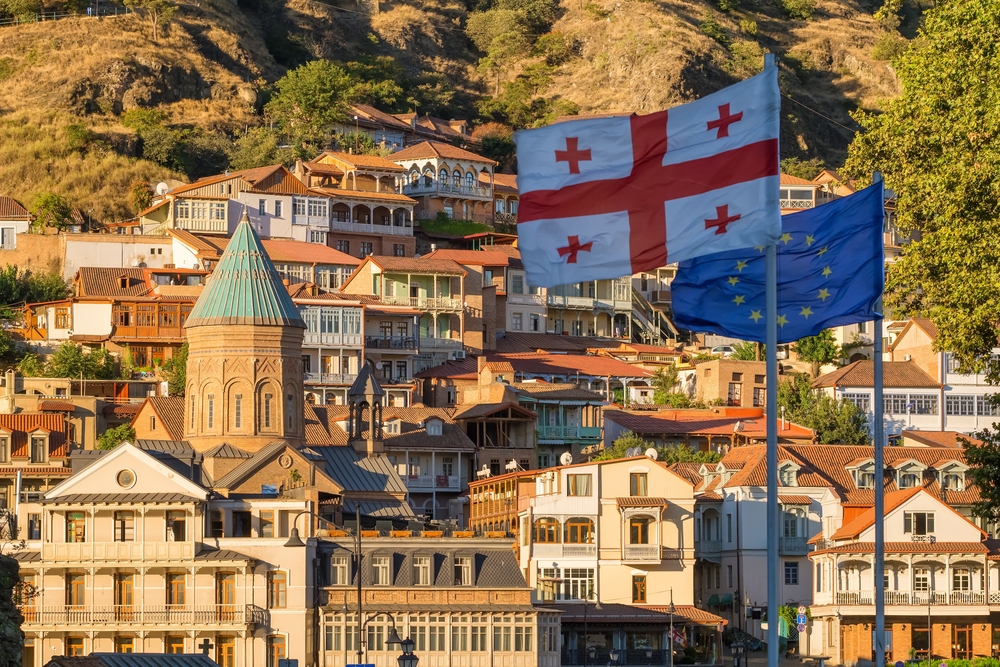
BACKGROUND: The signing of the EU–Georgia Association Agreement in 2014, establishing a comprehensive framework for deeper political association and economic integration was a culmination of a systematic rapprochement between Tbilisi and Brussels. The AA encompasses cooperation in democratic governance, justice, human rights, energy, environmental policy and other sectoral areas. A key component of the agreement is the DCFTA granting Georgian goods duty-free access to the EU’s Single Market.
Building on the comprehensive framework of the AA/DCFTA, Georgian citizens also gained one of the most tangible benefits of EU integration: visa-free access to the Schengen Area in March 2017. This milestone held both symbolic and practical significance, allowing Georgian nationals to travel for up to 90 days without a visa. It was widely seen as a reward for the country’s reform efforts and remains one of the most tangible benefits delivered to the Georgian public as part of the European integration process.
The geopolitical landscape shifted again in 2022 with Russia’s full-scale invasion of Ukraine, prompting the EU to reassess its enlargement policy towards the Eastern Neighbourhood. In this context, Georgia was granted EU candidate status in 2023 recognizing Georgia’s European aspirations and progress in the AA implementation.
However, shortly after gaining EU candidate status, internal challenges in Georgia, including political polarization and pressure on the judiciary, raised concerns about the country’s adherence to EU norms. This led to a major turning point on 28 November 2024, when Georgia’s ruling party declared that it would not place the issue of opening EU accession talks on the national agenda until the end of 2028.
In reaction to these developments, the EU has taken concrete steps, including suspending high-level political dialogue with Georgia. The European Council suspended visa facilitation privileges for holders of Georgian diplomatic and service passports as an initial step toward broader restrictions. Following the EU Foreign Affairs Council meeting on July 15, 2025, Georgia was given a deadline to implement 8 key recommendations by August 31. Failure to comply could lead to the suspension of the visa-free regime for all Georgian citizens and potentially a review or suspension of specific AA/DCFTA provisions.
Meanwhile, several EU member states are keen to impose personal sanctions asset freezes and travel bans on Georgian officials but are constrained by the lack of unanimity among EU members. Past instances, such as Hungary and Slovakia blocking personal sanctions against Georgia illustrate the complexity of achieving full consent.
Alongside political developments, Georgia’s economic integration with the EU has delivered measurable results. Since the 2014 signing of the EU–Georgia AA/DCFTA, exports to the EU have grown about 17 percent, expanding beyond wine, mineral water, and hazelnuts to include kiwifruit, blueberries, berries, organic honey, essential oils, dried and processed fruits, and, since 2022, snails. Export activity is strongest in Kakheti (wine and agriculture), Imereti (food processing), and Adjara, which benefits from its Black Sea access facilitating trade. Shida Kartli, bordering Russia, remains less export-oriented due to geopolitical challenges and limited market access.
Complementing trade growth, visa-free travel has expanded opportunities for tourism, business, education, and family ties, while significantly increasing remittances from EU countries. Since its introduction in 2017, over 500,000 Georgian citizens have benefited, making more than 1 million visits to Schengen Area countries. Starting at around US$ 414 million in 2017, EU-origin remittances more than tripled to approximately US$ 1.4 billion by 2024, reflecting a 238 percent increase. On the contrary, remittances from Russia started at approximately US$ 380 million in 2017 but grew only modestly to around US$ 420 million by 2024. Consequently, the EU now accounts for roughly 44 percent of Georgia’s total remittances, overshadowing Russia’s declining share.
IMPLICATIONS: The DCFTA plays a critical role in Georgia’s economic interests. Its suspension would have serious consequences, threatening jobs, competitiveness, and rural development. For years, it has provided Georgian producers, farmers, and entrepreneurs with tariff-free access to the EU market. Its suspension would damage the economy, erode public trust, and increase social vulnerability.
In contrast to the gradual economic impact of the DCFTA, the suspension of visa-free travel would hit ordinary Georgians immediately, undermining free mobility. Thousands rely on it for tourism, personal matters, and medical access to EU clinics. Students, entrepreneurs, and families would face new bureaucratic obstacles. Restrictions would hinder Georgian entrepreneurs from attending EU exhibitions and forums, limiting partnerships and market growth, while reduced EU access could deepen reliance on Russia and China, both visa-free partners.
This impact would be compounded by low-cost airlines, particularly WizzAir, which could reduce routes or raise fares. WizzAir, operating in both Georgia and Armenia, may even close its Georgian operations entirely and shift all flights to Armenia if the EU suspends visa-free travel for Georgians, especially given the prospect that Armenia could gain visa-free access in the coming years. Such a shift would make flights from and to Georgia more expensive and less accessible, further reducing European tourist arrivals. Meanwhile, flights from Russia have risen sharply in recent years, increasing the risk of greater reliance on Russian tourists if European arrivals decline due to fewer low-cost flights.
The economic consequences would not be limited to tourism. Suspension of visa-free travel would also negatively affect household incomes derived from remittances, underscoring the EU’s crucial role in supporting Georgia’s economic development through these flows. Many Georgians working in the EU without proper permits—often in informal sectors such as caregiving or domestic work—would no longer be able to sustain these livelihoods. Currently, they avoid breaching the 90-day visa-free limit by rotating their stays among friends and relatives, a practice that complies with entry rules while significantly contributing to remittance inflows. This informal mobility has provided a vital boost to Georgia’s economy.
Beyond economic costs, the suspension would deal a profound emotional blow to pro-European Georgians, deepening frustration and a sense of isolation. It would be perceived not merely as a bureaucratic measure but as a symbolic break - a clear signal that the country’s European path is no longer guaranteed.
Domestically, the suspension would likely be attributed to the government’s democratic backsliding rather than external pressures. Attempts by authorities to deflect responsibility onto the opposition, civil society, or the EU are unlikely to convince the pro-European majority. This could heighten polarization and, with local elections on 4 October 2025, trigger protests and increase pressure on the ruling party.
From a legal and procedural perspective, suspending parts of the AA/DCFTA is highly complex, requiring unanimity among all 27 member states. Therefore, suspension of the AA/DCFTA is unlikely, while in contrast, suspending the visa-free regime requires only a qualified majority of 15 member states, making it a more feasible short-term option if Georgia fails to meet EU benchmarks.
Despite these considerations, the EU remains cautious about measures that could directly harm ordinary Georgian citizens, especially given the 86 percent public support for EU membership. However, internal divisions over targeted personal sanctions have increased the likelihood of collective measures, including suspending visa-free travel. While affecting ordinary Georgians, this step may be the EU’s only remaining leverage if the government continues undermining democratic norms and fails to implement the recommended reforms by the end of August.
CONCLUSION: In the absence of a unified position towards the Georgian government, the EU currently has only a limited set of sanctions, which primarily target the local population rather than key representatives of the ruling party and business circles close to it. The ability of these tools to change the Georgian government’s position is likely limited. Moreover, both the suspension of visa liberalization and the less likely suspension of parts of the AA/DCFTA may be double-edged in the medium term, as they could increase the dependence of the Georgian economy and business on Russia and China.
Even if the current status quo with Georgia remains, while Ukraine and Moldova continue advancing towards EU membership, freezing Georgia’s accession process would create a damaging gap in EU enlargement policy. This could result in a ‘Turkey-style’ scenario, where candidate status is maintained in name but the accession perspective is practically frozen.
AUTHOR’S BIOS: David Bujiashvili is a Georgian diplomat and expert in European integration with over 26 years of experience in EU Affairs. He has held senior government positions, coordinated the implementation of the EU–Georgia Association Agreement, visa liberalization, and EU assistance to Georgia, and served as Chief Coordinator of Georgia’s EU Accession Questionnaire (2021–2022), directly contributing to Georgia’s EU candidate status. He is also an Associate Professor at ALTE University of Georgia and author of the book Steps for Comprehending the European Union and 12 academic publications on EU Affairs.
Tomáš Baranec is the Founder and Executive Director of the Centre for Black Sea Studies as well as a Research Fellow and Head of the Caucasus Program of the Slovak think tank Strategic Analysis. He currently works as a field researcher on the Georgian-Ossetian ABL. Tomas studied Balkan, Central European and Eurasian Studies at Charles University in Prague.
Visit also