
By: Irakli Laitadze
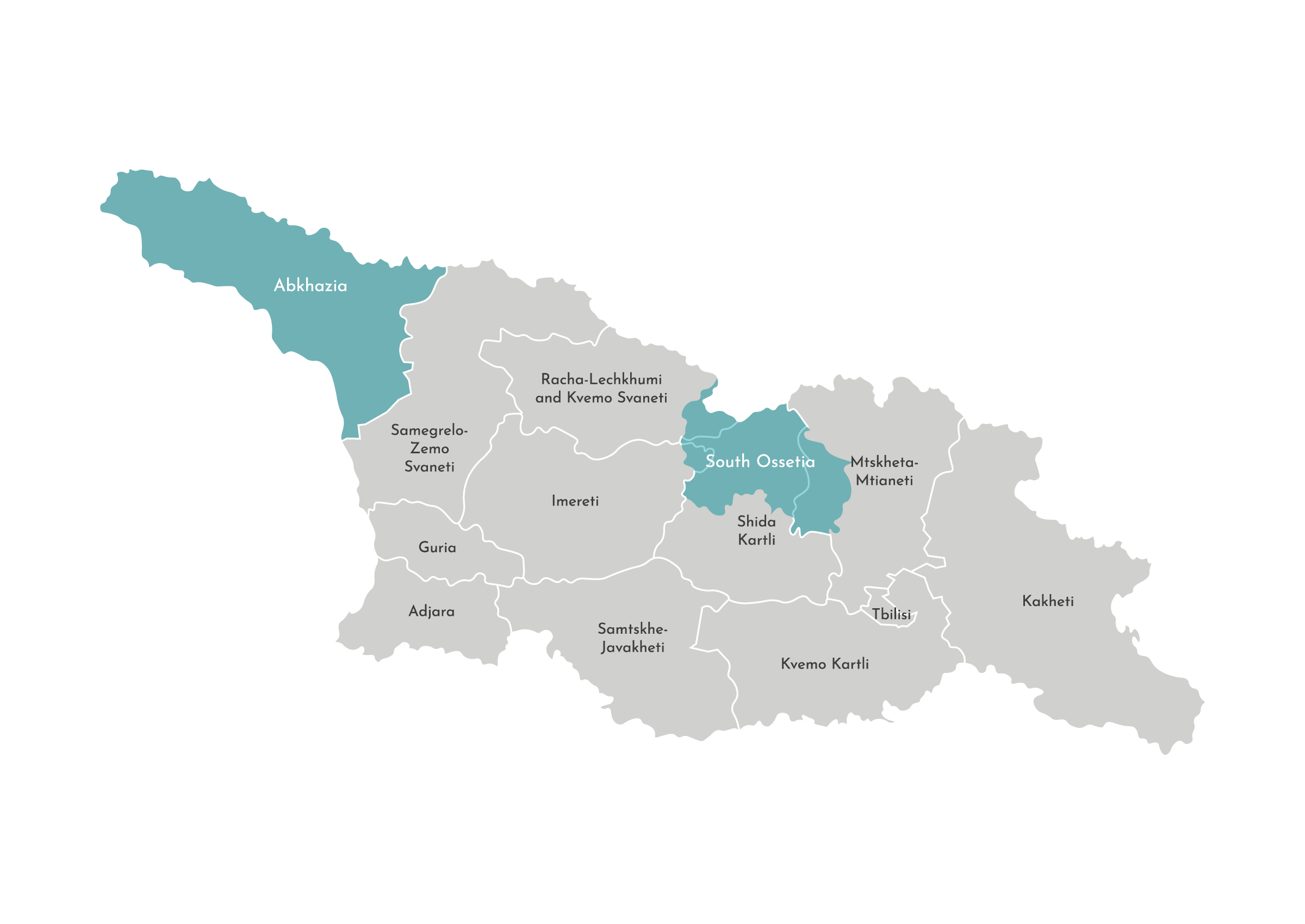
On September 30, 2026, Marat Kambolov was inaugurated in Tskhinvali as South Ossetia’s new de facto “president”, following the “presidential election” of September 18. Representatives of Russia, Venezuela, Nicaragua and breakaway Abkhazia attended the ceremony. Georgia and the EU rejected the vote as illegitimate and without legal effect. The transition illustrates South Ossetia’s deepening political, security and economic integration with Russia. The election’s significance lies in the consolidation of an established trajectory. Kambolov’s career in Russian state institutions and rapid emergence within the de facto administration reflect the territory’s dependence on Moscow for political support, security and economic viability. For Georgia, this dependence poses a continuing challenge to sovereignty and national security. Regionally, South Ossetia remains a strategic foothold where Russian military power, unresolved territorial disputes, limited international oversight and vulnerabilities associated with informal cross-border activity intersect.
BACKGROUND:
South Ossetia’s current status stems from the conflicts accompanying the Soviet Union’s dissolution and, particularly, the August 2008 Russia–Georgia war. Following that war, Moscow recognized South Ossetia as independent and established a permanent military presence. Georgia and the overwhelming majority of states continue to regard it as Georgian territory.
The political transition preceding the vote was revealing. Alan Gagloev, de facto “president” since 2022, resigned in June 2026 and subsequently became an adviser to Russian President Vladimir Putin. Kambolov, whose professional career was closely associated with Russian institutions, rapidly emerged as his successor. According to the announced results, Kambolov won 84.95 percent of the vote on turnout of 82.65 percent. Moscow welcomed his victory, while Kambolov emphasized strategic partnership with Russia and the welfare of South Ossetia’s population.
The transition coincided with further institutional integration. On May 9, 2026, Putin and Gagloev signed a Treaty on Deepening Allied Cooperation in Moscow. Building on the 2008 Treaty of Friendship, Cooperation and Mutual Assistance and the 2015 Treaty on Alliance and Integration, the agreement envisaged closer cooperation across multiple policy areas. The EU has criticized Russia’s incorporation of South Ossetia into its political, military, economic and judicial structures.
South Ossetia also has a history of informal trade beyond conventional customs controls. Until its closure in 2004, the Ergneti market near Tskhinvali facilitated substantial trade among Georgia, South Ossetia and Russia, including smuggling of cigarettes, fuel and other goods. Reports also described trafficking in weapons and drugs and significant losses to Georgian state revenues. This history does not establish that contemporary South Ossetia is a centrally organized criminal hub. It does, however, illustrate the governance vulnerabilities associated with weak customs, judicial and law-enforcement arrangements.
IMPLICATIONS:
The election reinforces Russia’s influence over South Ossetia’s political institutions. Kambolov’s professional connections exemplify the close ties linking senior figures in the de facto administration to Russian institutions. Moscow can thus exercise decisive influence over defense, security and external relations without formally annexing the territory. South Ossetia retains nominal governmental institutions, providing Russia with many advantages of territorial control while avoiding the political consequences of formal incorporation.
For Georgia, the immediate implications are military and infrastructural. Russian forces retain a permanent foothold close to Georgia’s central regions and principal east–west transport arteries. The Roki Tunnel and Transcaucasian Highway connect South Ossetia with Russia, providing an important logistical route across the Caucasus. Kambolov has proposed additional tunnels and transport connections. If implemented, these projects could facilitate the movement of personnel, equipment and goods and deepen South Ossetia’s dependence on Russia.
South Ossetia’s location amplifies these risks. Georgia’s principal east–west highway (S1) and railway are integral to regional transport networks. At their closest points, the highway passes approximately 450–500 meters from the administrative boundary line (ABL), while the railway is within 1.3 kilometers. Russian Federal Security Service border guards and South Ossetian personnel operate along the boundary, and a serious security incident or deliberate disruption could interrupt Georgian passenger and freight movement and affect regional supply chains.
Borderization remains another instrument of pressure. Since 2008, fences, barbed wire and other barriers have progressively hardened the ABL. These measures restrict movement and access to agricultural land, disrupt established routes and expose residents to detention, sometimes near poorly marked sections of the boundary. Georgian citizens continue to face unlawful detention by Russian and South Ossetian security personnel. Those responsible for the killing of Georgian citizen Tamaz Ginturi near the occupation line have not been brought to justice. Such incidents sustain insecurity without requiring another major military offensive.
The Incident Prevention and Response Mechanism (IPRM), co-facilitated by the European Union Monitoring Mission and the Organization for Security and Co-operation in Europe, brings together Georgian, Russian and de facto South Ossetian representatives near the boundary. It provides a channel for dialogue and de-escalation but is neither a judicial institution nor a law-enforcement mechanism. Its limited mandate, together with restricted international access, constrains oversight and leaves important security and governance problems unresolved.
The regional implications are also significant. South Ossetia gives Moscow a military and political position within Georgia’s internationally recognized borders as the South Caucasus transport landscape evolves. The U.S.-backed Trump Route for International Peace and Prosperity (TRIPP), alongside the Middle Corridor, could strengthen regional connections that bypass Russia. Nevertheless, Moscow’s presence in South Ossetia provides leverage over Georgia and potentially affects regional connectivity. That leverage is not unlimited: Turkey’s influence in Azerbaijan, U.S. engagement with Armenia and Azerbaijan, and the EU’s involvement in Armenia constrain Russia’s capacity to shape developments across the wider region.
Deepening institutional dependence also complicates conflict resolution. As Moscow and Tskhinvali become more closely integrated, the de facto authorities have less scope to negotiate independently. Russian influence has long been decisive in practice; successive treaties increasingly formalize that dependence. Russia’s direct political and military involvement thus remains central to the conflict’s dynamics and prospects for settlement.
The territory’s political future has domestic consequences for Georgia. Elections and proposals for referendums on independence or unification with North Ossetia within the Russian Federation take place outside Georgia’s constitutional jurisdiction. They expose Tbilisi’s limited capacity to exercise authority over internationally recognized Georgian territory and intensify political pressure over the unresolved conflict. Any eventual incorporation into Russia would represent a further escalation, deepen Georgia’s strategic vulnerability and raise wider regional political and economic risks. For now, the election chiefly underscores the durability of a Russian-backed order that restricts Georgian sovereignty and perpetuates geopolitical fragmentation in the South Caucasus.
CONCLUSIONS:
The September 2026 “presidential election” in South Ossetia represents a further consolidation of Russia’s political and security influence over the territory rather than a change in its political direction. The growing institutional integration between Tskhinvali and Moscow reinforces South Ossetia’s dependence on Russia and further limits the prospects for conflict resolution.
For Georgia, these developments perpetuate significant security challenges. Russia’s military presence, continued borderization and expanding transport links with South Ossetia strengthen Moscow’s position without requiring formal annexation. The proximity of Georgia’s main east–west transport infrastructure to the administrative boundary line also creates vulnerabilities with potential consequences for regional connectivity.
The election further highlights the limitations of Georgia’s ability to influence developments in South Ossetia. The continued operation of institutions outside Tbilisi’s control, together with recurring proposals for unification with Russia, challenges Georgia’s territorial integrity and increases domestic political pressure. Any formal incorporation of South Ossetia into the Russian Federation would further undermine Georgia’s sovereignty and increase regional security risks.
Ultimately, the election reinforces an established political and security arrangement that consolidates Russian control, constrains Georgia’s sovereignty and perpetuates the unresolved conflict.
AUTHOR’S BIO:
Irakli Laitadze is an Assistant Professor at Ilia State University (Tbilisi, Georgia) and Senior Fellow of the think-tank EU Awareness Centre (Brussels). He was previously a career diplomat, serving as a senior Counsellor in the Mission of Georgia to the EU and Director of the EU Political Department, Ministry of Foreign Affairs of Georgia. After his diplomatic service, he was the CFO in GMT Hospitality and CEO of Publishing House Artanuji. He holds degrees from Tbilisi State University, the Diplomatic School of Madrid (Diploma), and Cambridge University (MBA), and a Ph.D. (Magna cum laude) from Tbilisi Free University.